Key Takeaways
- A modernization strategy is a ranked set of choices, not a platform purchase.
- Sort every system into keep, move, rebuild or retire before you pick any tool.
- Start with the workload that costs most and carries the least risk to move.
- Fund stage two with the savings from stage one, and report cost, speed and reliability every month.
Most modernization programs start with a vendor demo and end with two stacks running side by side for three years. The fix is a strategy written before the purchase. In my data modernization consulting work, the teams that finish are the ones that decided what to leave alone as carefully as what to move.
This playbook shows the choices I put into every strategy: priorities, a verdict per system, a target shape, a sequence and the measures that tell you it is working. Take what fits and cut the rest.
The Strategy in Six Moves
A modernization strategy can be written in six moves. The table shows what each move produces, so you can see the whole shape before the detail.
| Move | Question it answers | Output |
|---|---|---|
| 1. Name the Business Case | Why are we doing this now? | Two or three goals with baselines |
| 2. Inventory What You Run | What exists and what does it cost? | System list with owners and costs |
| 3. Give Each System a Verdict | Keep, move, rebuild or retire? | Ranked decision table |
| 4. Sketch the Target | Where does the data end up? | One-page target design |
| 5. Sequence the Work | What moves first? | Stage plan with exit criteria |
| 6. Set the Measures | How do we know it works? | Monthly scorecard |
Move 1: Name the Business Case
Write down why you are modernizing in terms a finance director would accept. Good reasons are specific: the nightly load now finishes at 9 a.m., the database vendor ends support next year, or the sales team waits two weeks for any new report. Bad reasons are vague, such as becoming data-driven or getting ready for AI.
Pick two or three goals and record a baseline for each today. A goal without a baseline cannot be proven later, and you will want proof when you ask for the second stage budget.
Move 2: Inventory What You Run
You cannot rank what you have not listed. Build a plain table of databases, scheduled jobs, file feeds, reports and the people who rely on them. For each, note the owner, the yearly run cost, the age of the technology and what breaks if it stops.
Expect surprises. In nearly every inventory I run, at least one critical report depends on a spreadsheet or a script that nobody on the current team wrote. Finding these early is the cheapest risk reduction in the whole program. If your inventory shows scattered ownership, the ideas in my data modernization framework explain how to assign it.
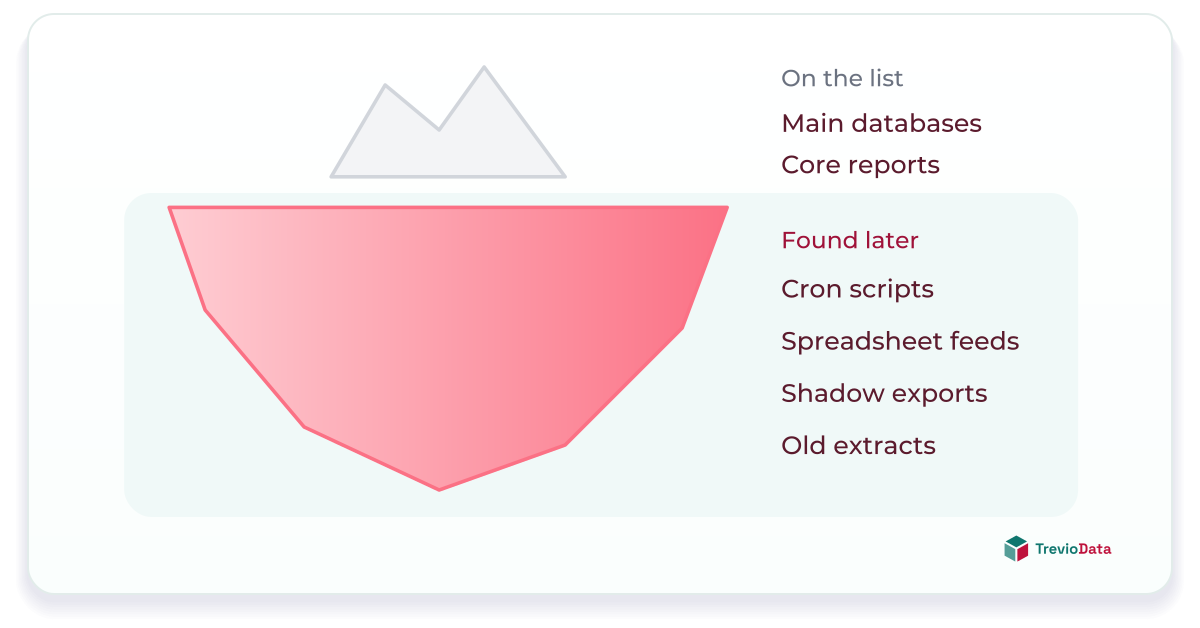
What to Record for Each System
- Owner and the main users.
- Yearly cost for licenses, hosting and support.
- Upstream sources and downstream reports.
- Vendor support status and the date it changes.
- How often it fails and how it is fixed.
Move 3: Give Each System a Verdict
This is the center of the strategy. Every system gets one of four verdicts, and the reasoning goes in writing.
| Verdict | Use it when | Typical cost | Main risk |
|---|---|---|---|
| Keep | The system works, is supported and the business is happy with it | Low | Drifting into unsupported territory |
| Move | The design is sound but the platform is expensive or at its limit | Medium | Copying old problems onto a new platform |
| Rebuild | Logic is tangled, undocumented or too slow to patch | High | Scope growth and missed business rules |
| Retire | Few people use it or another system already covers it | Lowest | A hidden dependency surfaces after shutdown |
Retire is the most underused verdict. In my client work, a noticeable share of tables and reports had no reader in the last year, and switching them off cut migration scope before a single row moved. Check usage logs, then ask owners to confirm, and keep a read-only copy for a few months as a safety net.
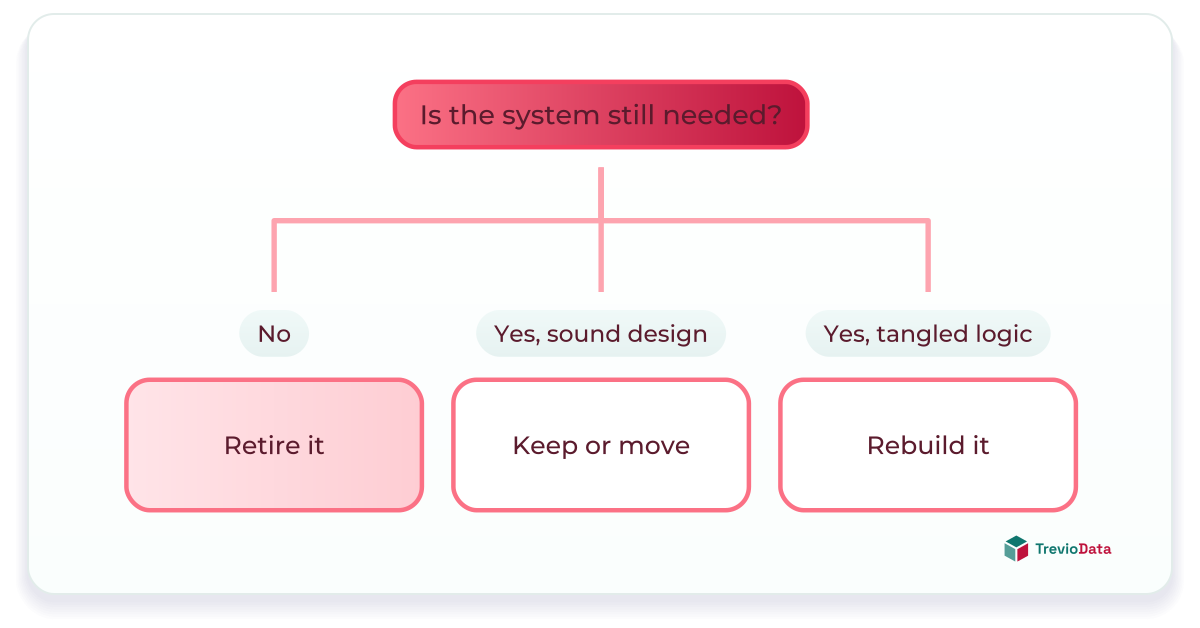
Rank the systems that survive with a simple score for business value, risk of staying, cost to run and effort to move. The scoring approach in my data modernization roadmap turns that ranking into dated stages.
Move 4: Sketch the Target
You need a one-page picture of where the data will live, not a full architecture. State the storage layer, how data gets in, where it is modeled for reporting and how people reach it. The lakehouse pattern, which puts warehouse-style management on cheap open storage, is a common choice and is described in the research paper from Databricks and university authors (Lakehouse paper, CIDR 2021). A classic warehouse, a lake or a mix can all be right for you.
Choose by workload. Structured reporting on finance and sales data usually fits a warehouse. Raw logs, files and machine learning inputs fit a lake. If you cannot tell, keep the target small and decide on the next piece when you get there. Teams comparing options can read my overview of data management strategy for how the platform choice fits into the wider plan.
Common Verdict Mistakes
Two mistakes show up often. Teams mark too much as rebuild because the old code is ugly, and the program then turns into a rewrite that takes years. Ugly code that produces correct numbers is a move candidate, and it can be improved later in smaller steps. The opposite mistake is marking everything as keep, because moving feels risky, which leaves you paying for the old stack indefinitely.
Test a verdict by asking what would change your mind. If a vendor deadline moved, a cost doubled or a key engineer left, would the verdict still hold? Verdicts that survive those questions are sound, and the ones that do not need a second look before they reach the plan.
Move 5: Sequence the Work
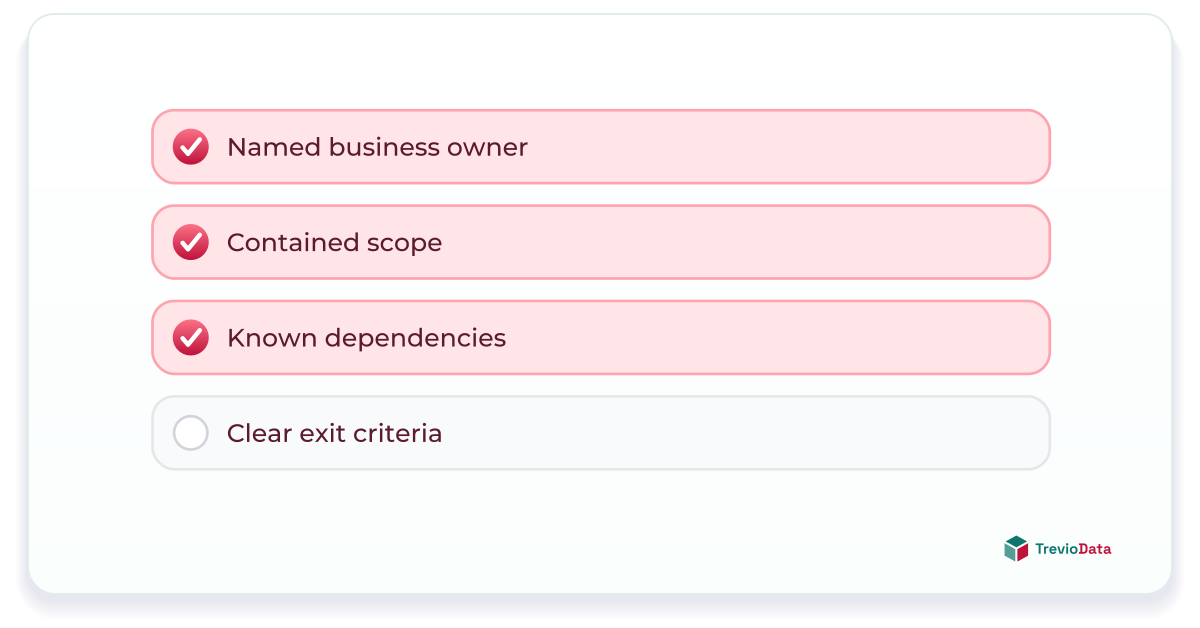
Start with a workload that is painful, contained and low in blast radius. A single department's reporting mart is a good first pick. A core finance close is a poor one. The first stage has two jobs: deliver a visible win and teach the team how your migrations work.
Use the strangler approach for the rest. You build the new capability beside the old one and move users over piece by piece until the old system has nothing left to do, a pattern described by Martin Fowler (Strangler Fig Application). Each stage gets exit criteria in writing: totals match for a set number of weeks, users have signed off and the old job is switched off.
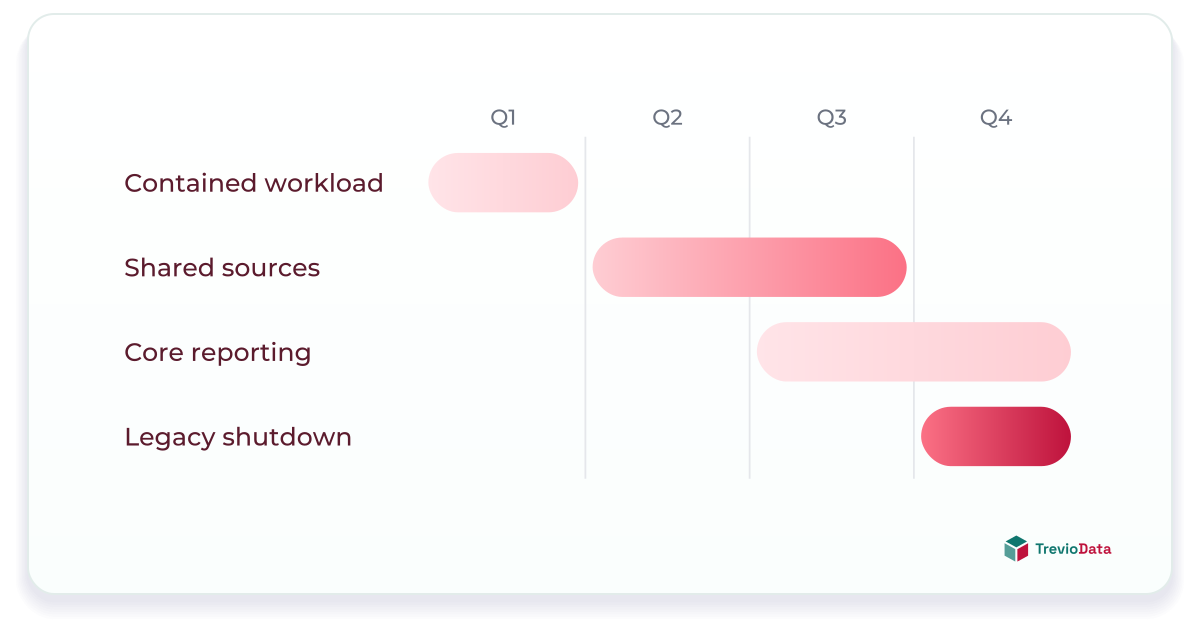
A Stage Plan You Can Copy
| Stage | Scope | Exit criteria |
|---|---|---|
| Stage 1 | One contained reporting workload | Parallel run matches for four weeks, users sign off |
| Stage 2 | Two or three shared sources and their pipelines | Old jobs switched off, alerts running |
| Stage 3 | Core finance and operations reporting | One close cycle run on the new stack |
| Stage 4 | Legacy shutdown and archive | Licenses ended, read-only archive verified |
Staffing deserves a line in the plan. If the same three engineers keep the old stack alive and build the new one, the new one loses. Name who is freed up for each stage, or buy outside help for the heavy lifting and keep your own people on knowledge transfer.
Move 6: Set the Measures
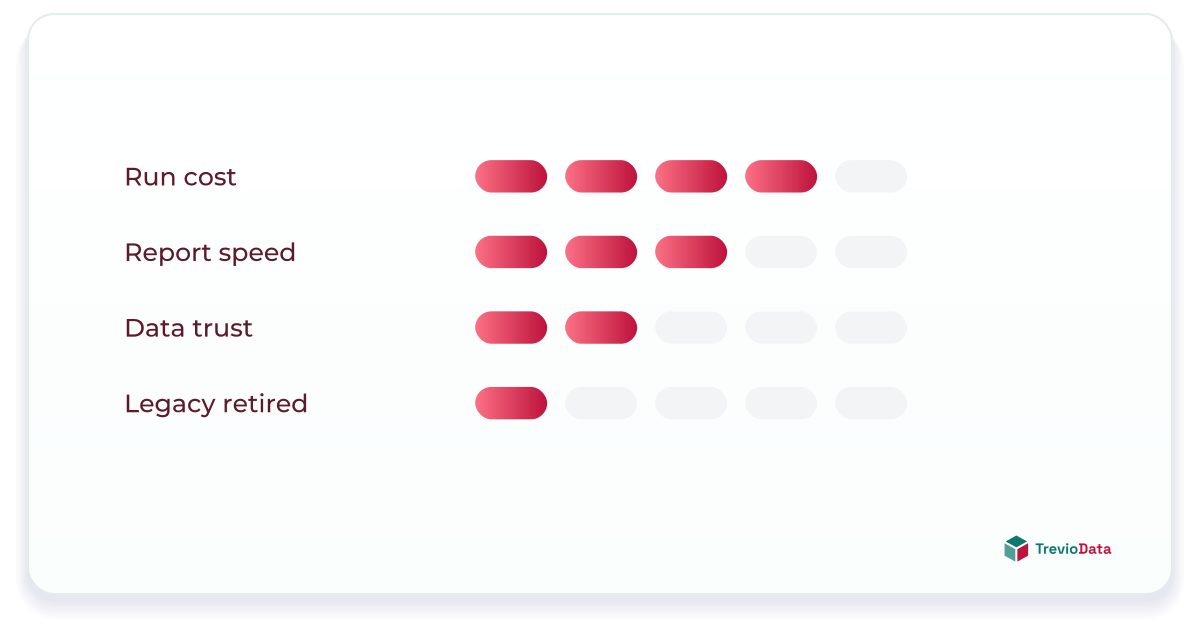
Pick five measures and report them monthly against the baseline from move one: yearly run cost, report refresh time, failed jobs per month, time to deliver a new data request and number of legacy systems still live. Add one story a month, such as a report that used to take a day and now takes minutes.
Honest reporting includes setbacks. A stage that slipped two weeks because of a missing business rule belongs in the report with the fix. Sponsors forgive delays and punish surprises. Real programs show this pattern, as the data modernization challenges I list below tend to appear in the second or third stage and not the first.
Where Strategies Quietly Fail
Three failures repeat. The first is a strategy that is really a platform decision: the document is full of product names and has no verdicts. The second is a strategy without an owner on the business side, so priorities shift whenever IT and finance disagree. The third is a strategy with no end date for the legacy system, which means the old stack lives on and the bill doubles.
Guard against all three. Write verdicts before products, name a sponsor who signs the priorities and set a shutdown date for each legacy system, even if you move it later. A date you can move is more useful than no date. Teams that skip this step often find themselves paying for both stacks long after the project team has been disbanded.
Another quiet failure is skipping the data quality work. Moving dirty data to a new platform gives you dirty data that is faster to query. Set a small set of quality checks for each migrated workload and treat failures as blockers for cutover. The habits in my list of data modernization best practices cover this in more detail.
How to Choose Your First Priority
If you can only fund one stage this year, pick it with four questions:
- Which system costs the most to keep alive per year?
- Which one carries a real support or security deadline?
- Which one can move without touching the finance close?
- Which one has a business owner who will test and sign off?
The system that answers yes to the last three questions and scores high on the first is your stage one. If two compete, pick the one with the deadline. Then write the exit criteria, name the owner and book the first parallel run. A short call can help you pressure-test the choice before you commit budget.
Questions About Your Data Modernization Strategy
What Is a Data Modernization Strategy?
It is a short, written set of choices about why you are modernizing, which systems you will touch first, what the target setup looks like and how you will measure success. It is not a platform shopping list. A good strategy fits on a few pages and lets a new team member see in ten minutes what is moving, what is staying and why.
How Is a Strategy Different from a Roadmap?
The strategy explains the priorities and the reasoning. The roadmap puts the chosen work in time order with owners and dates. You write the strategy first, because a roadmap built on unclear priorities simply schedules the wrong work faster.
Should I Move Everything to the Cloud?
No. Some workloads gain a lot from elastic cloud platforms, some run well and cheaply where they are, and some should be retired. Sort each system into keep, move, rebuild or retire and compare the cost of each path before you commit.
How Long Should a Modernization Strategy Take to Write?
Two to six weeks is typical for a mid-sized company. Most of that time goes into the inventory and into getting business owners to agree on priorities. A strategy that takes longer than a quarter usually means the scope is too wide.
Who Is Accountable for the Strategy?
A business sponsor who feels the pain should own it, with a technical lead who runs the details. If only IT owns it, the strategy tends to optimize for architecture. If only the business owns it, it tends to skip the unglamorous migration work.
How Do I Justify the Budget?
Add up what the old stack costs today: licenses, hosting, support contracts, failed-job fixes and the time people spend on workarounds. Then show the cost of the first stage and the savings it frees up. A first stage that pays for part of the second is the strongest argument you can make.
Can I Modernize and Keep the Business Running?
Yes, and that is the normal case. You run old and new side by side, compare results and cut over one workload at a time. Strategies that require a long freeze on changes usually fail, because the business does not stop needing data.
Sources
- Armbrust et al.: Lakehouse, A New Generation of Open Platforms (CIDR 2021)
- Martin Fowler: Strangler Fig Application
Note: This article is general information, not legal, financial or tax advice. Figures and examples are estimates based on typical projects, so check current details with your providers and advisers before you decide.
Was this article helpful?
Thank you for letting us know.
Camille leads the Trevio editorial team and works with our consultants to turn real client projects into practical guides on data strategy, engineering and governance. Before joining Trevio, she spent 11 years in data engineering and analytics roles. She has since edited more than 300 articles on data management and reviewed pipelines and platforms from over 100 client projects. She is based in Denver, Colorado.