Key Takeaways
- Regulatory reporting, personal data discovery and access management usually return the most.
- Each use case needs a named owner and a baseline you can measure.
- Start with one or two use cases and show a result within 90 days.
- AI data approval is a fast-growing use case, since many organizations lack AI governance policies.
Data governance earns its budget when it solves a specific problem. In this guide I rank 11 use cases by the return I typically see, from regulatory reporting at the top to data products near the bottom. If you want help picking yours, my data governance consulting starts with the same ranking exercise.
The order below reflects my client work and general industry patterns, and your own ranking may differ. Each use case lists the problem, the steps to put it in place and the tools that help.
11 Data Governance Use Cases, Ranked by Return
The ranking runs from the highest typical return to the lowest. Industries in the table show where each one appears most often.
| Use case | Typical industries | Typical return |
|---|---|---|
| 1. Regulatory and Audit Reporting | Finance, healthcare, insurance | Very high |
| 2. Personal Data Discovery and Privacy Requests | Retail, healthcare, SaaS | Very high |
| 3. Faster, Safer Data Access Requests | Every industry | High |
| 4. One Definition for Every Key Metric | Every industry | High |
| 5. Approving Data for AI and Machine Learning | SaaS, finance, retail | High |
| 6. A Trusted Customer View Across Systems | Retail, SaaS, banking | High |
| 7. Owning Data Quality Incidents | Every industry | Medium to high |
| 8. Safe Data Sharing With Partners and Vendors | Healthcare, logistics, retail | Medium to high |
| 9. Cleaning Up Before a Cloud Migration | Every industry | Medium |
| 10. Combining Data After a Merger | Finance, manufacturing, retail | Medium |
| 11. Treating Data as a Product | SaaS, retail, banking | Medium |
Regulatory and Audit Reporting
If you report to a regulator or face regular audits, this use case usually pays back first. Governance gives you a documented answer to three questions: where does this number come from, who approved it and who can see the underlying data. In the audit preparations I have seen, teams without lineage and ownership spend weeks rebuilding evidence that a governed catalog produces in an afternoon.
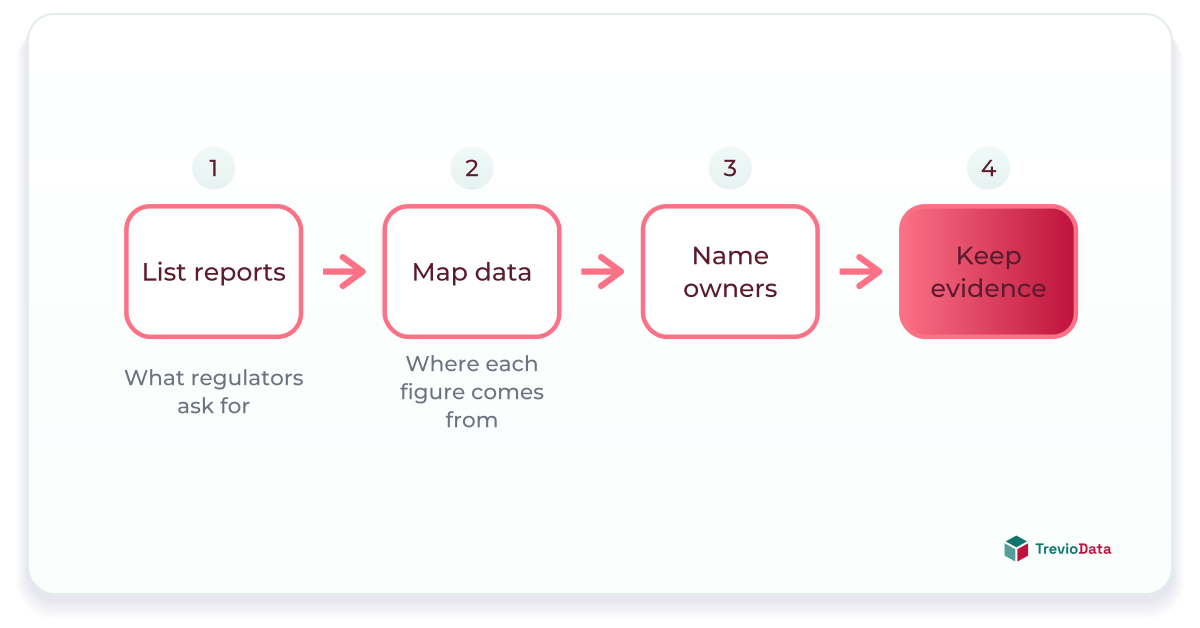
The work is mostly organizational. You list the reports regulators ask for, trace each to its source tables and give every table an owner. Check the current requirements that apply to you with your legal advisor, and map them to controls you can show.
Steps to Put This Use Case in Place
- List the reports and submissions you must produce.
- Trace each one back to its source systems.
- Name an owner for every source and every calculation.
- Record the approval steps in your catalog.
- Run a mock audit and time how long answers take.
Tools That Support It
Catalog and lineage tools such as Collibra, Informatica and Microsoft Purview suit this well. Pick one that reads your warehouse and BI tools natively.
Personal Data Discovery and Privacy Requests
Privacy requests are hard when you do not know where personal data lives. Governance starts with classification: scanning your systems, tagging personal fields and recording who may use them. Once tags exist, a request to find or delete a person's data becomes a query instead of a company-wide hunt.
Teams often underestimate how many copies of the same customer record exist in exports, test databases and analytics tables. Plan to review a sample of tagged columns by hand, since automated scans miss free-text fields. Your privacy counsel should decide which data types count as personal and how long you keep them.
Steps to Put This Use Case in Place
- Agree on the list of personal data types.
- Connect your main systems to a scanning tool.
- Review tagged columns and fix false hits.
- Assign an owner to every dataset with personal data.
- Write a short runbook for handling a request.
Tools That Support It
Purview, Atlan, Ataccama and Collibra offer automated classification. For an open-source start, OpenMetadata supports tags and glossary terms.
Faster, Safer Data Access Requests
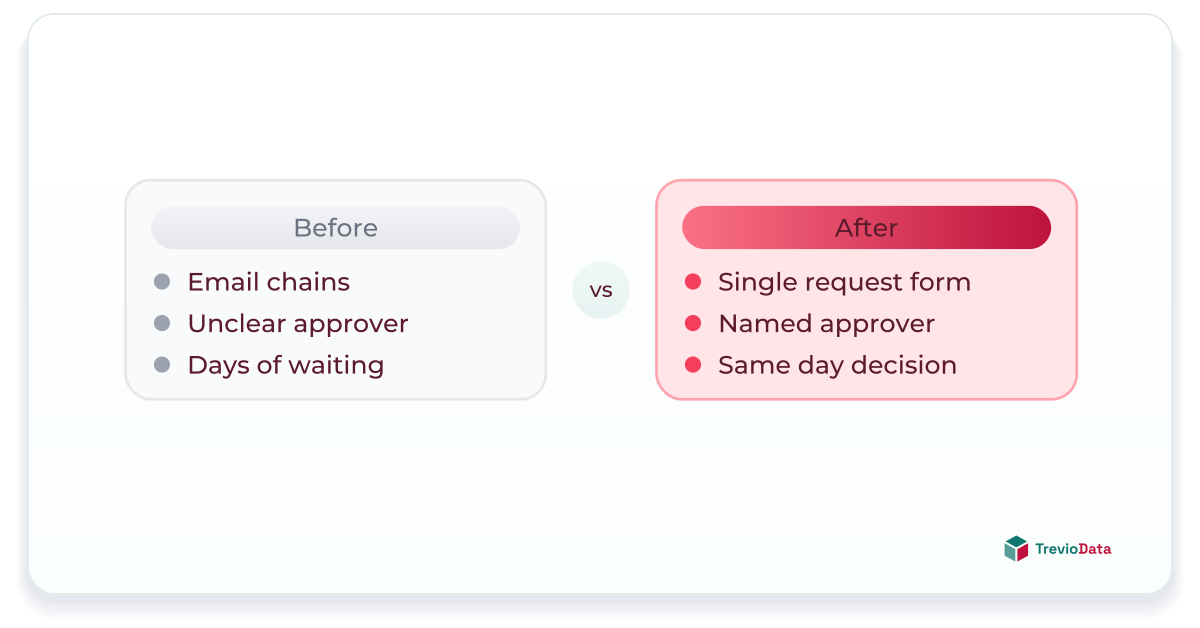
Analysts wait days for access because nobody is sure who may approve a request. A governance model answers that: each dataset has an owner, a sensitivity label and a default rule for who can see it. Low-risk data gets pre-approved access, and sensitive data goes to a named approver with a clear deadline.
I have watched teams cut approval time from several days to a few hours by publishing a one-page access matrix. Enforcement matters too. Rules written in a document drift, so connect them to the platform that controls permissions.
Steps to Put This Use Case in Place
- Label each dataset low, medium or high sensitivity.
- Define who can see each level by default.
- Name an approver for each high-sensitivity dataset.
- Set a response target, such as one business day.
- Review access every quarter and remove what is unused.
Tools That Support It
Unity Catalog, Purview and Dataplex enforce access near the data. A catalog such as Atlan or Alation adds the request workflow and context.
One Definition for Every Key Metric
Two teams report two different revenue numbers, and the meeting becomes an argument. Governance fixes this by agreeing on one definition per metric, writing it down and naming who may change it. The saving is time: leaders stop asking which number is right and start deciding what to do.
Start small, with the five metrics your leaders discuss most. Put the definition, the formula, the source and the owner in a business glossary, and link every dashboard that uses it. Expect pushback when a team loses its favorite version, so involve them in the wording.
Steps to Put This Use Case in Place
- Pick the five most disputed metrics.
- Run one workshop per metric with both teams.
- Write the definition, formula and source.
- Publish it in a glossary and link it from dashboards.
- Retire the old versions and tell everyone.
Tools That Support It
A business glossary in Collibra, Atlan, Alation or OpenMetadata works. A shared page with an owner is enough to begin.
Approving Data for AI and Machine Learning
AI projects raise new questions about which data a model may use. Governance gives you an approval path: the data owner confirms the source is accurate, permitted for this use and documented before it goes into training or retrieval. IBM's 2025 breach report found that 63% of organizations studied had no AI governance policies, and that a high level of shadow AI added $670,000 to the average breach cost.
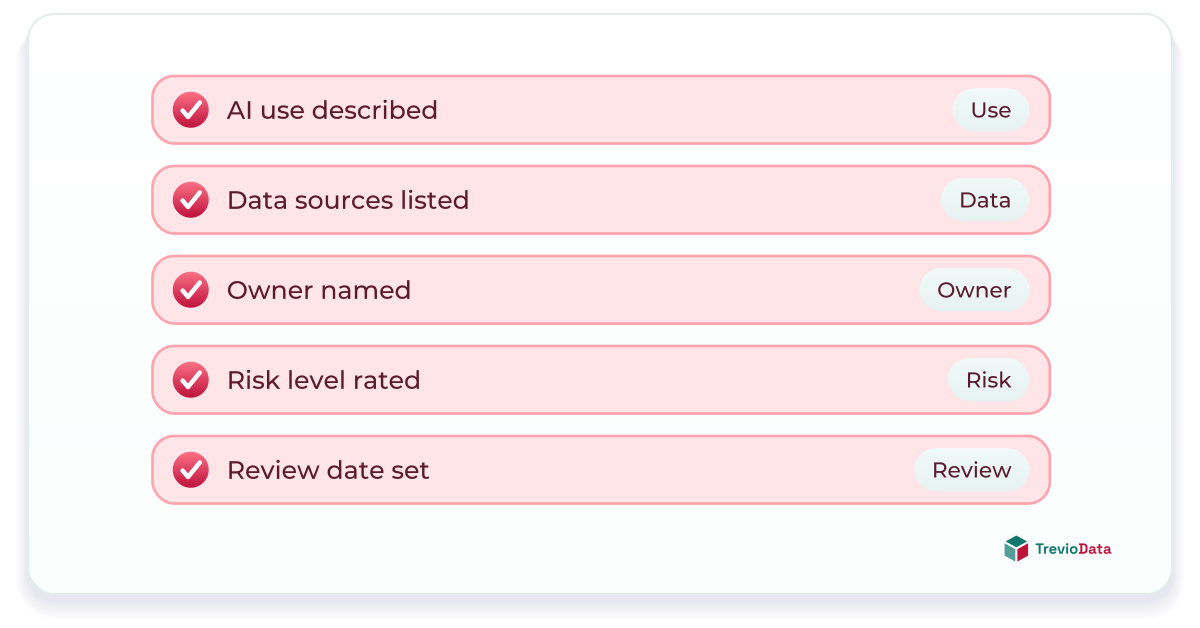
A lightweight register is enough to start. List each AI use, the data it touches, the owner and the review date. Then keep it current, because projects change quickly. If you run models on Databricks or Google Cloud, enforce the approved list in the platform.
Steps to Put This Use Case in Place
- Create a register of AI uses and the data behind them.
- Require owner sign-off before new data is used.
- Check each source for sensitivity and permitted use.
- Record lineage from source to model or index.
- Review the register each quarter.
Tools That Support It
Unity Catalog covers models and tables in Databricks. Purview and Collibra can hold the register and approvals, and a spreadsheet works for a first version.
A Trusted Customer View Across Systems
Customer data lives in five tools with five spellings, and sales, support and marketing each trust a different list. Governance sets the rules before you merge anything: which system is the source of truth for each field, how duplicates are matched and who resolves conflicts.
This use case links governance with master data work. In my experience, the matching rules matter less than the ownership model, since someone must decide what happens when two records disagree. Write that decision down before the first merge.
Steps to Put This Use Case in Place
- Pick the system of record for each customer field.
- Define matching rules and a confidence threshold.
- Name a steward who resolves conflicts.
- Merge a pilot segment and review the result.
- Add monitoring for new duplicates.
Tools That Support It
A master data tool such as Informatica or Ataccama fits here. Smaller teams can start with matching rules in their warehouse and a steward review list.
Owning Data Quality Incidents
Bad data is found by the person who acts on it, usually too late. Governance gives each critical dataset an owner who receives quality alerts and a clear path to fix the source. The saving comes from catching problems at the pipeline rather than in the board deck.
Start with the datasets behind your most important reports, and write three to five tests for each: completeness, uniqueness, freshness and valid ranges. Route alerts to an owner, not a shared inbox, and track how long each incident stays open.
Steps to Put This Use Case in Place
- List your ten most important datasets.
- Write three to five quality tests for each.
- Route failures to the named owner.
- Track time to resolve each incident.
- Publish a monthly quality score by domain.
Tools That Support It
Ataccama, Informatica and OpenMetadata include quality tests, and many teams add open-source checks inside their pipelines.
Safe Data Sharing With Partners and Vendors
Sharing data with outside parties needs rules about what is shared, why and for how long. Governance gives you a simple intake: the business owner states the purpose, a steward checks sensitivity and the access is time-boxed and logged.
Do not let sharing grow through one-off exports. A governed share has a named owner, a documented purpose and an expiry date. Contracts and legal terms belong to your legal team, and governance supplies the facts they need.
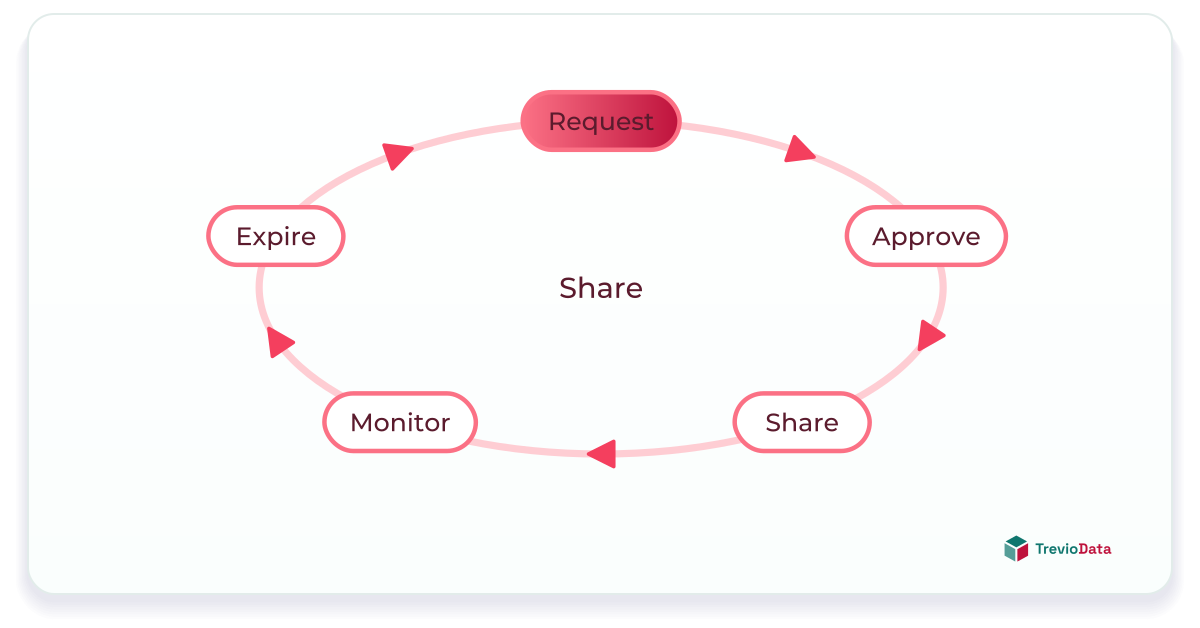
Steps to Put This Use Case in Place
- Create a standard data sharing request form.
- Check the data's sensitivity label before approval.
- Share through a controlled channel, not email exports.
- Set an expiry date and log the access.
- Review active shares every quarter.
Tools That Support It
Snowflake and Databricks both offer controlled sharing features, and a catalog records who approved each share.
Cleaning Up Before a Cloud Migration
A migration is the cheapest moment to decide what data you still need. Governance supplies the inventory: what exists, who owns it, how sensitive it is and when it was last used. Data nobody owns or touches can be archived or removed instead of moved.
I have seen migrations shrink noticeably once owners were asked to confirm what they need. The saving shows up in storage, effort and risk. If you are planning a move, my work on data management consulting covers the platform side.
Steps to Put This Use Case in Place
- Scan and inventory your sources.
- Show owners which datasets are unused.
- Archive or delete what nobody claims.
- Classify what remains by sensitivity.
- Migrate by domain, with owner sign-off.
Tools That Support It
A catalog with usage metadata such as Alation, Atlan or Dataplex shows what is queried. Lineage helps you see what depends on each dataset.
Combining Data After a Merger
After an acquisition you inherit new systems, new definitions and new owners. Governance gives you a method for deciding which definitions win, who owns merged domains and how to reconcile reports. Without it, finance runs two versions of the truth for years.
Begin with the data both companies report to leaders and regulators, and map definitions side by side. Expect the first workshops to be uncomfortable, since each side believes its way is correct. A neutral facilitator and written decisions keep the process moving.
Steps to Put This Use Case in Place
- Map key definitions from both companies side by side.
- Decide a winner or a new definition for each.
- Name owners for merged domains.
- Update reports and retire duplicates.
- Track unresolved differences until they close.
Tools That Support It
A shared glossary and catalog hold the decisions, and a spreadsheet works for the first mapping.
Treating Data as a Product
Data products are datasets published with an owner, a description, a quality promise and support. Governance sets the standard for what counts as a product and who may publish one. Consumers can then trust and reuse data instead of building their own copy.
The risk is publishing too much. Start with three products that many teams ask for, and measure how often they are used. Retire products that nobody uses so the catalog stays trusted.
Steps to Put This Use Case in Place
- Choose three datasets many teams request.
- Assign a product owner to each.
- Publish a description, a quality promise and a contact.
- Measure usage monthly.
- Retire products nobody uses.
Tools That Support It
Purview's Unified Catalog models data products directly, and Atlan and Collibra support similar concepts. A well-kept catalog page works as a first version.
How I Score Use Cases for Return
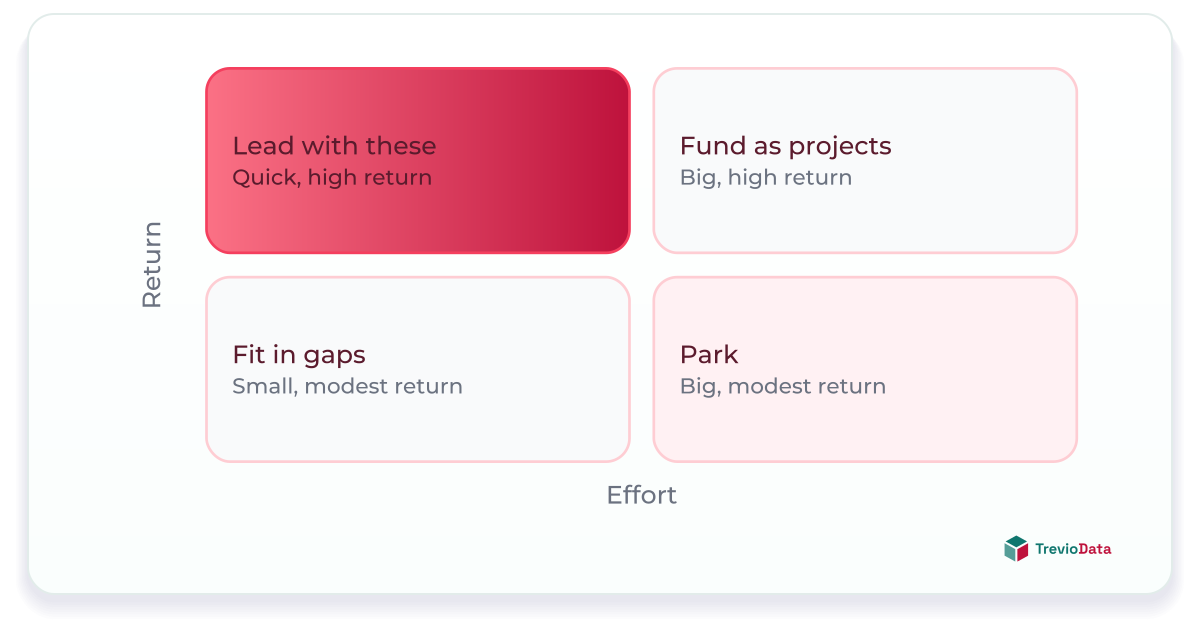
I rate each use case on three things: the cost of the problem today, how many people it touches and how much effort a first version takes. High value with low effort goes first. The comparison below shows how I weigh the factors.
| Factor | Question to ask | Signal of a good first use case |
|---|---|---|
| Cost of the problem | What does this cost in hours, errors or risk today? | A number you can write down |
| Reach | How many teams feel the pain? | Three or more teams |
| Effort | Can a first version run in 90 days? | One domain, one owner |
| Sponsor | Does a leader care about the result? | Named executive |
How to Choose Your First Use Case
Take your top three candidates and run them through the table above. In my experience, teams pick the use case they find most interesting, not the one with the clearest payoff. A short check keeps you honest:
- You can measure the baseline today.
- A single owner can make decisions.
- The data lives in two or three systems, not twenty.
- You can show a result to leaders within 90 days.
Once you have chosen, my data governance strategy guide helps you turn it into a plan, and the data governance roadmap shows what the first year can look like. For ideas from real companies, see these data governance examples. If tools are your next question, my ranking of data governance tools weighs up the main options.
Questions About Data Governance Use Cases
What Are the Most Valuable Data Governance Use Cases?
Regulatory reporting, personal data discovery and access management usually return the most, because they replace slow manual work and reduce risk. Metric definitions and AI data approval follow close behind. Your own ranking depends on your industry and your current pain.
How Do I Choose My First Use Case?
Pick the one where the pain is loudest and the owner is easiest to name. Score each candidate for business value, effort and risk, then choose the highest value for the lowest effort. A first result inside 90 days earns support for the rest.
Can I Run Several Use Cases at Once?
You can, but I suggest two at most for a small team. Each use case needs owners and review time, and spreading too thin means none finish. Complete one, measure it and then start the next.
How Do I Measure the Return of a Governance Use Case?
Record a baseline before you start: hours spent, days to approve access, number of disputed reports or time to answer an audit question. Compare the same numbers after 90 days. Put hours in money using your loaded staff cost.
Do These Use Cases Need Special Software?
Not at the start. Owners, definitions and a review rhythm come first, and many teams begin in shared documents. A catalog or governance platform becomes worth buying when the process works and needs to scale.
How Does Governance Help with AI Projects?
It tells you which data a model may use, who approved it and where it came from. Without that, AI projects run on data nobody has reviewed. A simple register of AI uses and their data is a good first step.
Which Use Cases Suit a Small Company?
Metric definitions, access requests and quality ownership suit small companies best, since they need little tooling. Privacy discovery and regulatory reporting matter once you handle sensitive data or face audits.
Sources
Note: This article is general information, not legal, financial or tax advice. Figures and examples are estimates based on typical projects, so check current details with your providers and advisers before you decide.
Was this article helpful?
Thank you for letting us know.
Camille leads the Trevio editorial team and works with our consultants to turn real client projects into practical guides on data strategy, engineering and governance. Before joining Trevio, she spent 11 years in data engineering and analytics roles. She has since edited more than 300 articles on data management and reviewed pipelines and platforms from over 100 client projects. She is based in Denver, Colorado.