Key Takeaways
- Microsoft Purview, Atlan and Collibra cover most needs, from Microsoft shops to regulated enterprises.
- Open-source options such as OpenMetadata and DataHub are free to license but cost engineering time.
- Most enterprise vendors do not publish prices, so compare written quotes for the same scope.
- Name owners and write rules first, then buy a tool to enforce them.
The Best Data Governance Tools at a Glance
| Tool | Type | Best for | Cost to start |
|---|---|---|---|
| 1. Microsoft Purview | Governance suite | Microsoft and Azure shops | Free to explore |
| 2. Atlan | Active metadata platform | Modern cloud data stacks | Demo-led |
| 3. Collibra | Enterprise governance | Regulated enterprises | Not free |
| 4. Alation | Data catalog | Analyst-led catalog adoption | Not free |
| 5. Informatica Cloud Data Governance and Catalog | Data management cloud | Large, integrated programs | Trial on request |
| 6. Ataccama ONE | Quality and governance | Quality-led governance | Not free |
| 7. Databricks Unity Catalog | Lakehouse governance | Databricks lakehouses | Included with Databricks |
| 8. OpenMetadata | Open-source catalog | Technical teams, free start | Free (open source) |
| 9. DataHub | Open-source catalog | Engineering-led teams | Free core (open source) |
| 10. Google Cloud Dataplex Universal Catalog | Cloud-native catalog | BigQuery and Google Cloud users | Free tier available |
The 10 Best Data Governance Tools, Ranked
I start with the tools that suit the widest range of teams and move toward specialist and cloud-native options, so you can stop reading once you find your fit. A tool only enforces rules you already have, and my data governance consulting work usually begins with owners and policies before software. Ratings come from G2 and Capterra at the time of writing.
Microsoft Purview

The Natural First Look If Your Data Already Lives in Azure, Fabric or Microsoft 365
Microsoft Purview combines a data catalog, lineage, classification and policy controls, with a Unified Catalog for business-facing governance.
If most of your data sits in Azure, Microsoft Fabric, SQL Server or Power BI, I would test Purview before anything else. Scans pick up sources with little setup, labels flow through to Microsoft 365, and the Unified Catalog lets your data owners define governance domains, data products and critical data elements in one place.
The trade-off is that Purview is a family of products, and the packaging can confuse buyers. In my client work, teams get the best results when they name one owner for the setup and decide early which parts they need. Outside the Microsoft stack, coverage of other sources is improving but needs more testing.
Pros of Microsoft Purview
- Strong fit with Azure, Fabric, Power BI and Microsoft 365 labels
- Pay-as-you-go billing means you can start small
- Unified Catalog gives business owners a clear place to work
Cons of Microsoft Purview
- Product packaging is confusing, so plan time to scope it
- Non-Microsoft sources need more testing than native ones
Microsoft Purview Pricing
Purview bills by usage. The Unified Catalog is charged per governed data asset per day, and the Data Map is charged per capacity unit per hour, with Basic, Standard and Advanced processing tiers for enterprise data management. Microsoft shows the current rates in the Azure pricing calculator, so I recommend running your own asset counts through it.
Microsoft Purview Reviews
- G2: 4.7/5 average (from 18 reviews)
- Capterra: 4.5/5 average (from 2 reviews)
Atlan
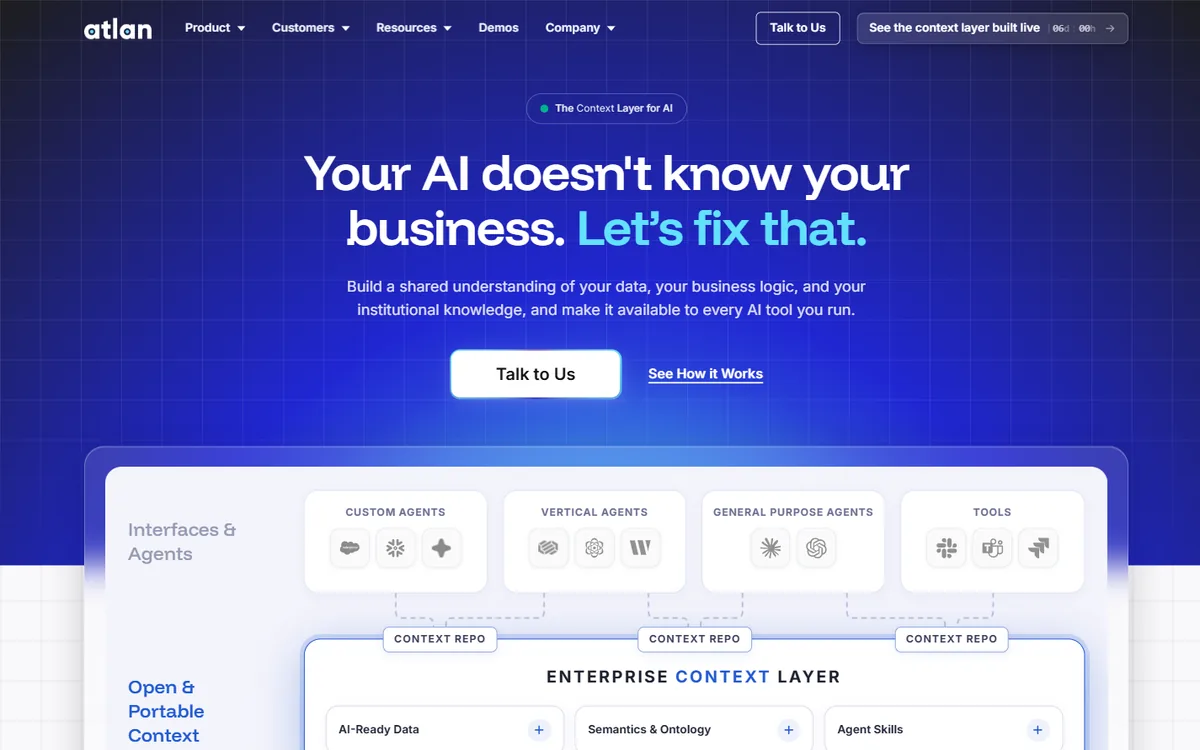
The Most Pleasant Catalog for Analysts and Engineers on a Modern Cloud Stack
Atlan is a collaborative data catalog and governance platform built around active metadata, lineage and automation.
Atlan is the tool I see data teams actually enjoy using, which matters more than any feature list. Search feels like a consumer product, lineage is column-level for many sources, and connectors for Snowflake, Databricks, BigQuery, dbt and Looker are mature.
It is a catalog first, so formal governance workflows such as policy approval are lighter than in Collibra. I recommend it when your analysts and engineers drive adoption and your governance needs are practical rather than heavily regulated. Plan for sales-led pricing and a proper pilot before you commit.
Pros of Atlan
- Clean, fast interface that analysts adopt without a push
- Deep connectors for Snowflake, Databricks, dbt and BI tools
- Automation propagates tags and classifications across assets
Cons of Atlan
- Pricing is not published and depends on a sales conversation
- Formal policy workflows are lighter than in heavyweight suites
Atlan Pricing
Atlan does not publish prices. Its pricing page is a contact form, and quotes depend on your sources, users and add-ons. Expect to run a pilot and negotiate, and ask what is included in the base platform and what costs extra.
Atlan Reviews
- G2: 4.5/5 average (from 135 reviews)
Collibra
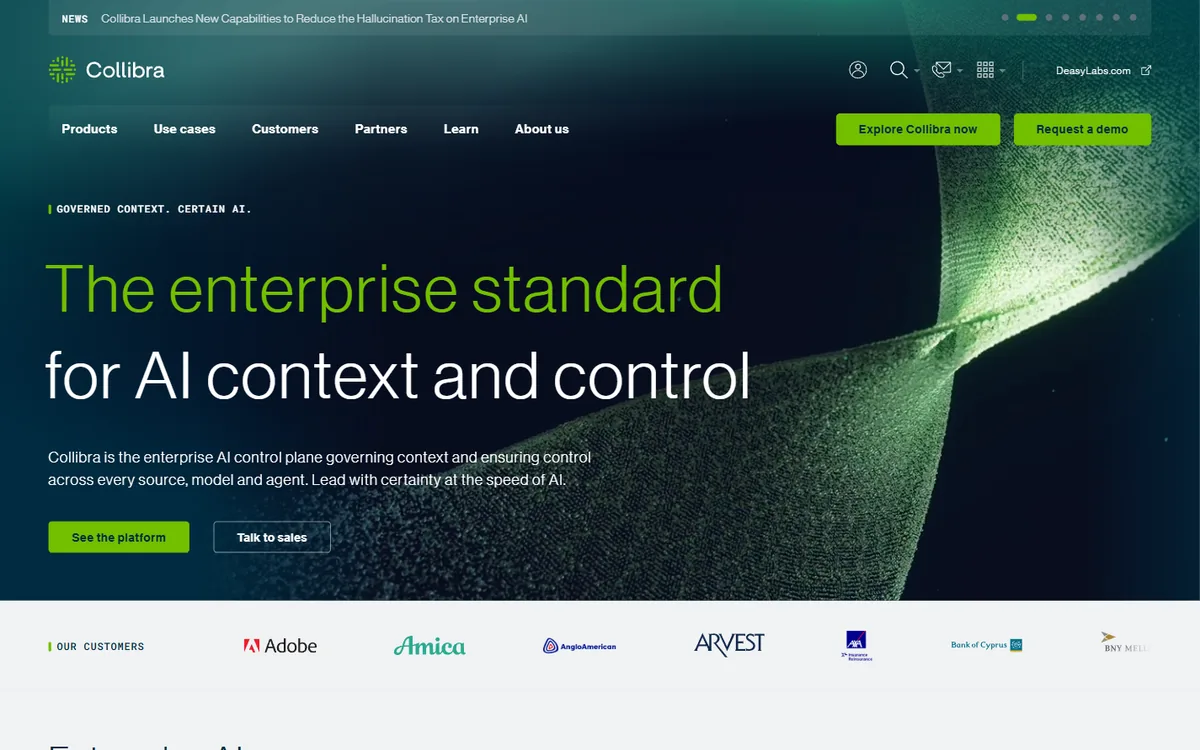
The Heavyweight Choice When You Need Formal Workflows, Policies and Audit Evidence
Collibra is an enterprise data intelligence platform covering catalog, governance workflows, lineage, privacy and quality.
Collibra is the platform I see most often in banks, insurers and large healthcare organizations, because its workflows model how regulated companies already decide things. You define domains, policies, rules and approvals, and the evidence trail is there when an auditor asks.
That power has a cost. G2 shows an average implementation time of around six months, and I have seen programs stall because nobody owned the operating model behind the tool. Buy it when you already have governance roles in place, or hire help to design them alongside the rollout.
Pros of Collibra
- Workflows and policy management suit regulated industries
- Mature business glossary and stewardship features
- Broad connector and partner ecosystem
Cons of Collibra
- Long implementations and a high price point
- Needs a defined operating model, or it becomes shelfware
Collibra Pricing
Collibra does not publish prices and Capterra lists its starting price as contact vendor, with no free trial. Quotes depend on modules, users and data volume, so request a written scope that separates catalog, governance and add-on modules.
Collibra Reviews
- G2: 4.2/5 average (from 104 reviews)
- Capterra: 4.6/5 average (from 9 reviews)
Alation

A Catalog Built Around Search, Trust and Giving Analysts Context
Alation is a data catalog with governance features, lineage and a strong focus on helping analysts find and trust data.
Alation helped define the data catalog category, and it still does well where the main problem is people not knowing which table to use. Behavioral signals show which assets colleagues query most, and curation workflows let stewards endorse or warn against datasets.
In my experience, it fits companies that want to build a culture of data use first and add policy controls second. If your governance mandate is mainly about regulatory evidence, compare it carefully with Collibra and Informatica.
Pros of Alation
- Strong search and usage-based recommendations
- Good curation and stewardship workflows
- Works across a wide range of databases and BI tools
Cons of Alation
- Pricing is opaque and aimed at mid-size to large budgets
- Policy workflows are less deep than in governance-first suites
Alation Pricing
Alation does not publish prices. One third-party tracker estimates plans from about $60,000 per year, which I treat as a rough guide only. Ask for a quote that lists connectors, users and any AI features separately.
Alation Reviews
- G2: 4.4/5 average (from 99 reviews)
Informatica Cloud Data Governance and Catalog
The Best Fit When Governance Must Sit Next to Integration, Quality and Master Data
Informatica's governance and catalog services run on its Intelligent Data Management Cloud, next to integration, quality and master data tools.
Informatica makes the most sense when you already use its integration or master data tools, because catalog, quality, lineage and governance share one metadata layer. You can trace a number from a report back through the mappings that built it, and attach quality rules to the same asset.
The price of that breadth is complexity. Licensing runs on processing units, and I have seen first-year budgets drift when teams switched on services without a consumption plan. Scope carefully, and start with one domain.
Pros of Informatica Cloud Data Governance and Catalog
- Governance, quality, integration and master data on one platform
- Strong lineage across Informatica pipelines
- Proven at large enterprise scale
Cons of Informatica Cloud Data Governance and Catalog
- Consumption-based licensing is hard to forecast
- Heavy for small teams and simple stacks
Informatica Cloud Data Governance and Catalog Pricing
Informatica prices through Informatica Processing Units that cover its cloud services, and it does not publish rates. Its pricing page directs you to request a quote or a sample price range for your use case. Ask for a consumption forecast before you sign.
Informatica Cloud Data Governance and Catalog Reviews
- G2: 4.1/5 average (from 151 reviews)
Ataccama ONE
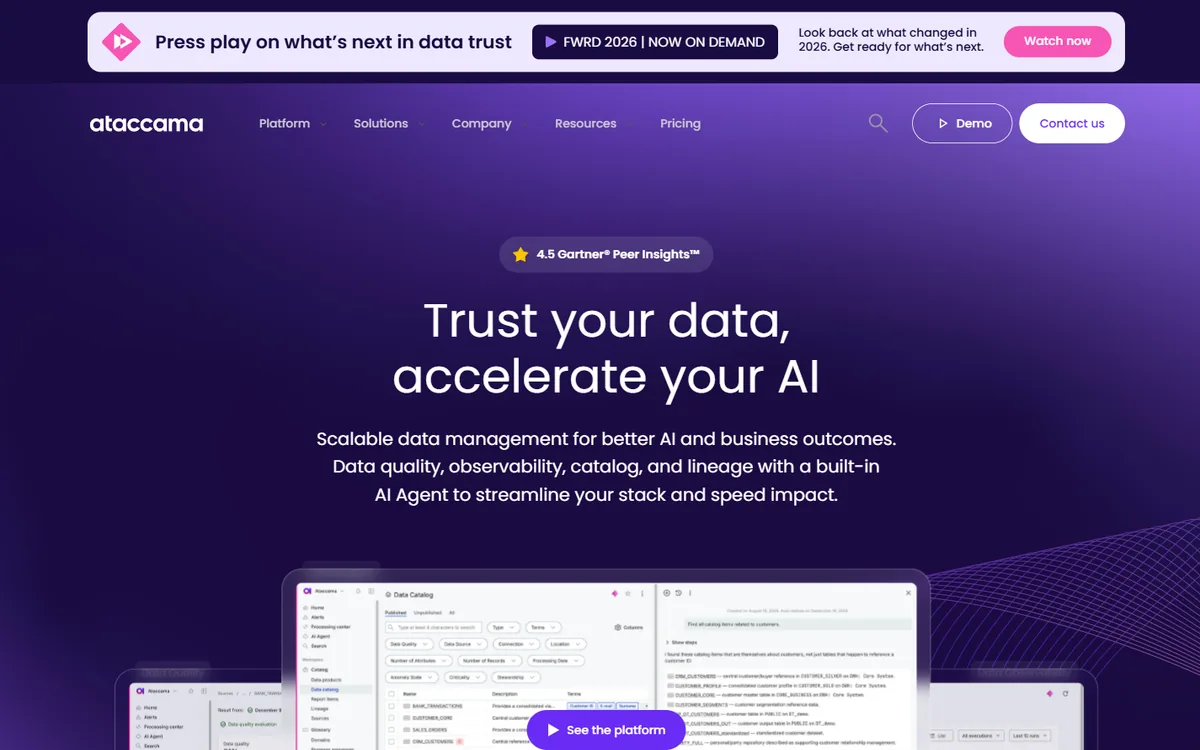
The Smart Pick If Data Quality Is Your Biggest Governance Problem
Ataccama ONE puts data quality, observability, catalog and master data in one platform, with AI help for rules and classification.
Ataccama starts from quality. You profile data, write or generate rules, monitor them and link failures back to the catalog and the people who own the data. For teams whose governance case is bad records rather than missing policies, that order of work feels natural.
The platform is broad, so scoping matters. I suggest starting with quality rules for one domain and expanding into catalog and stewardship once owners trust the scores.
Pros of Ataccama ONE
- Quality monitoring and catalog share one workspace
- AI helps suggest rules and classify data
- Soft pricing limits do not stop operations when you exceed them
Cons of Ataccama ONE
- Smaller community and fewer public reviews than the big names
- Broad scope needs careful phasing
Ataccama ONE Pricing
Ataccama does not publish prices. Its model depends on named users, data objects under management and active data quality configurations, and consumer users with view access are unlimited at every tier. Limits are described as soft, so brief overages do not interrupt operations.
Ataccama ONE Reviews
- G2: 4.2/5 average (from 12 reviews)
Databricks Unity Catalog
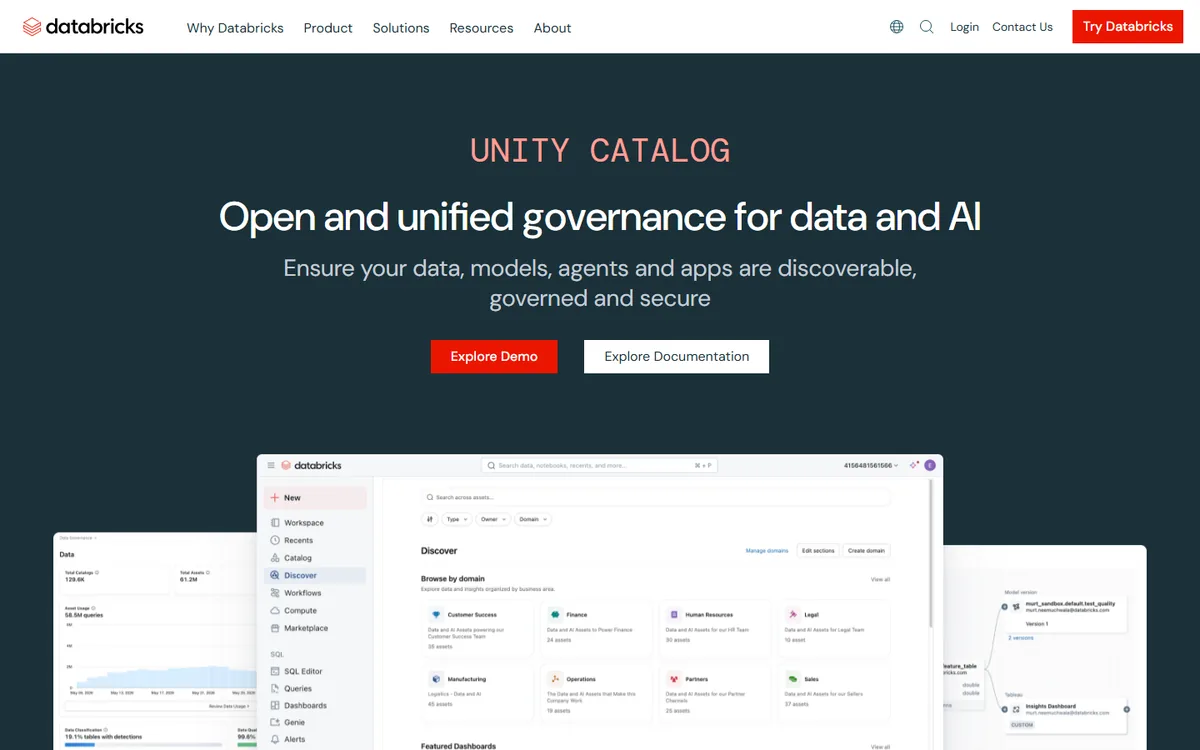
The Obvious Starting Point If Your Data and AI Work Already Runs on Databricks
Unity Catalog governs tables, files, models and notebooks on Databricks, with access control, lineage and auditing built in.
If your data lives in Databricks, Unity Catalog is where I would begin, since it sits inside the platform and enforces access where the data is queried. You get fine-grained permissions, automatic lineage and audit logs for tables, volumes and AI models without another system to run.
It governs what is inside Databricks. For a business glossary, stewardship workflows and coverage of sources outside the lakehouse, many teams pair it with a catalog such as Atlan or Collibra. Treat it as your enforcement layer rather than your whole program.
Pros of Databricks Unity Catalog
- Access control, lineage and audit sit inside the platform
- No separate license, since it comes with Databricks
- Open source project under the Linux Foundation
Cons of Databricks Unity Catalog
- Governs the Databricks estate, not your whole company
- Business glossary and stewardship features are basic
Databricks Unity Catalog Pricing
Databricks says there is no separate license for Unity Catalog. It is included with Premium and Enterprise tiers, and you pay for the compute and storage you use. The rating shown below is for the Databricks platform as a whole, because Unity Catalog has no separate listing.
Databricks Unity Catalog Reviews
- G2: 4.6/5 average (from 1,405 reviews)
OpenMetadata
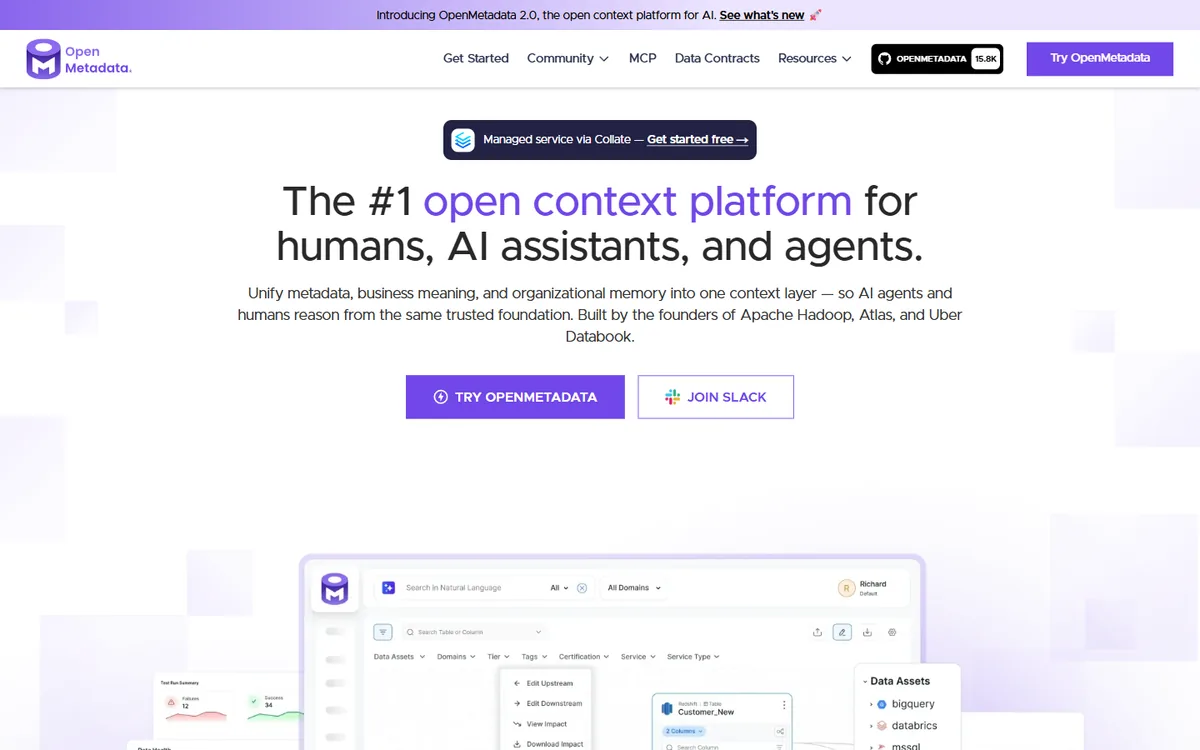
The Most Capable Free Option for Teams That Can Run Their Own Metadata Platform
OpenMetadata is an open-source metadata platform with catalog, lineage, quality tests and glossary, and Collate offers it as a managed service.
OpenMetadata surprised me with how complete a free tool can be. You get connectors for most warehouses and BI tools, column-level lineage, built-in data quality tests and a glossary with ownership, all under an Apache 2.0 core.
You need engineers to host, upgrade and secure it, or you can pay Collate to run it. I recommend it for technical teams with a clear owner and a tight budget, and for anyone who wants to prove the value of a catalog before spending serious money.
Pros of OpenMetadata
- Free, open-source core under Apache 2.0
- Lineage, quality tests and glossary in one tool
- Active community and fast release pace
Cons of OpenMetadata
- Self-hosting needs engineering time
- Fewer governance workflows than enterprise suites
OpenMetadata Pricing
The OpenMetadata core is free under Apache 2.0. Collate, its managed offering, lists a Free plan (5 users, 500 data assets, weekly refresh), a Premium plan (25 users, 5,000 assets) and an Enterprise plan, with no dollar prices published for the paid tiers.
OpenMetadata Reviews
- G2: 5.0/5 average (from 2 reviews)
DataHub
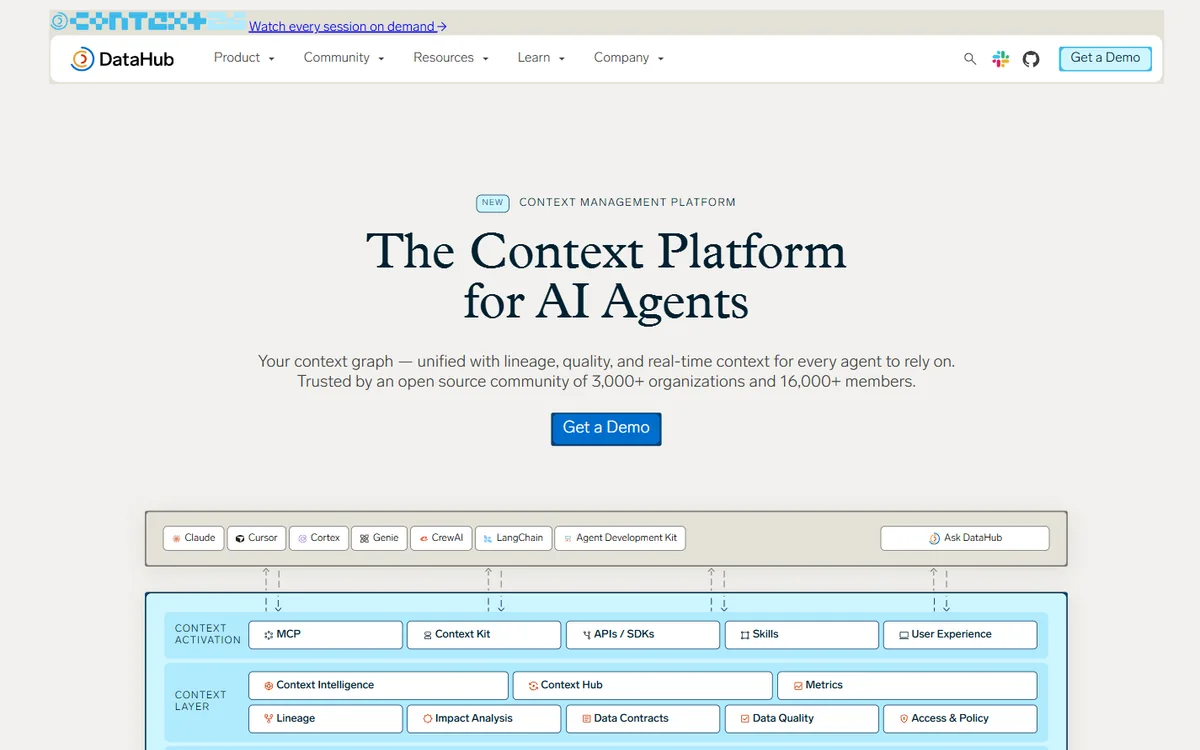
A Battle-Tested Open-Source Catalog With a Large Engineering Community
DataHub is an open-source metadata platform that started at LinkedIn, with a paid cloud edition for teams that do not want to host it.
DataHub is a strong choice when your engineers want an API-first metadata graph they can extend. Ingestion is flexible, lineage covers many tools, and the community is large enough that most connector questions already have an answer.
As with OpenMetadata, you either run it yourself or pay for the cloud edition. I have found that the people side matters as much as the install: without named owners and a review habit, any catalog fills with stale descriptions.
Pros of DataHub
- Flexible, API-first design for custom setups
- Large community and wide connector coverage
- Free to self-host
Cons of DataHub
- Self-hosting needs engineering time
- Business-user features lag behind commercial rivals
DataHub Pricing
DataHub Core is open source and free to self-host. DataHub Cloud is a paid, quote-based service, and I could not confirm published prices, so check the vendor for current plans.
DataHub Reviews
- G2: 4.4/5 average (from 8 reviews)
Google Cloud Dataplex Universal Catalog
The Low-Friction Option for Teams Whose Data Lives in BigQuery
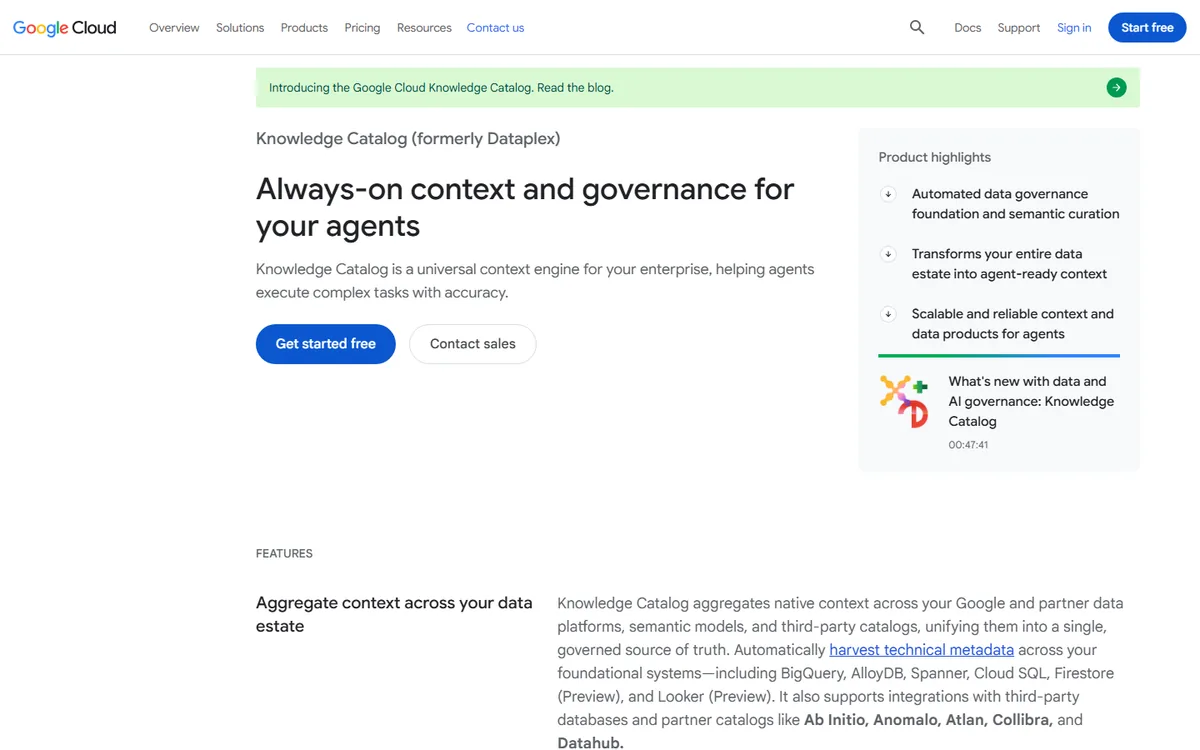
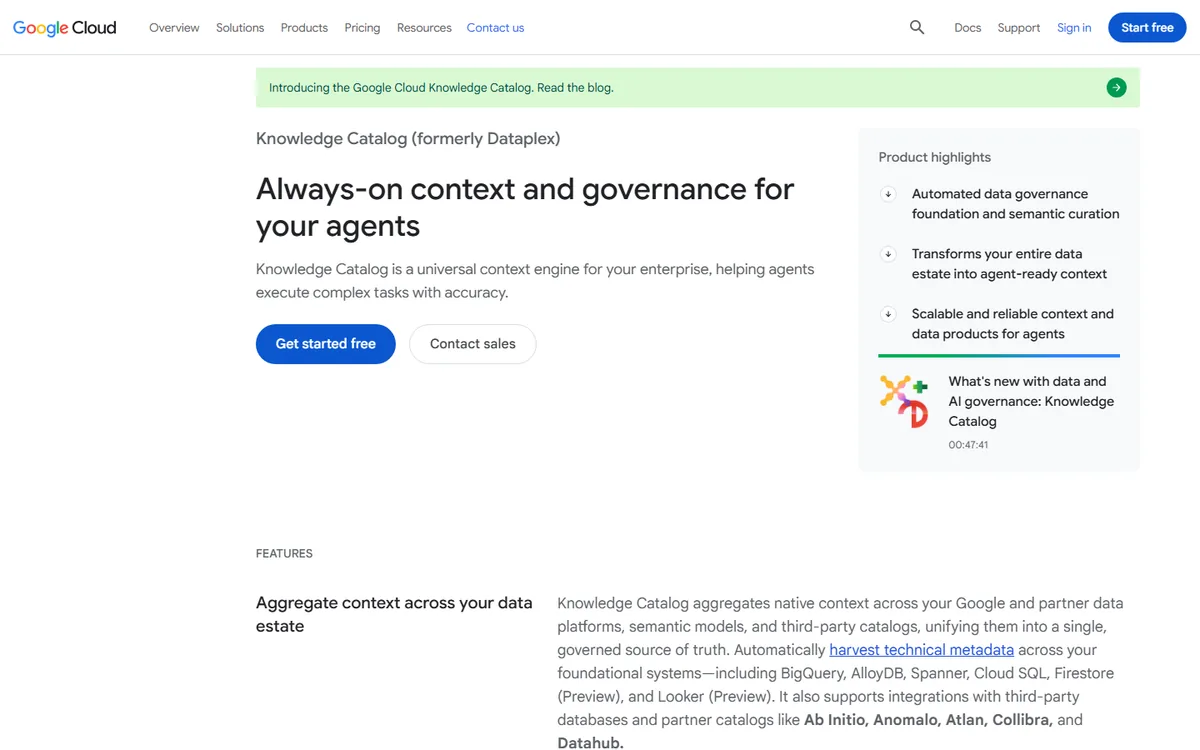
Google's catalog service (now branded Knowledge Catalog) handles metadata, lineage, quality scans and discovery across Google Cloud data.
If your warehouse is BigQuery, technical metadata arrives in the catalog automatically, and lineage and quality scans can be switched on per dataset. There is little to install, which makes it a quick way to get a baseline of what you have.
It is lighter on business-side governance, such as glossary workflows and stewardship, than dedicated platforms. I would use it as the technical layer for a Google Cloud estate and add a business catalog if your owners need one.
Pros of Google Cloud Dataplex Universal Catalog
- Automatic technical metadata for BigQuery and other Google services
- Pay-as-you-go, with a free tier for standard processing
- Lineage and data quality scans in the same service
Cons of Google Cloud Dataplex Universal Catalog
- Business glossary and stewardship are lighter than in dedicated suites
- Best value stays inside Google Cloud
Google Cloud Dataplex Universal Catalog Pricing
Pricing is pay-as-you-go. Standard processing is listed at $0.06 per DCU-hour and premium processing, which covers lineage, quality and profiling, at $0.089 per DCU-hour in us-central1. Metadata storage costs about $2 per GiB-month, and a free tier gives 100 standard DCU-hours per month. Prices vary by region.
Google Cloud Dataplex Universal Catalog Reviews
- No G2 or Capterra rating found for this product at the time of writing.
Estimate the Return on a Data Governance Tool
Before you pick a plan, check whether the numbers work for you. Enter the manual hours you spend on data requests, reconciliations and audit prep, and the monthly price of the tool you are considering, and you will see what it could return in a year.
Will the Tool Pay Off for You?
Move the sliders to match the work you want to automate and the plan you are considering.
How to Choose the Right Data Governance Tool
In my experience, fit with your operating model decides more than any feature list. Before you compare vendors, I suggest you answer four questions:
- Which domains will you govern first, and who owns each one?
- Which platforms hold the data, and does the tool connect to them natively?
- How formal must approvals and audit evidence be?
- Who will run the tool: business stewards, IT or a small engineering team?
If you work in a Microsoft or Google Cloud estate, start with Purview or Dataplex. If analysts drive adoption, shortlist Atlan and Alation, and if you face heavy oversight, look at Collibra and Informatica. Teams with strong engineers and tight budgets can prove the idea with OpenMetadata or DataHub. A written plan helps whichever you pick, and my data governance strategy guide shows how to set priorities before you buy. If you want a realistic timeline, my data governance roadmap lays out the milestones, and the data governance examples show what tools did for real teams. For ideas on where to apply a tool first, see these data governance use cases.
Questions About Choosing Data Governance Tools
What Is the Best Data Governance Tool for a Small Company?
For a small company, I usually start with the tools you already pay for, then add OpenMetadata or the free Collate plan if you need a catalog. A written list of owners and definitions in a shared document often does more than software at this stage. Once you have rules worth enforcing, a paid catalog such as Atlan becomes easier to justify.
What Is the Difference Between a Data Catalog and a Data Governance Tool?
A catalog helps people find and understand data. A governance tool adds the decisions around it: owners, policies, approval workflows and evidence. Many products now do both, but their strengths differ. Alation and Atlan lead with the catalog, while Collibra and Informatica lead with governance workflows.
Are There Free Data Governance Tools Worth Using?
Yes. OpenMetadata and DataHub are open source and free to self-host, Unity Catalog is included with Databricks, and Google Cloud offers a free tier for standard processing. Free tools cost engineering time instead of license fees, so count the hours it takes to host, upgrade and secure them.
How Much Do Data Governance Tools Cost?
Most enterprise vendors do not publish prices, and quotes depend on users, data assets and modules. Usage-based options such as Microsoft Purview and Google Cloud list their unit rates. I suggest asking every vendor for a written three-year cost for the same scope, so you can compare them fairly.
Do I Need a Tool Before I Start Data Governance?
No. Roles, definitions and a review rhythm come first. Teams that buy a platform before naming owners often end up with an empty catalog. Start with one domain, write down who owns it and which rules apply, and choose a tool when you have something to put into it.
Which Data Governance Tool Is Best for Regulated Industries?
Collibra and Informatica are the most common picks in regulated industries, because their workflows, policy management and audit trails fit formal oversight. Microsoft Purview is a strong option for Microsoft-heavy organizations. Always check the current regulatory requirements that apply to you with your legal advisor.
How Long Does It Take to Implement a Data Governance Tool?
It depends on scope. G2 shows an average implementation time of around six months for Collibra, while a catalog on a modern cloud stack can show first results in weeks. I recommend starting with one domain and a small set of sources, then expanding as owners adopt it.
Heads up: vendors change prices, plans and ratings often. Everything was checked at the last update date, but confirm on each vendor’s website first. This article is not legal or financial advice.
Was this article helpful?
Thank you for letting us know.
Camille leads the Trevio editorial team and works with our consultants to turn real client projects into practical guides on data strategy, engineering and governance. Before joining Trevio, she spent 11 years in data engineering and analytics roles. She has since edited more than 300 articles on data management and reviewed pipelines and platforms from over 100 client projects. She is based in Denver, Colorado.