Key Takeaways
- Informatica and SAP MDG fit large enterprises, while Profisee, Semarchy and Reltio suit teams that want a faster start.
- Stibo Systems and Pimcore are strongest when product data is the main problem.
- Almost no vendor publishes prices, so ask for written quotes that include implementation.
- Run a proof of concept on your own duplicate-heavy records before you sign.
The Best Master Data Management Software at a Glance
| Tool | Type | Best for |
|---|---|---|
| 1. Informatica MDM | Enterprise multi-domain MDM | Large enterprises with many domains and hybrid systems |
| 2. Reltio | Cloud-native MDM with graph relationships | Companies that need real-time customer and relationship data in the cloud |
| 3. Profisee | MDM focused on fast delivery | Microsoft-centric mid-sized and large companies |
| 4. Semarchy xDM | Multi-domain MDM and data-as-a-product | Teams that want a flexible, developer-friendly platform at a lower cost |
| 5. Stibo Systems | Product-centric MDM with PIM | Retailers, manufacturers and distributors with complex product data |
| 6. Ataccama ONE | Unified data quality, catalog and MDM | Teams that want data quality and MDM in a single product |
| 7. SAP Master Data Governance | ERP-embedded master data governance | Companies that run SAP S/4HANA or SAP ECC at the core |
| 8. Pimcore | Open-source MDM, PIM and DAM | Developer-led teams that want an open-source, customizable platform |
The 8 Best Master Data Management Tools, Ranked
I start with platforms that suit the widest range of companies and move toward specialist options. Before you shop, remember that tools only solve part of the problem. In the master data management consulting projects I review, ownership and matching rules decide the outcome more than the logo on the invoice. If you are still deciding how to approach the work, my master data management strategy guide comes first. Ratings come from G2 and were checked in November 2026. Where a vendor has few reviews, I say so.
Informatica MDM
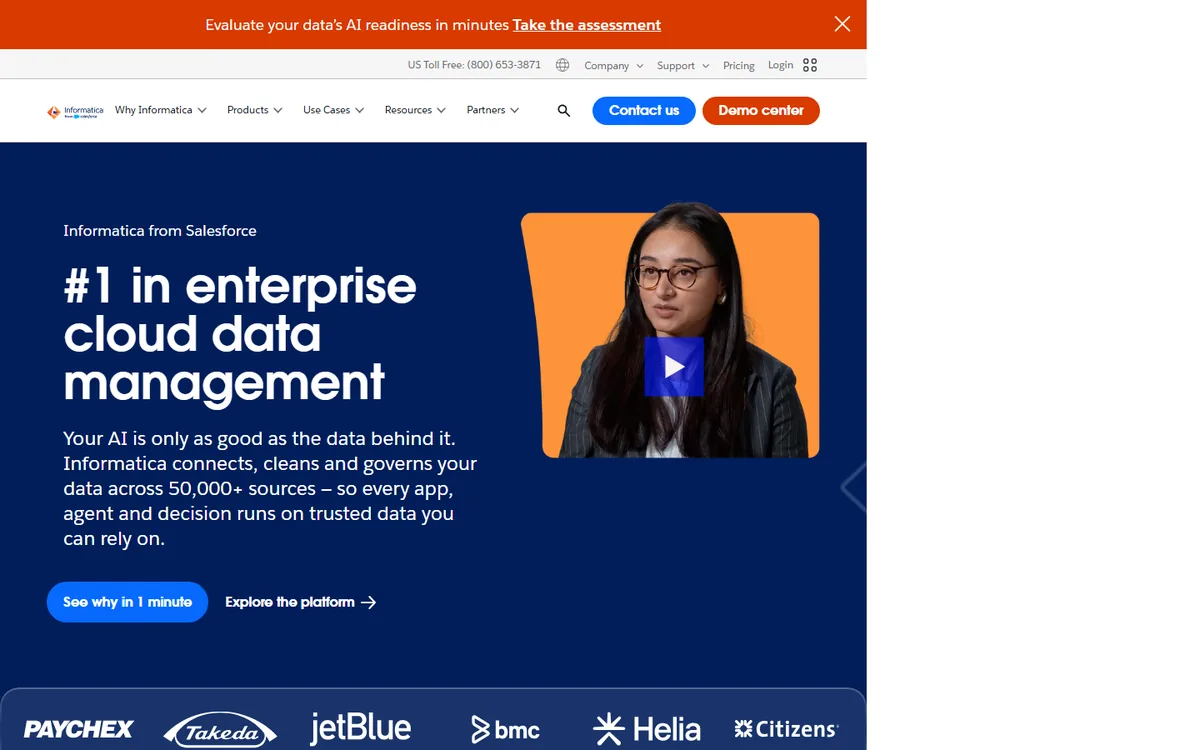
The Broadest Enterprise Platform, With the Price Tag and Learning Curve to Match
Informatica sits inside its Intelligent Data Management Cloud and covers customer, product, supplier and reference data with built-in matching, data quality and catalog tools. The CLAIRE AI engine helps with matching and suggestions, and ready-made 360 applications shorten the start for common domains.
I put Informatica on the shortlist when a client has many source systems, a mix of cloud and on-premises data and a central team that can run a platform. In my experience the product is rarely the problem. The people needed to model, configure and steward it are. For a single customer domain at a mid-sized company, it can be more than you need.
One thing to check before you sign: Informatica was acquired by Salesforce, and Semarchy's comparison notes that roadmap and licensing questions followed. Ask for current product commitments in writing, especially if you still run on-premises components.
Pros of Informatica MDM
- Covers many domains, data quality and cataloging on one platform
- Scales to very large record volumes and hybrid setups
- Pre-built 360 applications shorten the start for common domains
Cons of Informatica MDM
- Steep learning curve and heavy implementation effort
- Reviewers on G2 call it expensive for small and mid-sized organizations
Informatica MDM Pricing
Informatica does not publish MDM prices. Cost is quote-based and depends on the cloud services you use, data volumes and the deployment. Plan for a platform subscription plus implementation services, and ask which parts of the bundle you will actually use.
Informatica MDM Reviews
- G2: 4.2/5 average (from 98 reviews)
Reltio
A Cloud-Native Platform Built for Real-Time Customer Relationships
Reltio is a SaaS-only platform that stores master data as connected profiles, which makes relationships between people, accounts and organizations easy to model. Matching combines rules with machine learning, and the vendor lists more than a thousand prebuilt connectors.
It fits teams that need current customer or provider data to feed applications in near real time, such as a call center or a digital front end. I like how naturally it handles hierarchies, such as a household or a health system with many sites. The cloud-only model is a plus for most buyers and a blocker for a few.
Two cautions. Semarchy's comparison says Reltio lacks native cataloging and advanced governance, so you may need extra tools beside it. The same source describes pricing as higher than competitors, so get a quote early rather than late.
Pros of Reltio
- Relationship and hierarchy modeling is a core strength
- Real-time access to profiles for applications
- Large library of prebuilt connectors
Cons of Reltio
- SaaS only, so no on-premises option
- Governance and cataloging need other tools
Reltio Pricing
Reltio does not publish prices. You get a quote based on the data domains, record volumes and modules you choose. Because the platform is SaaS only, there are no hardware costs, but implementation services are a separate line to budget for.
Reltio Reviews
- G2: 3.3/5 average (from 6 reviews)
Profisee
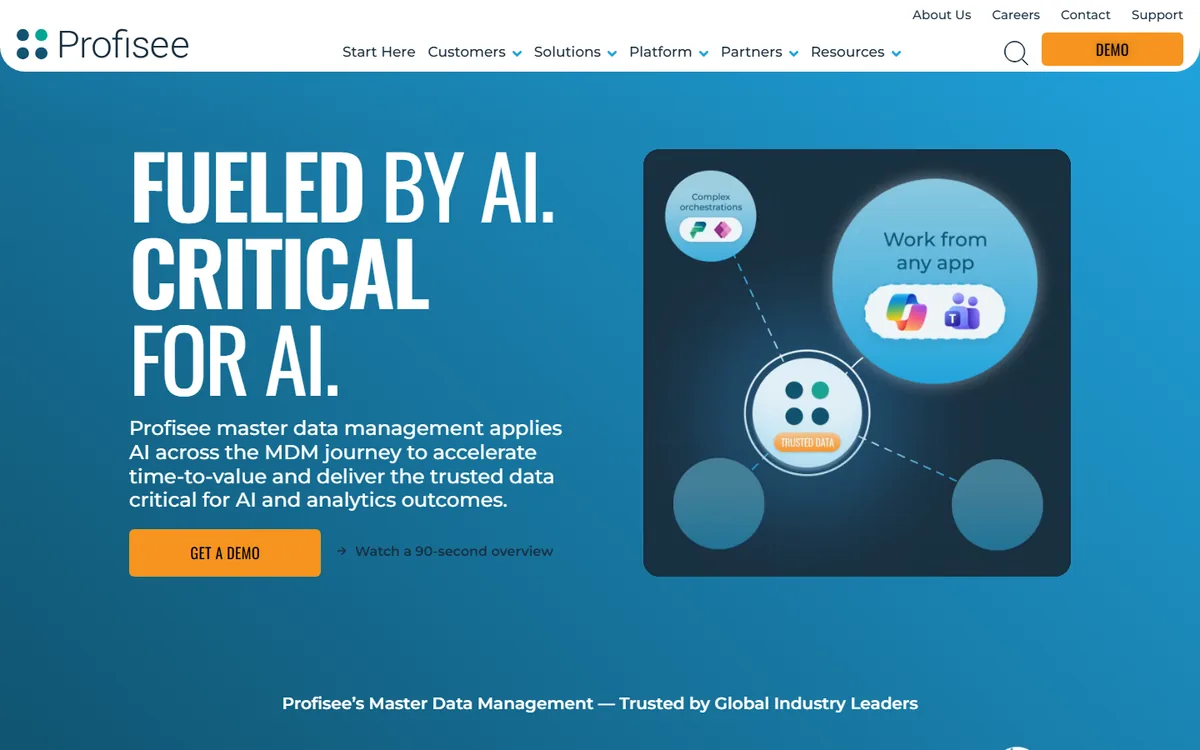
A Focused MDM Platform That Gets Many Teams to Production Quickly
Profisee concentrates on master data and little else. It integrates closely with the Microsoft stack, including Microsoft Purview for cataloging, and offers an AI assistant for stewards. Semarchy's comparison reports implementations often take under 90 days, a claim to test with references.
I tend to suggest Profisee to teams that already run Azure, Power BI and SQL Server and want one tool their own people can learn. The scope is narrower than Informatica, which is the point: less to configure and fewer modules to pay for. The trade-off is that data quality, cataloging and lineage often come from partner tools.
Ask how much of your use case runs in the standard product and how much needs customization. Complex rules can still need IT help, and that is where timelines slip.
Pros of Profisee
- Quick path to a first production domain
- Strong fit with Microsoft tools and Purview
- Stewardship screens that business users can follow
Cons of Profisee
- Data quality and governance often depend on partner tools
- Lineage integration can take extra work
Profisee Pricing
Profisee does not publish MDM prices on G2 or on its site, and lists its pricing as available on request. Expect a subscription based on domains, environments and volumes, plus implementation. Check the Azure Marketplace listing if you want to apply cloud commitments.
Profisee Reviews
- G2: 4.3/5 average (from 46 reviews)
Semarchy xDM
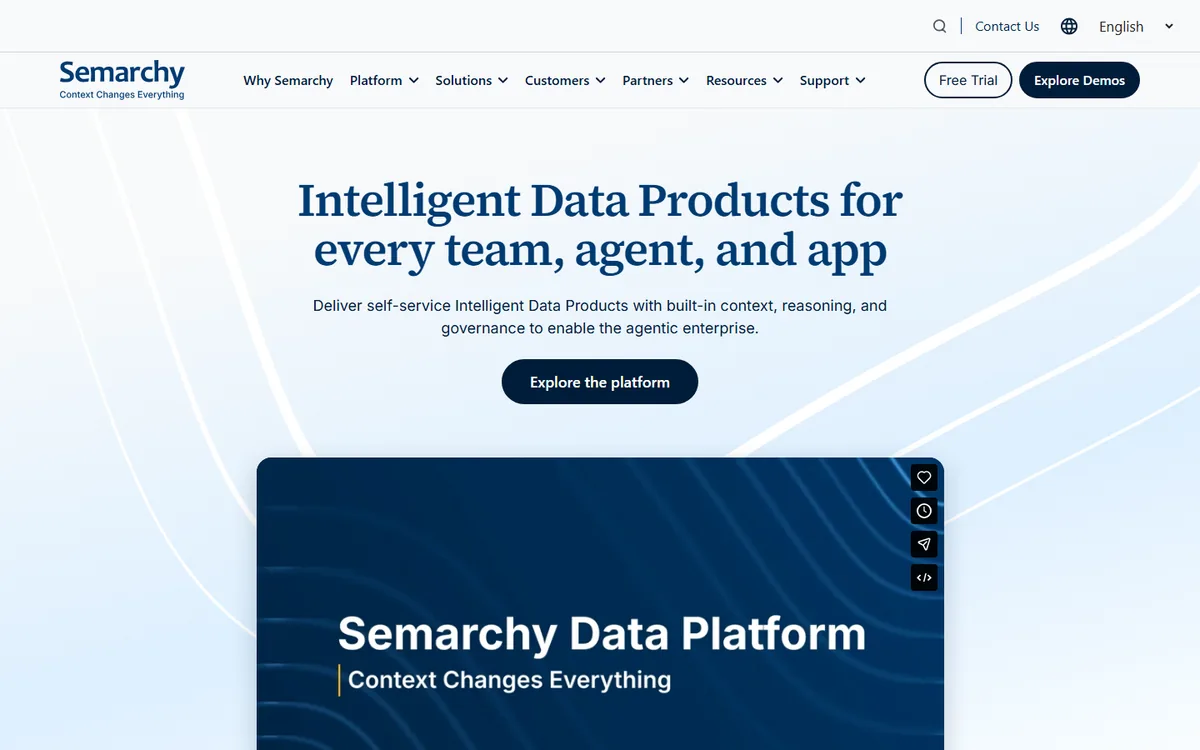
The Highest-Rated Challenger, Best When Your Team Is Comfortable With DataOps
Semarchy xDM handles multiple domains in one model and treats master data as a product. It supports Git-based DataOps workflows and offers a native Snowflake application. The vendor states many customers go live in under 12 weeks, so ask for references that match your size.
Its G2 score is the highest in this list, but it rests on only 21 reviews, so I read it as a good sign and not as proof. The platform appeals to engineering-minded teams that want to version their MDM configuration like code. Business-only teams may find the learning curve steeper.
Semarchy publishes a comparison of MDM vendors, which is useful reading but written by a vendor in this market. Treat its claims about competitors as a starting list of questions.
Pros of Semarchy xDM
- Flexible multi-domain modeling
- DataOps with Git and CI/CD fits engineering teams
- Native Snowflake application
Cons of Semarchy xDM
- Learning curve for the DataOps approach
- Self-hosted setups need Kubernetes skills
Semarchy xDM Pricing
Semarchy does not publish list prices, and the vendor offers a 30-day free trial. Third-party price trackers show quote-based pricing and warn that figures are unverified. Ask for a quote that includes implementation, support hours and any out-of-hours cover.
Semarchy xDM Reviews
- G2: 4.8/5 average (from 21 reviews)
Stibo Systems
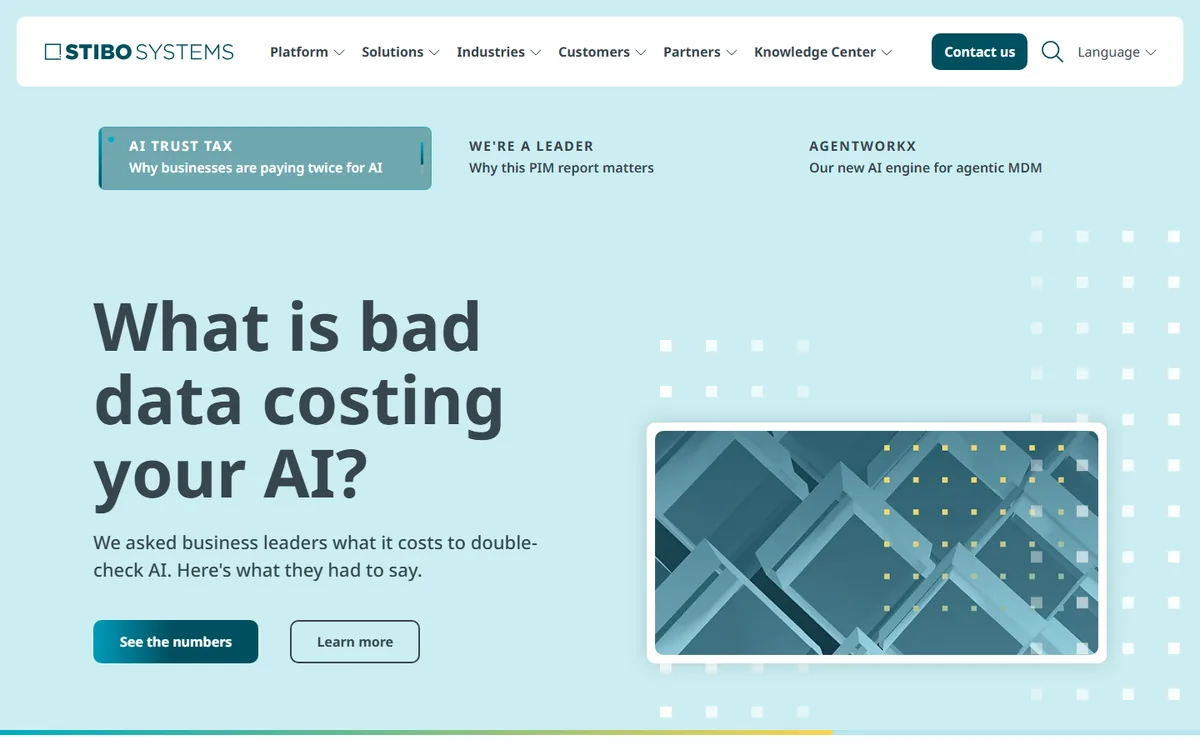
The Strongest Pick When Product Data Is Your Main Problem
Stibo Systems builds its STEP platform around product data and supply chain information, with taxonomy management, enrichment and syndication to channels. It also covers customer and supplier domains, though product is where its reputation is.
If your pain is product attributes that differ between your ERP, web shop and marketplaces, Stibo deserves a look. It is common in retail, consumer goods and manufacturing. Projects can be long and need skilled resources, and customization can require JavaScript.
Compare it against Pimcore if you want an open-source route to a similar scope, and against Informatica if your domains go well beyond products.
Pros of Stibo Systems
- Deep product data and taxonomy management
- Syndication to retail channels and marketplaces
- Governance suited to regulated industries
Cons of Stibo Systems
- Long, resource-heavy deployments
- Customer domain is seen as less mature than product
Stibo Systems Pricing
Stibo Systems does not publish prices. It positions the platform for the enterprise, and G2 shows no pricing. Budget for licenses, implementation partners and internal time for modeling and testing.
Stibo Systems Reviews
- G2: 4.3/5 average (from 62 reviews)
Ataccama ONE
Data Quality and MDM in One Product, Strongest When Quality Is the Starting Point
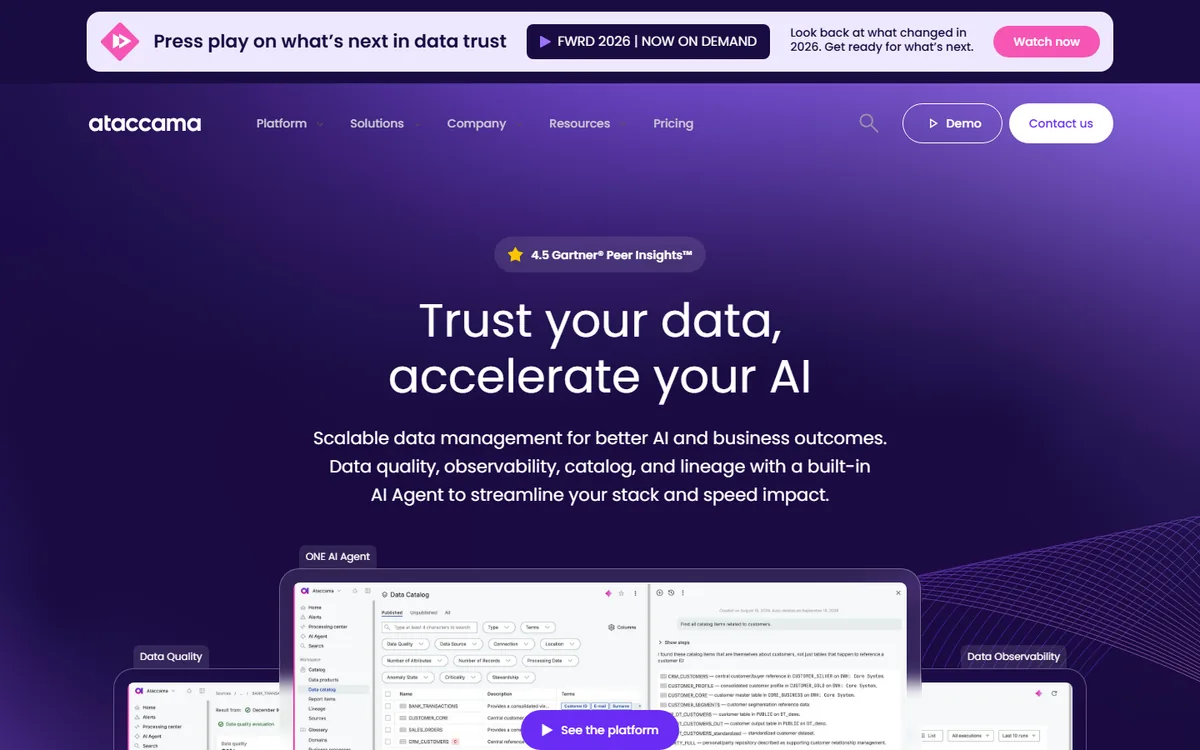
Ataccama ONE combines data quality, profiling, cataloging and MDM, with AI-assisted matching and rule suggestions. The advantage is that quality rules and master data live in one place instead of two tools.
I see it fit best when a company already knows its first problem is data quality and expects MDM to follow. The same rules that profile a column can feed matching. The flip side, noted in Semarchy's comparison, is that complex advanced use cases may need specialists and timelines can run long.
G2 shows 12 reviews, which is too few to lean on. Ask for customer references in your industry and run a proof of concept on your own messy records.
Pros of Ataccama ONE
- Data quality and MDM share rules and tooling
- AI-assisted profiling and matching
- Scales to large data volumes
Cons of Ataccama ONE
- Advanced setups can need specialists
- Smaller market presence than the biggest vendors
Ataccama ONE Pricing
Ataccama does not publish prices, and G2 states pricing details are not available. Expect a quote based on modules and volumes. Ask which capabilities are included in the base subscription and which are add-ons.
Ataccama ONE Reviews
- G2: 4.2/5 average (from 12 reviews)
SAP Master Data Governance
The Natural Choice When SAP Is Your System of Record
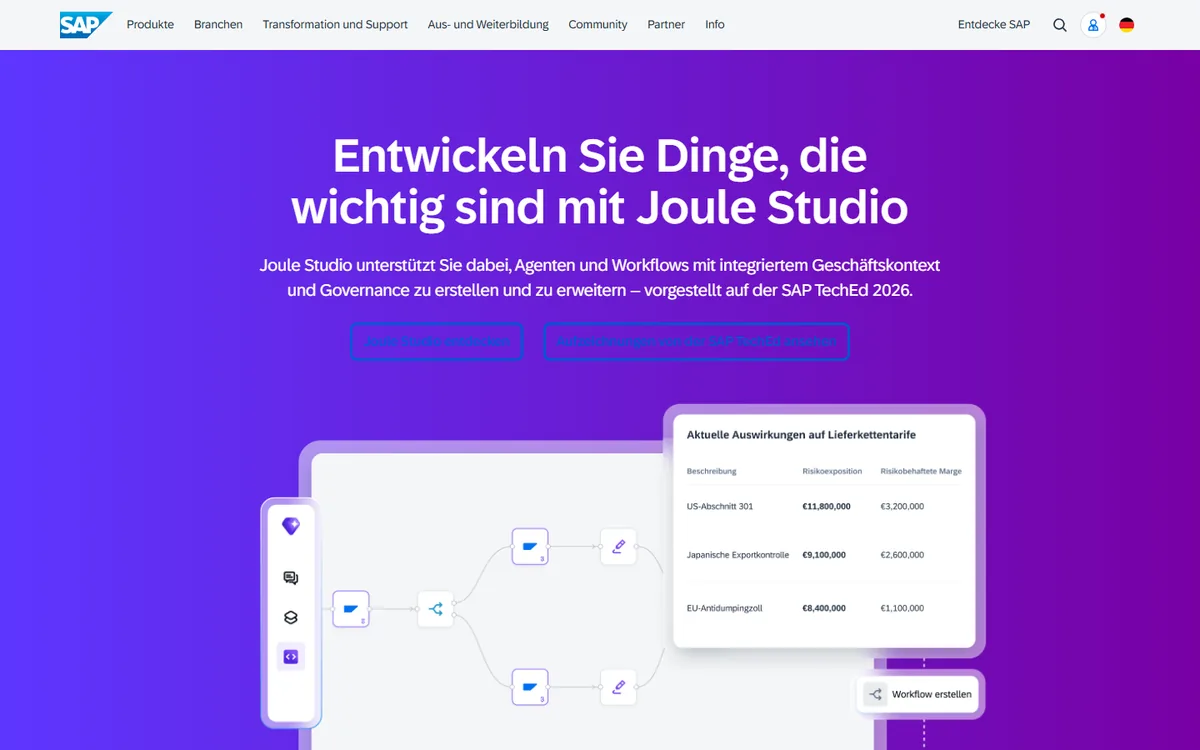
SAP Master Data Governance manages material, business partner, finance and other master data inside the SAP landscape, with change requests, approval workflows and validation. It fits closely with S/4HANA and with the way SAP shops already work.
My view is simple: if SAP runs your finance and supply chain, start here before you look at anything else. The governance workflows are mature, and you avoid building integrations to your own ERP. If much of your critical data lives outside SAP, the case is weaker.
Expect configuration work and SAP expertise. Semarchy's comparison notes limited appeal outside SAP environments, which matches what I see.
Pros of SAP Master Data Governance
- Deep S/4HANA integration
- Mature change request and approval workflows
- Familiar patterns for SAP teams
Cons of SAP Master Data Governance
- Needs significant SAP-specific configuration skills
- Less attractive outside SAP environments
SAP Master Data Governance Pricing
SAP does not publish Master Data Governance prices, and G2 lists no pricing. Licensing is tied to your wider SAP agreement, so talk to your SAP account team and an independent licensing adviser before you compare.
SAP Master Data Governance Reviews
- G2: 4.4/5 average (from 240+ reviews)
Pimcore
The Open-Source Route for Teams With Developers and Product-Heavy Data
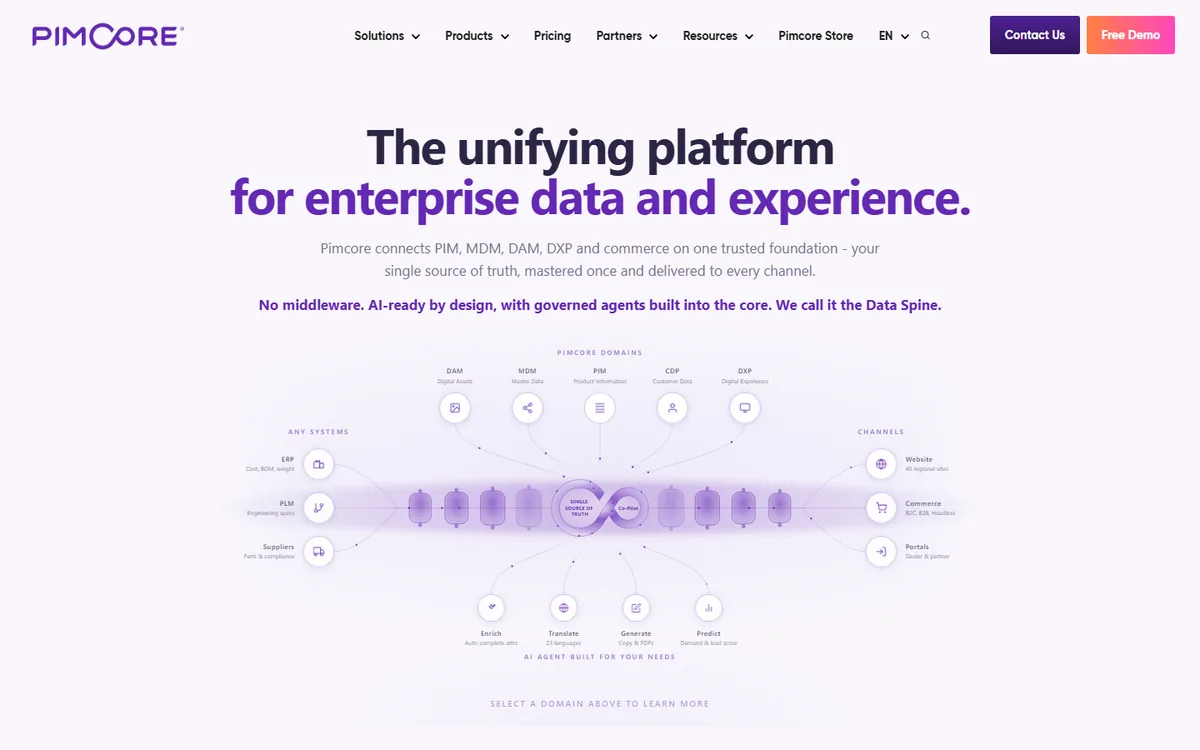
Pimcore combines product information management, digital asset management, MDM and content management on an open-source base. A free Community Edition exists, and paid enterprise subscriptions add support and features.
I recommend it to teams with their own developers that need a flexible data model and want to avoid heavy license fees. Product and asset management are its strongest areas, and it can serve as a light MDM layer for other domains.
The cost of freedom is effort. Semarchy's comparison notes a steep learning curve and a need for experienced developers, and G2 reviewers also call it expensive once enterprise features and services are added.
Pros of Pimcore
- Open-source Community Edition lowers the entry cost
- Combines PIM, DAM and MDM in one system
- Highly customizable data model
Cons of Pimcore
- Needs experienced developers
- Less polished for non-technical business users
Pimcore Pricing
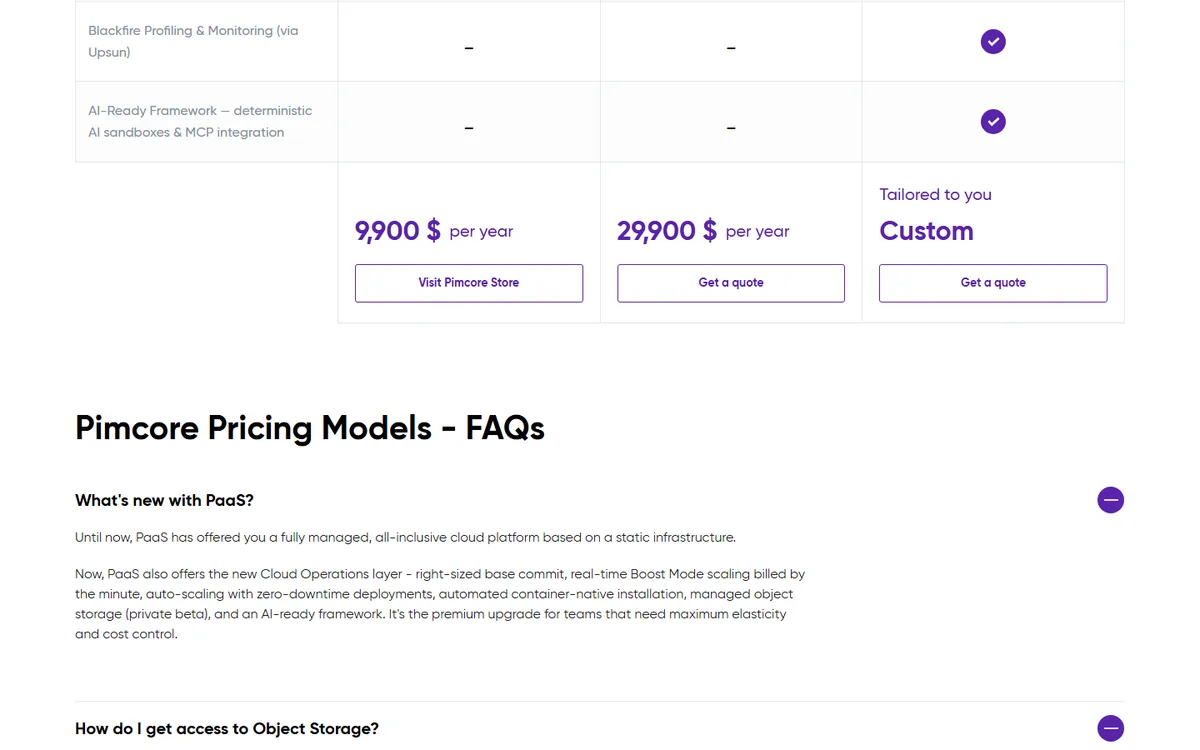
Pimcore offers a free Community Edition. Enterprise subscriptions are quote-based, and I could not verify current list prices. Budget for developer time or a partner, since that usually outweighs the license.
Pimcore Reviews
- G2: 4.5/5 average (from 42 reviews)
Estimate the Return on an MDM Tool
Before you pick a plan, check whether the numbers work for you. Enter the manual hours your team spends fixing and reconciling records and the monthly price you are considering, and you will see what it could return in a year. MDM licenses usually cost more than the sliders allow, so use the monthly figure of your quote divided by twelve.
Will the Tool Pay Off for You?
Move the sliders to match the work you want to automate and the plan you are considering.
How to Choose the Right Master Data Management Software
In my experience, fit with your domains and your team decides more than any feature list. Before you compare vendors, I suggest you answer four questions. My master data management framework explains the model behind them:
- Which domain hurts most, customers, products, suppliers or locations?
- Which systems create the records, and can they exchange data through APIs?
- Who will own the rules and review uncertain matches after go-live?
- Does the data need to stay in your own environment, or is SaaS acceptable?
If you run SAP at the core, start with SAP MDG. If you run on Microsoft, look at Profisee first. If your problem is mainly product data, compare Stibo Systems and Pimcore. If you need real-time customer relationships, shortlist Reltio, and if you want one product for quality and MDM, look at Ataccama. Informatica fits when you need breadth and have a team to run it. Before any purchase, read the master data management best practices and plan the work with the master data management implementation steps. For examples of where the money comes back, see these master data management use cases. A short call usually settles the tool question.
Questions About Choosing Master Data Management Software
What Is the Best Master Data Management Software?
There is no single winner. Informatica and SAP MDG suit large enterprises, Reltio suits cloud-first teams that need real-time customer data, Profisee suits Microsoft shops, Stibo Systems and Pimcore suit product-heavy data, and Semarchy and Ataccama suit teams that want flexibility or built-in data quality. Pick based on your domains, your systems and who will run it.
How Much Does Master Data Management Software Cost?
Most vendors in this list do not publish prices. Costs are quoted from your domains, record volumes, environments and modules. Plan for the license or subscription plus implementation services, and ask each vendor for a written quote that includes both. Pimcore has a free Community Edition, but developer time still costs money.
Do I Need MDM Software or Can I Use My Data Warehouse?
For one domain with few sources, matching rules in your warehouse plus a steward process can be enough. Software pays off when several systems create the same records and you need workflows, audit trails and sharing back to applications. My master data management strategy guide covers how to decide.
How Long Does It Take to Implement MDM Software?
A first domain often takes a few months, and vendors such as Profisee and Semarchy cite 90 days or 12 weeks for some customers. Treat those as best cases and ask for references of your size. Data cleanup and ownership decisions usually take longer than installation.
What Is the Difference Between MDM and a CRM?
A CRM stores customer interactions and deals for sales and service. MDM creates the single trusted record of who the customer is across all systems, including the CRM, billing and your warehouse. The CRM is one of the systems MDM feeds and cleans.
Which MDM Tool Is Best for Small Companies?
Most platforms here target mid-sized and large organizations. A smaller company should look at Pimcore's Community Edition, a trial of Semarchy or a lightweight matching setup before committing to an enterprise contract. If you have under a few hundred thousand records, a simpler fix may be enough.
Can MDM Software Handle Healthcare or Retail Data?
Yes, but the fit differs. Reltio and Informatica are used for customer and provider data, while Stibo Systems and Pimcore are stronger on product data for retail. Check how each vendor handles access control and audit trails, especially for health data.
Sources
- Semarchy: Top Master Data Management Solutions Compared (vendor-published comparison, used for product strengths and weaknesses)
- G2: Master Data Management (MDM) Software (ratings and review counts, November 2026)
Heads up: vendors change prices, plans and ratings often. Everything was checked at the last update date, but confirm on each vendor’s website first. This article is not legal or financial advice.
Was this article helpful?
Thank you for letting us know.
Camille leads the Trevio editorial team and works with our consultants to turn real client projects into practical guides on data strategy, engineering and governance. Before joining Trevio, she spent 11 years in data engineering and analytics roles. She has since edited more than 300 articles on data management and reviewed pipelines and platforms from over 100 client projects. She is based in Denver, Colorado.