Key Takeaways
- Implement one domain in six phases, with a decision gate at the end of each.
- Profiling and rule tests on real records come before any platform configuration.
- Cut over one system at a time and keep a rollback plan for every step.
- Operate the result with named stewards and a monthly scorecard from week one.
The usual implementation story goes like this: a platform is licensed, a project team is formed and six months later the configuration is finished but nobody trusts the golden record. The gap is almost never technical. It sits in skipped decisions and untested rules. This plan is the sequence I use in master data management consulting projects to avoid that.
You will see six phases, each with a goal, the work involved, a decision gate and the usual way it goes wrong. If you still need to choose a domain or write the business case, start with the master data management strategy guide, then return here.
Six Phases in Brief
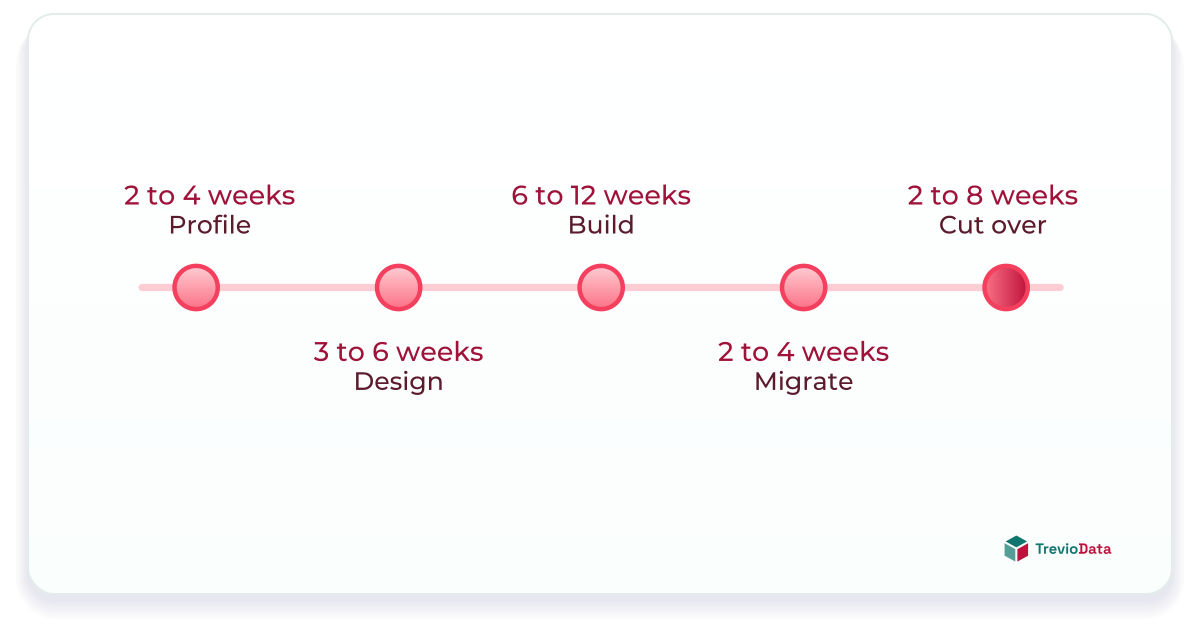
| Phase | Goal | Gate to pass | Typical duration |
|---|---|---|---|
| 1. Profile | Know what is in the sources | Owner signs off on the profiling findings | 2 to 4 weeks |
| 2. Design | Define model, roles and rules | Rule register tested on a sample | 3 to 6 weeks |
| 3. Build | Configure matching, workflows and integrations | Stewards approve results on test data | 6 to 12 weeks |
| 4. Migrate | Load and reconcile the golden records | Reconciliation counts agree with sources | 2 to 4 weeks |
| 5. Cut over | Connect systems one at a time | No critical errors for one full business cycle | 2 to 8 weeks |
| 6. Operate | Run, measure and tune | Scorecard beats the baseline for a quarter | Ongoing |
Durations are ranges from my own projects. They grow with the number of source systems and shrink when ownership is settled early.
Phase 1: Profile the Sources Before You Promise Anything
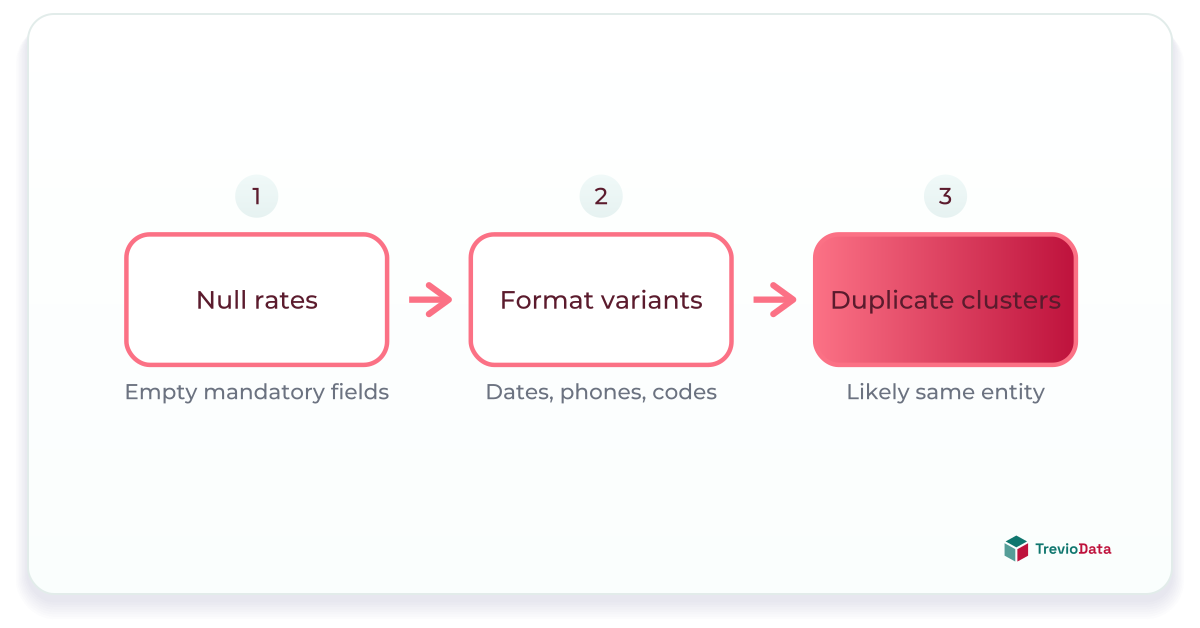
Profiling reads the data and reports on it. For each source in the domain you want null rates by field, format variations, value distributions and likely duplicate clusters. It takes days, and it changes the plan more often than any kickoff meeting. In a typical customer domain, a field the business treats as reliable turns out to be empty or inconsistent in a large share of records.
Share the findings in a short workshop with the owner and the people who create records. Let them see real examples, such as the same company spelled four ways. The workshop does two things: it sets realistic expectations, and it builds support for the changes in entry forms that come later.
Gate: the owner confirms the profiling findings and the scope of the first release. Where it goes wrong: teams skip profiling because the vendor offers a quick start, then discover the problems during migration, when they are most expensive.
Phase 2: Design the Model, Roles and Rules
This phase produces the artifacts that the platform will implement: the attribute model, owner and steward roles, match rules, survivorship rules and the record lifecycle. The master data management framework describes each artifact in detail.
The most valuable activity is a rule test on a sample of a few thousand real records. Print pairs that the rules would merge and pairs they would keep apart, and let stewards mark the mistakes. Expect two or three rounds. Each round tends to shrink the number of disputed pairs by a large share, and it gives stewards early ownership of the rules.
Gate: the rule register is signed by the owner and tested on a sample. Where it goes wrong: default vendor thresholds are accepted without testing, and the first migration creates wrong merges.
Phase 3: Build Matching, Workflows and Integrations
Now the platform, or the warehouse-based setup, gets configured. That includes the data model, matching, survivorship, stewardship screens, approval workflows, security roles and the integrations to the first two systems. Build in small releases and let stewards test each one on test data.
If you have not chosen a platform yet, make the choice with a proof of concept on your messiest records. My ranking of master data management software lists the main candidates and what each one is good at. A few build decisions deserve extra attention:
- Identifiers. Give every golden record a persistent ID and keep cross-references to the source IDs, so you can trace anything back.
- Security. Restrict sensitive fields by role and log every change, especially for health or financial data.
- Error handling. Decide what happens when a source system is down or sends a malformed record. A queue with alerts beats silent failure.
Gate: stewards approve the results on a realistic test set. Where it goes wrong: the build team optimizes the technical flow while the steward screens stay clumsy, and the queue becomes a bottleneck after launch.
Phase 4: Migrate and Reconcile the Records
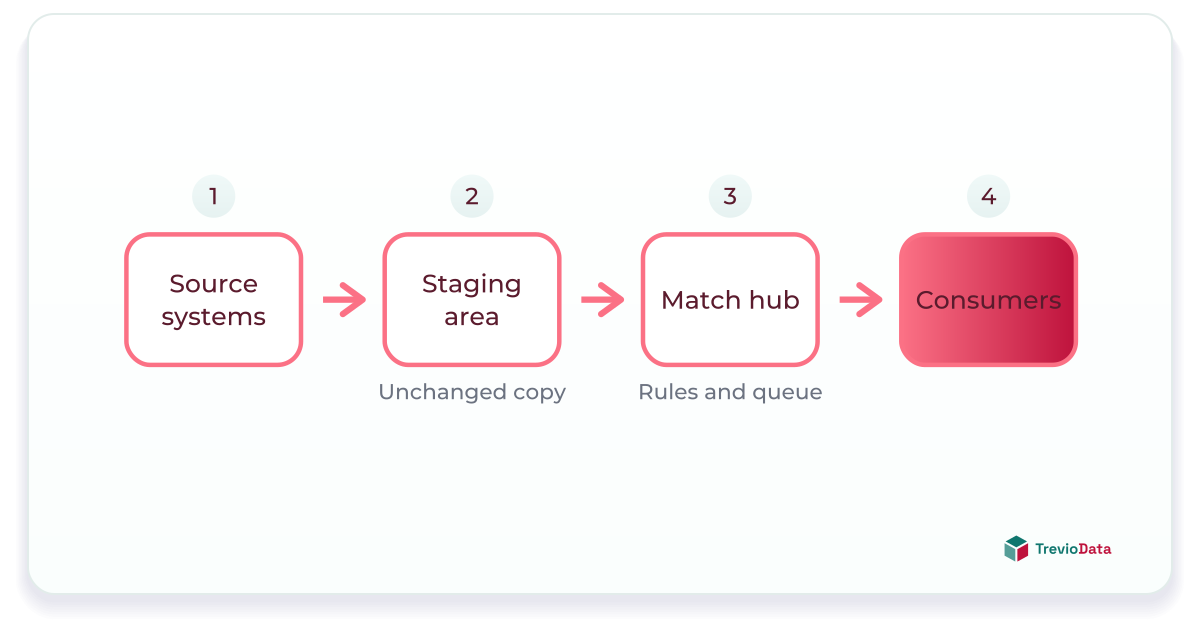
Migration is a repeatable pipeline, not a one-off load. Copy each source into a staging area, standardize formats, run matching, let stewards resolve uncertain pairs and load the golden records. Run it several times, because each run reveals another pattern in the data.
| Step | What happens | Check |
|---|---|---|
| Stage | Copy sources unchanged into a staging area | Row counts match the sources |
| Standardize | Fix formats, casing, country codes, phone numbers | Sample review shows consistent formats |
| Match | Apply rules and score candidate pairs | Merge and non-merge samples pass review |
| Resolve | Stewards decide uncertain pairs | Queue age stays under the agreed limit |
| Load | Create golden records with cross-references | Every source record maps to one golden record |
Reconciliation is the check that earns trust. Every source record must map to exactly one golden record, and the counts must add up. If the numbers do not reconcile, do not move on.
Gate: reconciliation counts agree and the steward queue is under control. Where it goes wrong: the team loads everything in one go and has no way to explain differences in counts.
Phase 5: Cut Over One System at a Time
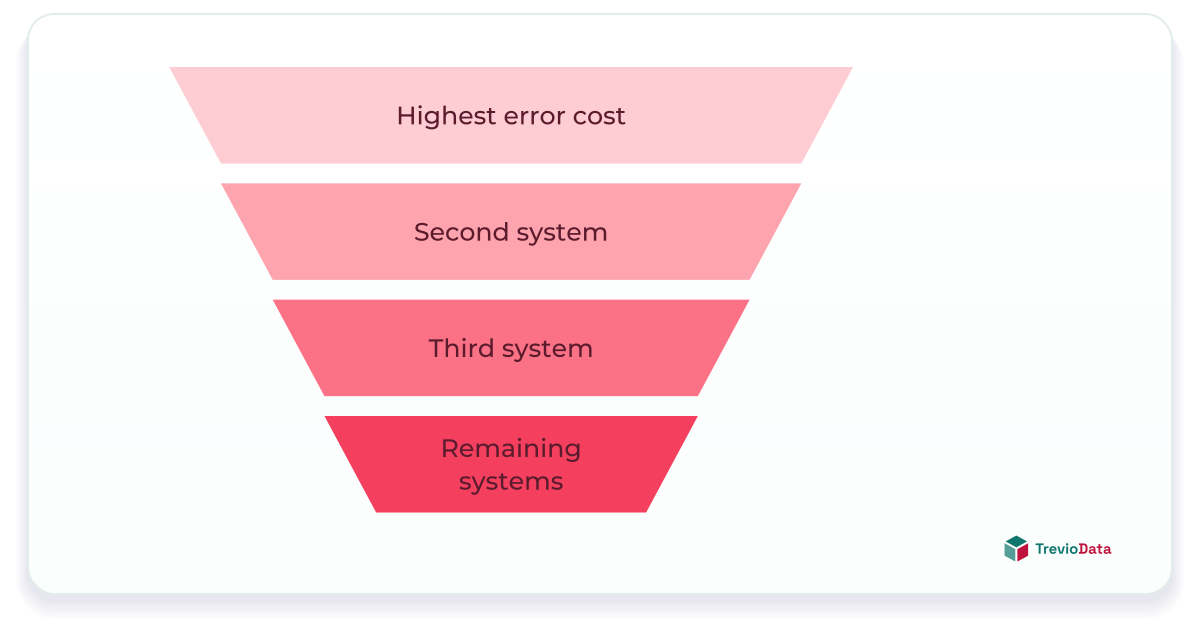
Connect the first system, run it for a full business cycle, then add the next. A full cycle means a month-end for finance data or a campaign cycle for marketing data. Every connection needs a rollback path: if the new flow misbehaves, you must be able to switch back to the old one within hours.
Cut over in the order of the benefit. Start with the system where errors hurt most, and leave read-only consumers, such as reporting, for later. For each system, tell the people who use it what changes: new warnings on creation forms, a new field or a new way to request a correction. A one-page note and a short demo are usually enough.
Gate: no critical errors for one full business cycle. Where it goes wrong: several systems are switched on the same weekend, and when something breaks, nobody can tell which change caused it.
Phase 6: Operate, Measure and Tune
Go-live is the start of the job. Stewards work the queue, the owner reviews the scorecard each month and the custodian watches the integrations. Rules need tuning as data and systems change, so budget time for it. The habits that keep a launch from decaying are collected in my article on master data management best practices.
Compare the first scorecards with the baseline from before launch. Duplicate rate and the cost of bad records should fall, completeness should rise and the steward queue should peak after launch, then shrink. When the numbers hold for a quarter, take the same plan to the next domain. The master data management use cases show typical next steps.
Who You Need on the Team and What Time They Spend
A first-domain implementation at a mid-sized company usually needs fewer people than the plan suggests, but it needs them reliably. The business owner spends a few hours a week, mostly on decisions and escalations. Stewards need the most protected time during design and migration, when they review sample pairs and uncertain matches. The technical lead and one integration engineer per connected system carry the build.
An outside partner typically adds a data architect and a project lead for the design and build phases and then steps back. Agree up front what the handover looks like: documentation, a rule register, training for stewards and a named internal person who owns the platform. If the handover is vague, the platform becomes a black box within a year.
Risks to Plan For
| Risk | Early sign | Response |
|---|---|---|
| Stewards lack time | Queue age keeps rising | Reserve calendar time and reduce the queue with better rules |
| Source systems keep creating duplicates | Duplicate rate rebounds after cleanup | Add search-before-create to the entry forms |
| Scope creep | New domains added before the first is stable | Hold the gate: one domain, one quarter of stable numbers |
| Wrong merges | Complaints from sales or support | Raise the review threshold and use unmerge |
Is Your Team Ready to Start?
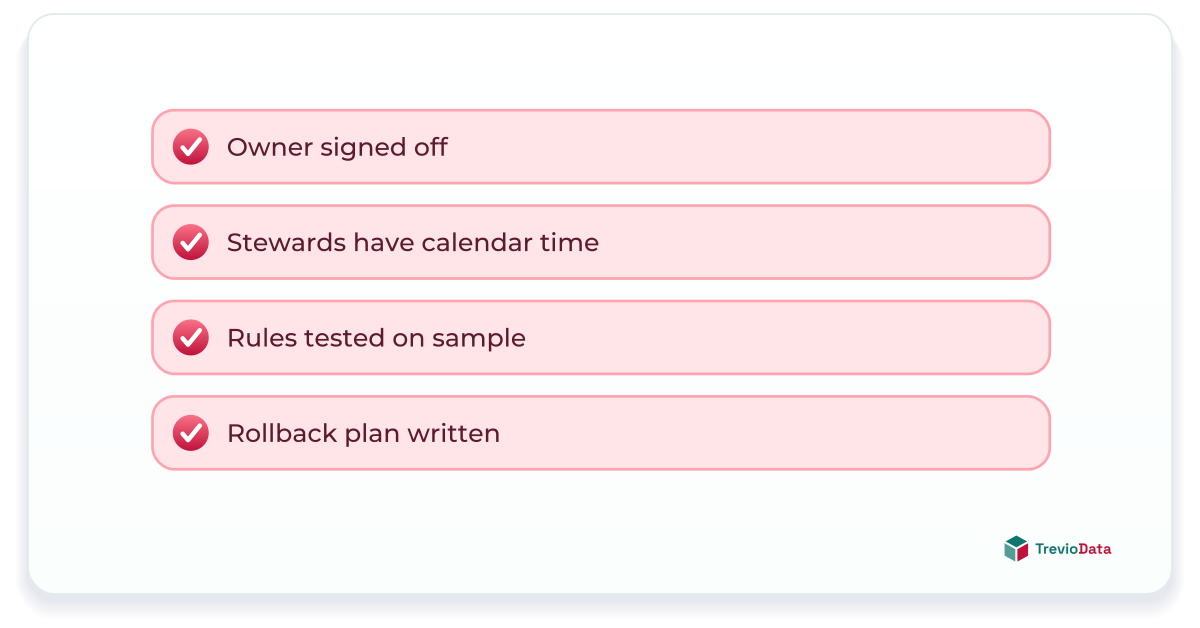
Before kickoff, confirm that you can say yes to each point:
- The first domain, its owner and its stewards are named.
- You have a baseline for duplicate rate, completeness and one cost measure.
- Access to every source system for profiling is arranged.
- A rollback plan exists for each system you will connect.
- Budget covers the platform, implementation, integration and steward time.
Questions About Master Data Management Implementation
How Long Does Master Data Management Implementation Take?
A first domain commonly takes three to nine months from kickoff to go-live, depending on the number of source systems, the state of the data and whether you need a new platform. Vendors quote shorter times for some customers, so ask for references of your size. Data cleanup and ownership decisions usually take longer than installation.
What Does an MDM Implementation Cost?
The cost depends on the number of domains, systems and records, and on license or subscription fees. Most vendors do not publish prices. Budget separately for the platform, implementation services, integration work and the internal time of stewards and owners. Ask for a fixed quote for the first domain.
What Is the First Step of an MDM Implementation?
Profile the data in the first domain and agree on its owner. Profiling shows duplicates, gaps and conflicting formats, and the owner decides what a correct record looks like. Tool configuration comes after both.
Should I Do a Big-Bang or Phased Rollout?
Phase it. Release one domain, then one system at a time, with a rollback plan for each. A big-bang cutover across all systems multiplies risk and makes it hard to find the cause of a problem.
How Do I Migrate Existing Records into the Master Hub?
Load a copy of each source into a staging area, standardize formats, run matching, let stewards resolve uncertain pairs and load the golden records. Keep the source identifiers as cross-references, so you can trace any golden record back to the original entries.
Who Should Be on the Implementation Team?
You need a business owner, one or two stewards, a technical lead, an integration engineer for each connected system and a project manager. A consultant or vendor partner usually adds a data architect. Stewards need time in their calendar, because their input drives rule quality.
How Do I Know the Implementation Worked?
Compare the monthly scorecard with the baseline you recorded before launch. Duplicate rate and the cost of bad records should fall, completeness should rise and the steward queue should shrink after the first weeks. If the numbers do not move, review rules and entry points before adding a new domain.
Disclaimer: This article is general information, not legal, compliance or financial advice. Check the rules that apply to your data and industry.
Was this article helpful?
Thank you for letting us know.
Camille leads the Trevio editorial team and works with our consultants to turn real client projects into practical guides on data strategy, engineering and governance. Before joining Trevio, she spent 11 years in data engineering and analytics roles. She has since edited more than 300 articles on data management and reviewed pipelines and platforms from over 100 client projects. She is based in Denver, Colorado.