Key Takeaways
- Start from the decisions the warehouse must support, and write each goal with a number you can measure.
- Scope the first release small: one business area, a few sources and one named owner.
- Set platform criteria before you look at vendors, and test on your own workload.
- Build a staged roadmap with a gate and a budget at each stage, and review it every six months.
The warehouse strategies I read most often are a list of technologies with a timeline. They say what to buy and when, and say nothing about which decision gets better. The result is a platform that works and a business that keeps using spreadsheets. A real strategy starts from goals and works toward tools, which is how I run strategy sessions in data warehouse consulting.
The framework below has five steps. Each step has a question to answer, an output to write down and a common failure. A summary table comes first, then the details, then notes on tying it to a budget and a roadmap.
The Five Steps at a Glance
| Step | Question to answer | Output | Typical effort |
|---|---|---|---|
| 1. Goals | Which decisions need better data? | Three to five measurable goals | 1 week |
| 2. Scope | What is the first release? | One-page scope with sources and users | 1 week |
| 3. Ownership | Who decides and who runs it? | Owner, steward and builder named | A few days |
| 4. Platform | What must the platform do? | Criteria list and a tested shortlist | 2 to 3 weeks |
| 5. Roadmap | What happens in what order, at what cost? | Staged plan with gates and budget | 1 week |
Step 1: Start From the Decisions, Not the Data
List the decisions your leaders make every week and what each needs: pricing, stock, hiring, ad spend, collections. Choose three to five where better numbers would change the outcome, and write each as a goal with a measure, such as cutting month-end close from nine days to five, or giving every region the same revenue figure by the second working day.
Goals written as capabilities, such as "build a data lake", cannot fail and cannot succeed. A measured goal gives you a baseline and a finish line. It also tells you which sources matter, because a goal about inventory needs stock and sales data first.
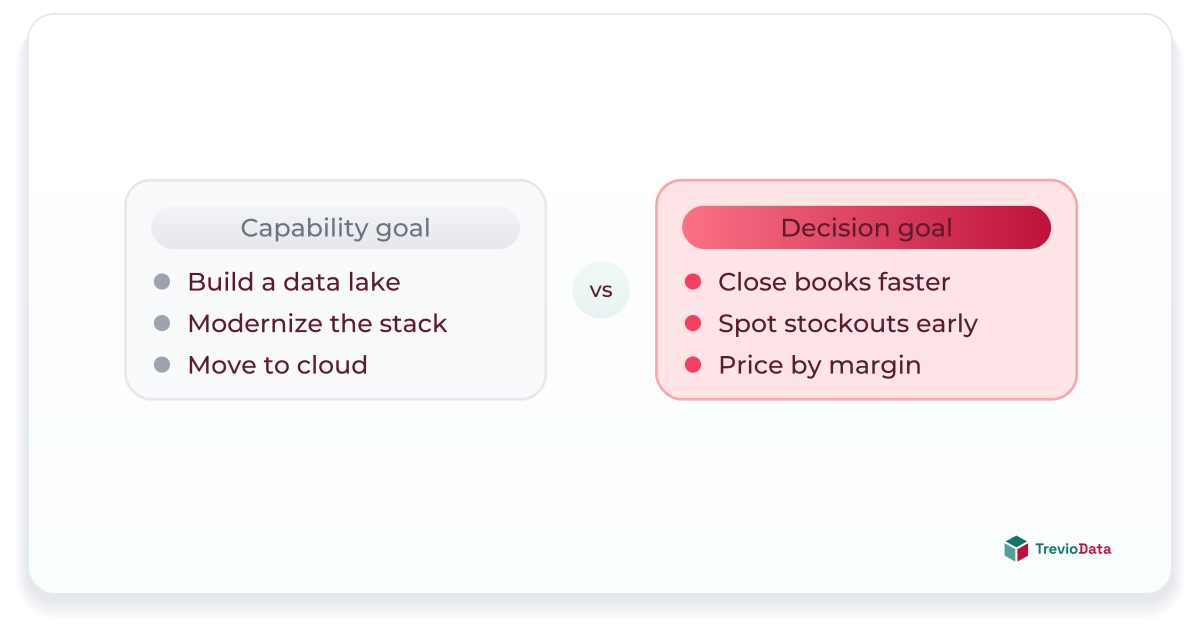
Output: a short list of goals, each with a measure and an owner. Common failure: goals that name technology, so nobody can tell whether they were reached.
Step 2: Scope a Release You Can Finish
Pick the goal with the best ratio of value to sources and make it release one. Write a one-page scope with the questions it answers, the sources it needs, the users and a date. Limit release one to a few sources, because every extra source adds weeks of access requests, cleaning and tests.
Then list what is out of scope, in writing. In my client work, the out-of-scope list is the most useful half of the page, because it is what people point to when a new request arrives in week four. The data warehouse use cases guide shows ten candidates and the steps behind each.
Output: a signed one-page scope with sources, users and a date. Common failure: a scope that grows every week because nothing was ruled out.
Step 3: Decide Who Owns What
Name a business owner who settles definition disputes, a data steward per area who answers detailed questions and a technical lead who builds and runs. In a small company one person may hold two roles, and that is fine if the roles are written down.
Add a simple decision rule: who approves a new metric, who approves access and who decides when to change a platform setting that affects cost. This turns every future disagreement into a known path. Ownership questions also connect to wider governance work, which is out of scope here but worth planning for.
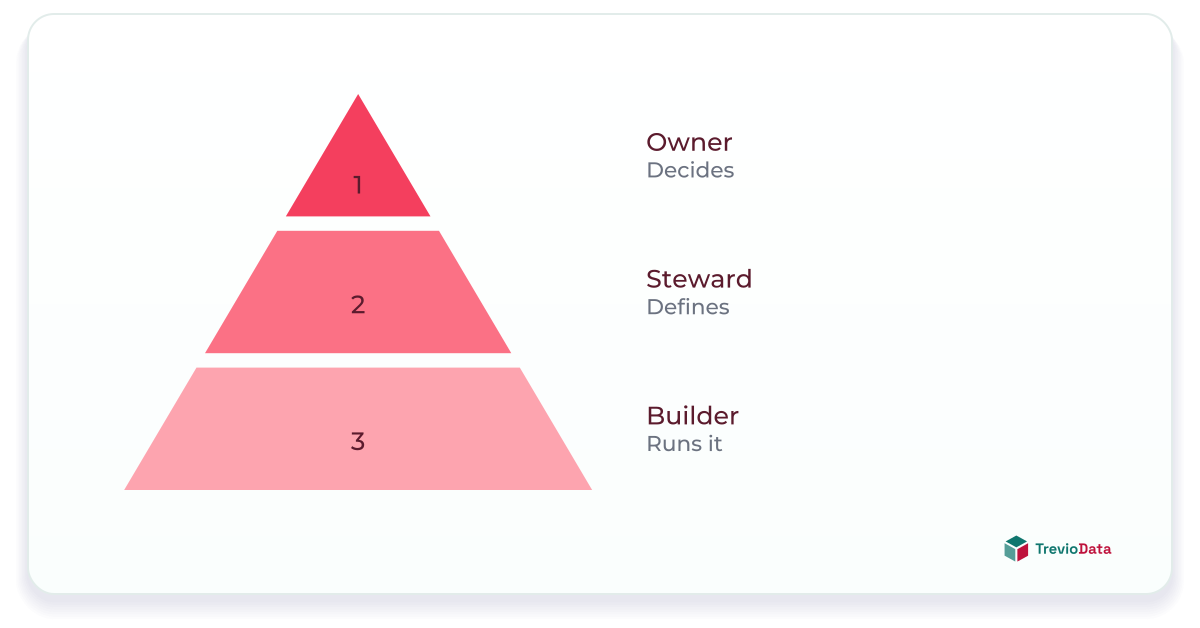
Output: a role list with names and a decision rule for definitions and access. Common failure: the owner is "the data team", which means nobody.
Step 4: Set Platform Criteria Before You Meet Vendors
Write the criteria first: where your sources live, which skills your team has, how steady the workload is, which data must stay in a region or on premises and what the budget ceiling is. Then shortlist two or three platforms and test them on a sample of your real data and ten real queries.
The comparison should cover cost on your workload, speed, security features, how easy it is to hire for and how hard it would be to leave. My ranking of data warehouse tools covers the main contenders, with prices and ratings.
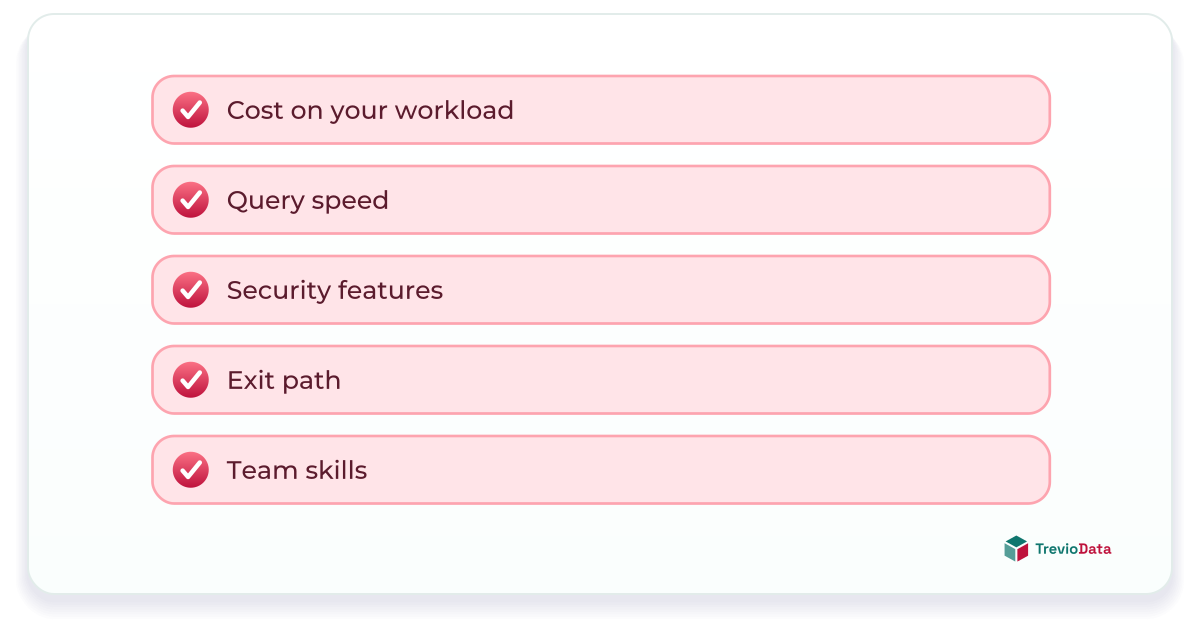
Do not skip the exit question. SQL is portable and the surrounding code is not, so keep your transformation logic in version control with tools that run on more than one platform. Switching later then takes weeks, not a rewrite.
Output: a criteria list and a one-page comparison with a recommendation. Common failure: the platform is chosen by the loudest demo, and the criteria are written afterward to match.
Step 5: Turn the Plan Into a Staged Roadmap With a Budget
Lay out the releases in order, each with a goal, a gate and a cost range. Gates keep the program honest: release two starts only if release one hit its measure. Add the budget lines from my guide to data warehouse cost: platform, tools, people and migration, with a quarter of slack for delays.
The execution plan for each release is in my article on data warehouse implementation, which has six phases and the gates for each. The strategy decides what to build and why, and the implementation plan decides how.
Output: a roadmap with releases, gates, owners and a budget. Common failure: a single large release with an end date a year away and no checkpoints.
Risks to Name in the Strategy
A strategy that lists no risks is a brochure. Write down the four I see most often and one mitigation for each. The first is a missing owner, which leaves definitions in dispute. The mitigation is naming one before work starts. The second is source access: credentials, firewalls and vendor API limits can stall a project for weeks, so request them in step two.
The third is data quality. Sources contain duplicates, gaps and old rules that nobody remembers, and they surface during loading. Keep an issue log with an owner per item and budget time for the fixes. The fourth is cost drift, where compute grows with every new dashboard. Set budgets and alerts at launch, and review the top queries monthly.
Add one more for your own situation, such as a pending acquisition, a system replacement or a regulatory deadline. These events change priorities overnight, and a strategy that anticipates them can adjust the roadmap in a meeting instead of a crisis.
A Short Example of the Framework in Use
Consider a regional retailer with online and store sales. Its leaders say the weekly trading meeting spends half its time arguing about which numbers are right. The goal becomes: one revenue and margin figure, available by 9 a.m. on Monday, for every region.
The scope for release one is three sources: the store system, the web shop and the finance ledger. The owner is the finance director, the steward is the head of trading and a contract engineer builds. Platform criteria favor a cloud warehouse in the same region as the web shop, with Power BI support because the finance team already uses it. The roadmap has three releases: trading figures, then inventory, then marketing attribution, each with a measure and a gate.
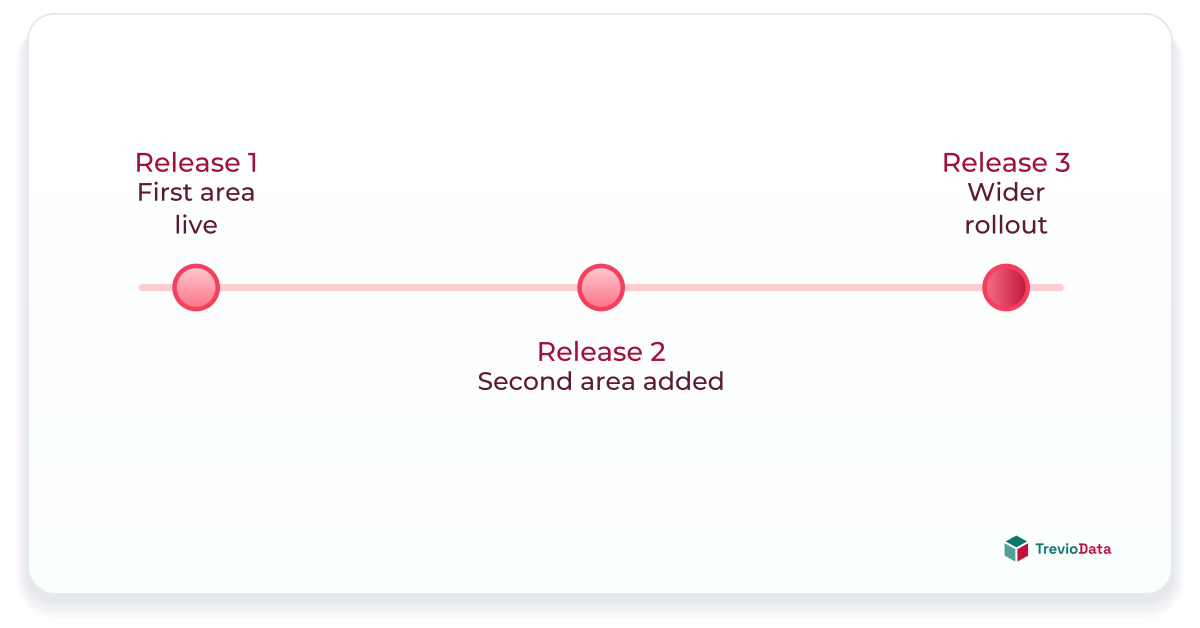
Nothing in that example is exotic, and that is the point. The strategy fits on three pages, it names a measure for every release and everybody can see what comes next. The details of delivering each release then follow the plan in my implementation guide.
Making the Strategy Stick
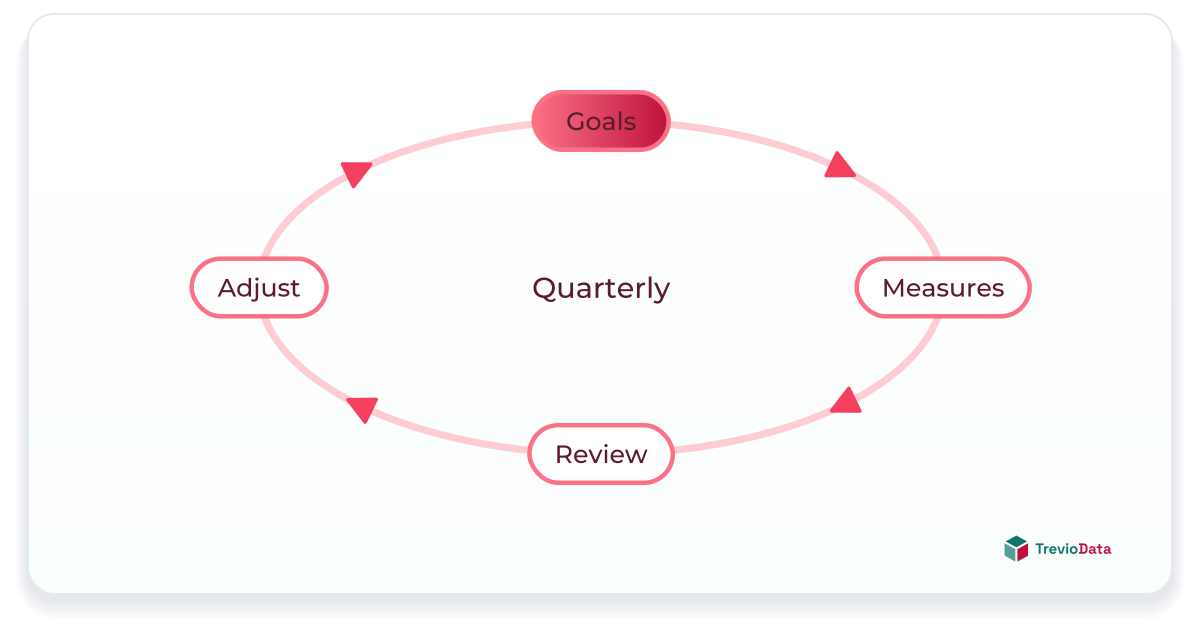
A strategy decays unless someone uses it. Put the goals in the agenda of a monthly review, report the measures against the baseline and update the roadmap every six months. When a request arrives, check it against the scope and the goals before saying yes.
Also write down the working habits that protect the plan, such as tests on every load, cost tags by team and named table owners. They are collected in my list of data warehouse best practices, and they are much easier to adopt at the start than to add later.
Keep the language plain, too. A strategy full of jargon invites nodding and no action, while one that says "the Monday numbers will agree" gets remembered.
One last test: hand the strategy to a colleague who was not in the room and ask them to explain it back. If they can say what the first release is, who owns it and how you will know it worked, the document is doing its job. If they cannot, shorten it until they can.
How to Start Your Own Strategy This Month
Block two hours with the person who owns the numbers you worry about. Write down three decisions that suffer from poor data, then rate each one on value and on the number of sources it needs. Pick one, write the one-page scope and name the owner. You will have the core of a strategy before the end of the week, and the remaining steps will be easier because the first one is concrete.
Questions About Data Warehouse Strategy
What Is a Data Warehouse Strategy?
It is a short plan that says why you need a warehouse, which decisions it supports, who owns it, what it will cost and how you will build it in stages. It sits between a data strategy for the whole company and the technical design of the platform.
How Long Should a Warehouse Strategy Document Be?
Short enough that people read it. Three to six pages with the goals, scope, owners, platform criteria, roadmap and budget are enough. A long document that nobody updates is worse than a one-page plan the team uses.
Who Is Accountable for the Strategy?
A business leader who depends on the numbers, such as the head of finance or operations, should own it, with a technical lead as partner. If only IT owns it, the warehouse tends to answer technical questions nobody asked.
How Is It Different from a Data Strategy?
A data strategy covers all use of data in the business, including governance, culture and skills. A warehouse strategy covers one platform and the decisions it serves. It should fit inside the wider plan, and it can start before one exists.
Should the Strategy Name a Platform?
It should name the criteria and, once you have tested options, the choice. Naming a vendor before the goals are clear is how teams end up with a platform that fits the demo and not the work.
How Often Should I Revisit the Strategy?
Review it every six months, and after any big change such as an acquisition or a new source system. Update the priorities and the budget, and retire goals you no longer need.
How Do I Get Leadership to Fund It?
Tie the first release to a number leaders already track: hours of manual reporting, days to close, customer churn. Show a small first phase with a fixed cost and a date, and offer to report the change after launch.
Note: This article is general information, not legal, financial or tax advice. Figures and examples are estimates based on typical projects, so check current details with your providers and advisers before you decide.
Was this article helpful?
Thank you for letting us know.
Camille leads the Trevio editorial team and works with our consultants to turn real client projects into practical guides on data strategy, engineering and governance. Before joining Trevio, she spent 11 years in data engineering and analytics roles. She has since edited more than 300 articles on data management and reviewed pipelines and platforms from over 100 client projects. She is based in Denver, Colorado.