Key Takeaways
- Work in seven steps: goals, current state, use cases, ownership, standards, technology, delivery.
- Score every use case for value, effort and risk, then fund only the top three first.
- Name an owner for each data domain and set a tiebreaker for disputes.
- Choose technology after your use cases, so you buy only what they need.
A data strategy framework is a checklist of the decisions you have to make, in an order that avoids rework. Without one, teams jump to tools, then discover they never agreed what the data was for. With one, a leadership meeting has a shape: goals, then use cases, then ownership, then technology, then delivery. If you want a partner to run that sequence with you, data strategy consulting is built around it.
The model below has seven steps. I have used versions of it with retailers, clinics and software companies, and it has changed less than I expected. The details differ by company, but the order rarely does.
The Seven-Step Model in One Table
Each step produces a document or decision, and each one depends on the step above it. The “Typical output” column is what you should be able to show a colleague before you move on.
| Step | Question it answers | Typical output |
|---|---|---|
| 1. Goals | What must data help us achieve? | 3 to 5 business goals with targets |
| 2. Current state | What do we have and where does it break? | Source list, tool list, issue log |
| 3. Use cases | Which data work is worth doing first? | Ranked list scored for value, effort and risk |
| 4. Ownership | Who decides and who is accountable? | Owners, roles, decision rights |
| 5. Standards | How do we keep data trustworthy? | Definitions, quality rules, access rules |
| 6. Technology | What platforms and skills do the use cases need? | Target architecture and skills plan |
| 7. Delivery | In what order, with what budget? | Roadmap with milestones and measures |
Step 1: Start With Goals You Can Measure
A goal like “become data-driven” is impossible to check. A goal like “cut monthly close from eight days to five” can be checked. Write three to five goals the way your CFO would, with a number and a date, and ask the executive sponsor to sign them.
If leaders cannot agree on goals, the framework has done its first job: it has exposed a disagreement that would have wrecked the project later. Stop here until it is settled.
Step 2: Map Your Current State Honestly
List your sources, tools, the reports people open and the people who know how each works. Add an issue log with three columns: what breaks, how often and who it hurts. Aim for a map you can draw on one page. Detailed documentation of every table is a later job.
This step blends into a readiness check, which I cover in my guide to a data strategy assessment. If you have not scored your current state, do that first and come back.
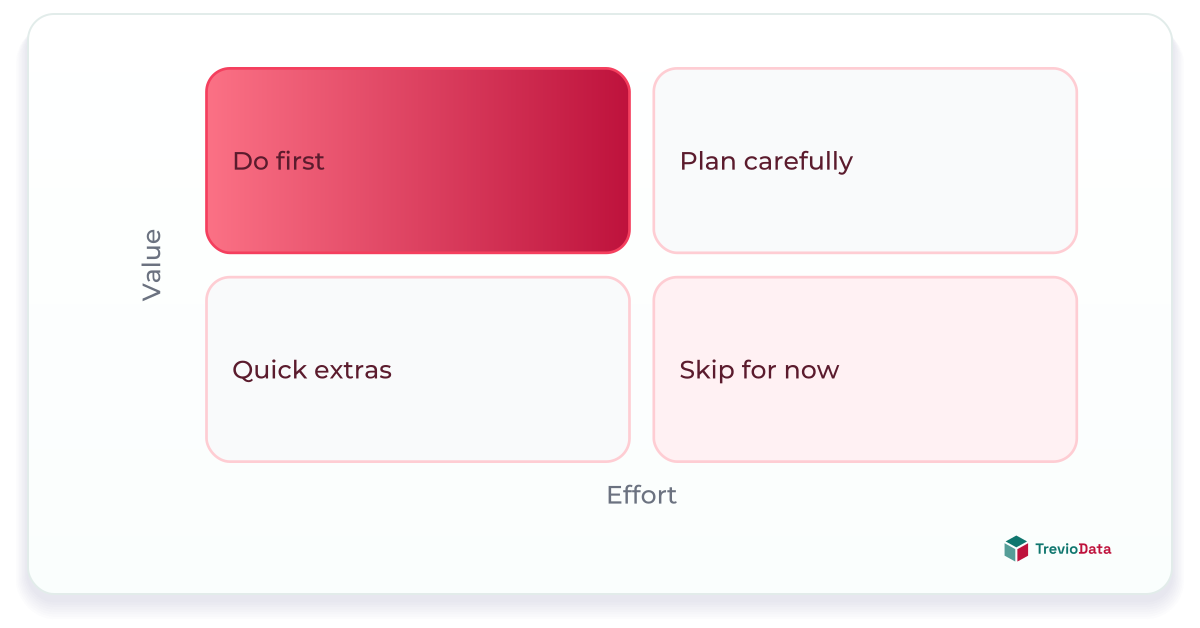
Step 3: Rank Use Cases by Value, Effort and Risk
Gather every data idea people have, from a better dashboard to a forecasting model. Score each on three scales of 1 to 5: value to a goal from step 1, effort to deliver and risk of failing or causing harm. A simple formula is value divided by effort, with risk as a veto. A high-value idea with a risk of 5 gets a review before it gets a budget.
The top three become your first wave. Keep the others on a visible backlog, because people accept waiting when they can see their idea has not been lost.
Step 4: Assign Owners and Decision Rights
For each data domain you need an owner who can say yes or no. That is usually a business leader. A steward handles the daily work, and the data team provides the tools. Write it as a short table: domain, owner, steward, backup.
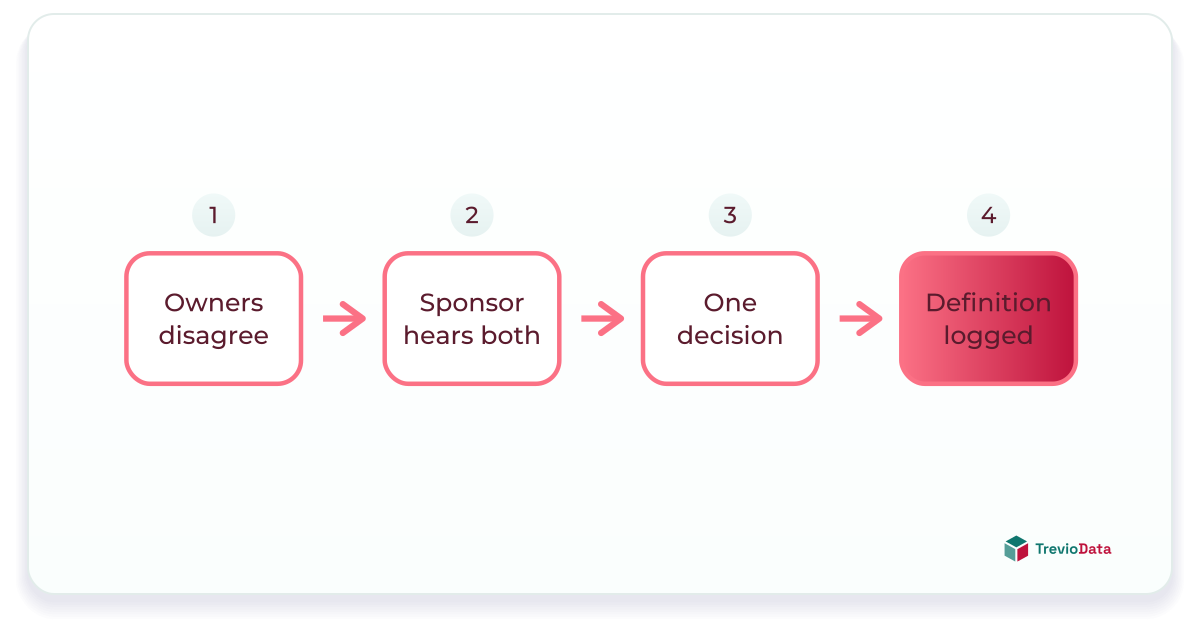
Add one rule for disputes. When two owners disagree on a definition, who decides, and how fast? A named tiebreaker and a seven-day limit settle most conflicts that would otherwise last a year. This is where a framework changes behavior more than any technology choice does.
Step 5: Set Standards That People Will Follow
Standards cover three things: definitions, quality and access. Start with definitions for your ten most-used metrics, written in a sentence each and signed by the owners. Add two or three quality rules per priority domain, such as “every order has a customer ID” or “no duplicate email addresses.” Finally, decide who can see what, and review that list when people change roles.
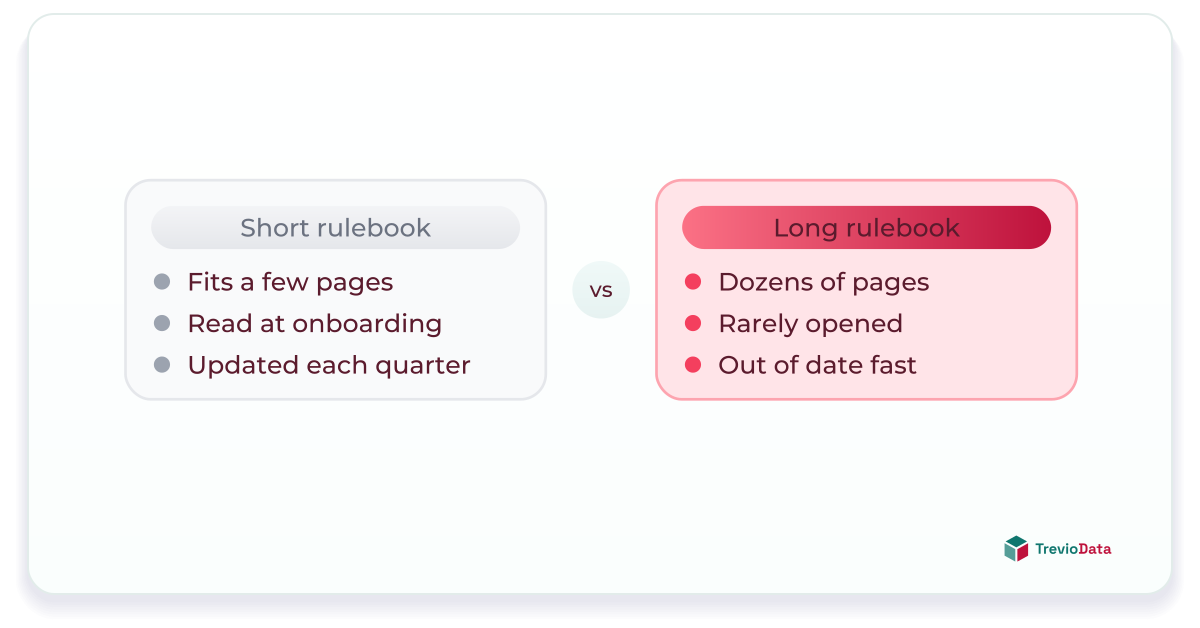
Keep the rulebook short. Rules that fit on a few pages get read, and rules in a forty-page policy get ignored. If your industry brings formal requirements, such as health or payment data, add them here and ask your legal team to confirm the current requirements.
Step 6: Choose Technology Last
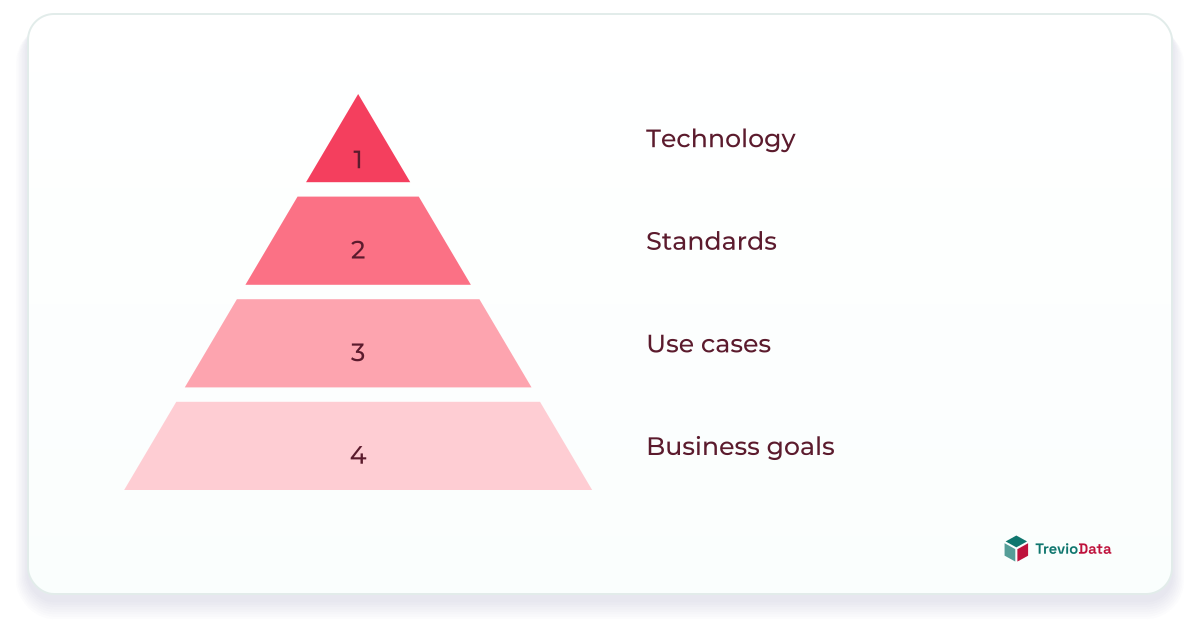
Only now do you ask what platforms you need. Look at the top three use cases and list what each requires: sources to connect, how fresh the data must be, who will query it and how often. The overlap shows you the platform. In many cases your current tools cover most of it, and the gap is a pipeline or a modeling layer.
Include skills in this step. A warehouse that nobody can maintain is a liability. For each capability, decide whether you will hire, train or buy it, and note the cost beside each choice.
Step 7: Sequence Delivery and Measure It
Turn the steps into dated work. Put foundations first, the first use cases next and platform investment once you have proof. Attach a measure to each milestone, drawn from the baseline you took in step 2. My article on the data strategy roadmap shows a full 18-month sequence you can copy.
Plan the review rhythm too. A monthly one-hour check of milestones and a quarterly steering meeting is enough for most companies. Without that rhythm the framework turns into a document nobody opens.
How This Model Compares With Other Frameworks
You will meet other frameworks, such as DAMA-DMBOK, which covers data management as a discipline, and the EDM Council’s DCAM, which assesses capability. They are useful references and they answer different questions. The table shows how I think about the choice.
| Approach | Best for | Be careful with |
|---|---|---|
| Seven-step strategy model | Deciding priorities and sequence for the next 12 to 24 months | Needs a sponsor who attends |
| DAMA-DMBOK | Reference for data management disciplines and vocabulary | Large, and easy to over-apply |
| DCAM-style capability models | Scoring maturity across many capabilities, often in regulated firms | Can become a scoring exercise with no decisions |
| Home-grown checklist | Small teams that need a first plan quickly | Gaps you cannot see yourself |
Borrow the vocabulary from the big frameworks and keep your own plan short. A strategy that reads like a textbook rarely gets followed.
A Checklist to Test Your Own Framework
Hold your current plan up against these questions. Any “no” is a gap you can fix this month.
- Can your sponsor recite the top three goals with numbers?
- Do you have a ranked use case list with scores, not just an idea list?
- Does every priority domain have a named owner?
- Are your ten key metrics defined in writing?
- Did you pick technology after the use cases?
- Does every milestone have a date, an owner and a measure?
When you move from the framework to actual delivery, plan for the friction that appears in data strategy implementation, such as stalled approvals and unclear handoffs. A smaller company can compress the seven steps into a few pages, and my notes on data strategy for small business show how.
For a first pass, time-box each step. Give goals one week, current state one week, and use cases one week. Short limits force decisions, and the result can be improved in the next quarterly review. A rough plan in month two is worth more than a polished one in month six, since your goals will have moved by then.
Mistakes I See When Teams Adopt a Framework
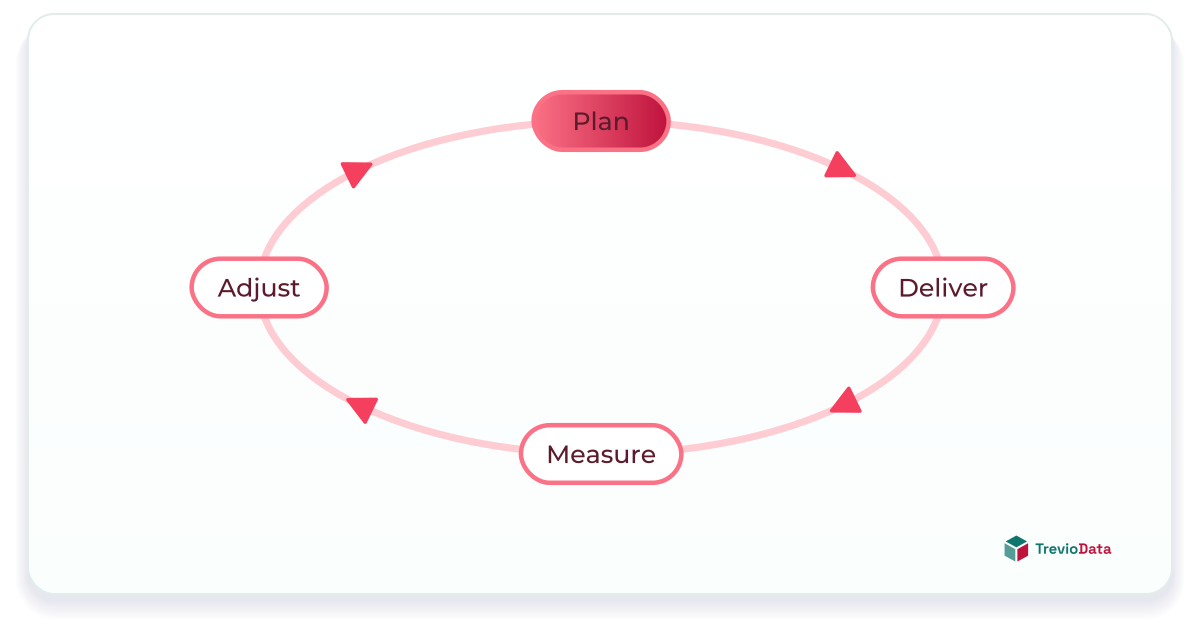
The most common is treating the steps as a one-off project. A framework is a cycle, and goals, scores and owners change. The second is copying another company’s version wholesale, including their ownership model, which was built around their politics. The third is overbuilding step five. I have seen teams write 60 standards before they had a single working report, and then enforce none.
A good rule is to build the minimum for the first use case, run it, and add the standard that the next problem demands. Your framework grows from real friction, which keeps it relevant.
Revisit the framework after your first use case goes live. Compare the ranking you gave it with what actually happened, and adjust your scoring scale if the effort was off by a wide margin. Teams that do this once usually score the next batch far more accurately, which saves months of misdirected work across the roadmap.
How to Choose the Right Depth for Your Company
Pick the depth that matches your size and risk. A fifty-person company can finish all seven steps in a month with short documents. A regulated enterprise may need a quarter and more formal sign-off. The question to ask is how costly a wrong decision would be.
- Small team, low risk: one page per step, about four weeks.
- Mid-sized company: short documents, interviews and a steering group, about eight weeks.
- Regulated or multi-site business: add compliance review and domain workshops, 12 weeks or more.
- Unsure: run steps 1 to 3 first and decide on depth after you see the gaps.
If you are unsure what depth your situation needs, a short outside review can set the scope before you commit to a long project.
Questions About Data Strategy Frameworks
What Is a Data Strategy Framework?
It is an ordered set of decisions that turns business goals into a data plan. It usually covers goals, current state, use cases, ownership, standards, technology and delivery. Using a framework keeps you from buying tools before you know what they are for.
How Many Steps Should a Framework Have?
Five to eight is typical. Fewer steps tend to hide key decisions, and more steps turn into paperwork. The seven-step model here fits most mid-sized companies.
Is DAMA-DMBOK a Data Strategy Framework?
DAMA-DMBOK is a body of knowledge about data management disciplines. It helps you with vocabulary and scope, and strategy is one of the topics it covers. You still need your own goals, priorities and roadmap.
Who Should Own the Framework?
An executive sponsor owns the outcome, and a head of data or program lead runs it. Business owners then take over each data domain. If only the data team owns it, the rest of the company treats it as optional.
How Long Does It Take to Build One?
A small team can finish in about four weeks, and a mid-sized company in six to eight. Regulated or multi-site businesses may need twelve weeks or more. Interviews and decisions take longer than writing.
Do We Need New Technology to Follow a Framework?
Often not. The technology step starts from your use cases, and many of them run on tools you already have. A new platform is only recommended when a specific use case needs something you lack.
How Often Should We Update the Framework?
Review it every quarter and refresh it fully every year. Update sooner after a merger, a new platform or a change in leadership. Small, regular updates are easier than a big rewrite.
Note: This article is general information, not legal, financial or tax advice. Figures and examples are estimates based on typical projects, so check current details with your providers and advisers before you decide.
Was this article helpful?
Thank you for letting us know.
Camille leads the Trevio editorial team and works with our consultants to turn real client projects into practical guides on data strategy, engineering and governance. Before joining Trevio, she spent 11 years in data engineering and analytics roles. She has since edited more than 300 articles on data management and reviewed pipelines and platforms from over 100 client projects. She is based in Denver, Colorado.