Key Takeaways
- A data quality framework has six working parts: scope, roles, dimensions, rules, monitoring and a fix routine.
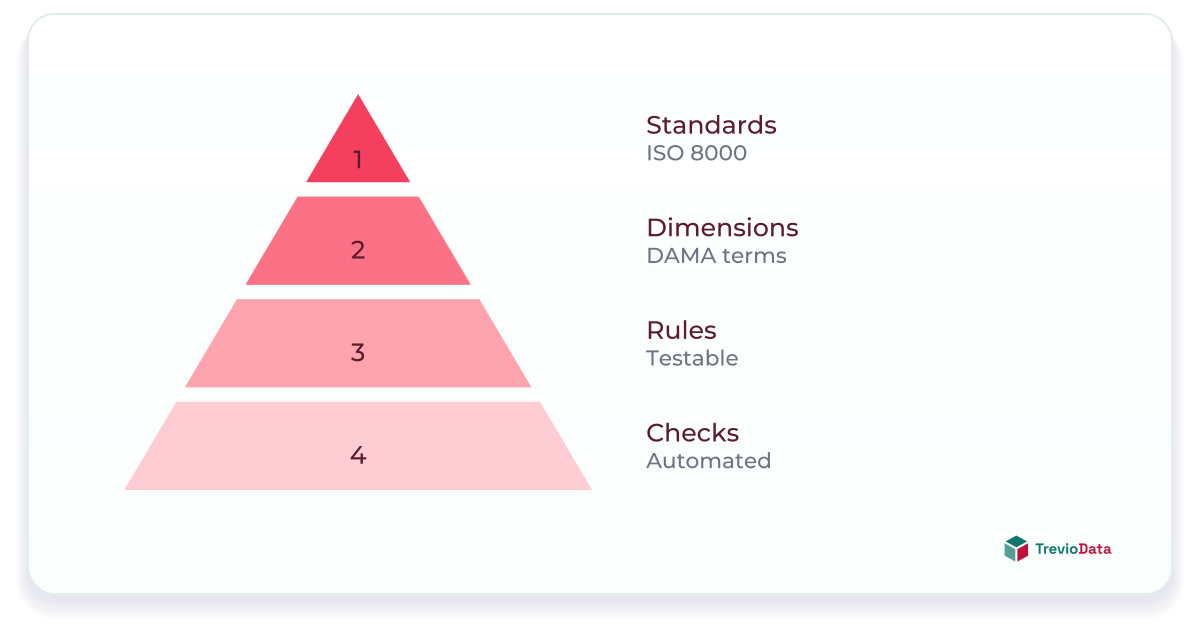
- DAMA, ISO 8000 and ISO/IEC 25012 are useful references, and most teams borrow from them instead of adopting one whole.
- Start with two or three critical datasets and grow the framework as results come in.
- A framework that nobody reviews monthly turns into a document, so build the review into the calendar.
Teams usually ask for a data quality framework after a bad week: a report went out wrong, a model trained on stale data or two systems disagreed about revenue. The request is reasonable, and the answer is often too large. A 60-page framework document does not fix a broken pipeline.
This article explains what a framework contains, how the best-known models compare and how I build one small enough to start in a month. The work I do in data quality consulting follows the same pattern: begin with the data that hurts, write only the rules you will enforce and add structure as the program proves itself.
What a Data Quality Framework Actually Is
A framework is the structure that turns good intentions about data into routine work. It names who owns each dataset, defines what good means, tests the data against that definition and sets the steps for fixing a failure. Take any one of those out and quality slips back to depending on individual effort.
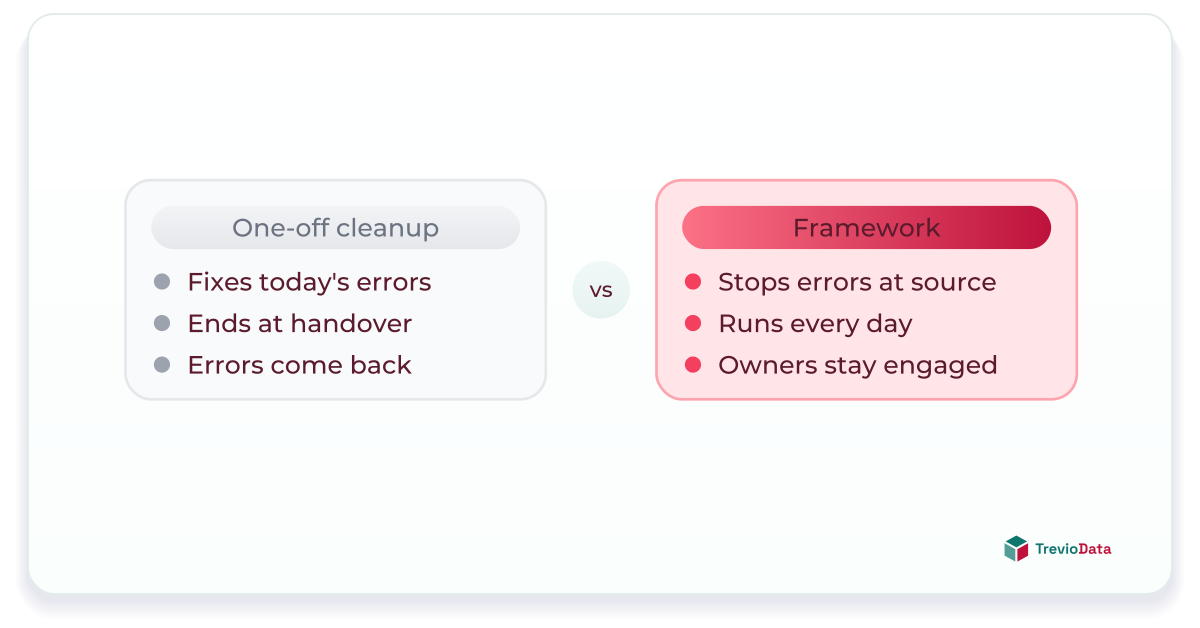
It is not a tool, and it is not a one-off cleanup. A cleanup improves the data once. A framework keeps the improvement in place after the people who ran the cleanup have moved on. That difference is why I judge a framework by its monthly review, not by its document: if the review is on the calendar and decisions come out of it, the framework works.
The Six Parts Every Framework Needs
Models differ in vocabulary, yet the working parts repeat. Here is the set I use.
| Part | What it decides | First version looks like |
|---|---|---|
| Scope | Which data is covered first | Two or three critical datasets |
| Roles | Who owns, fixes and reviews | One owner per dataset, one lead overall |
| Dimensions | How quality is described | Five or six, such as completeness and validity |
| Rules | What passes and what fails | A register of 15 to 30 testable rules |
| Monitoring | How and when data is tested | Daily checks and a monthly score |
| Fix routine | What happens after a failure | Issue queue with an owner and a response time |
The order matters. Scope and roles come first because a rule without an owner is never fixed. Dimensions and rules follow, and monitoring comes after that, since you can only automate a check you have defined.
Scope: Choose Data by Cost of Error
Rank datasets by what a wrong value costs you. Customer, product, order, patient or supplier data usually leads the list, because errors there reach customers and finance. I pick two or three and leave the rest for later. Starting wide produces rules nobody can enforce.
Roles: Put Ownership on the Business Side
Each dataset needs an owner who can say what good looks like and a steward who handles daily questions. A data quality lead runs the program. The pattern that fails most often is giving every role to IT. Engineers can fix pipelines, but only the business can tell you whether a customer's status is right.
Dimensions and Rules: Make Every Rule Testable
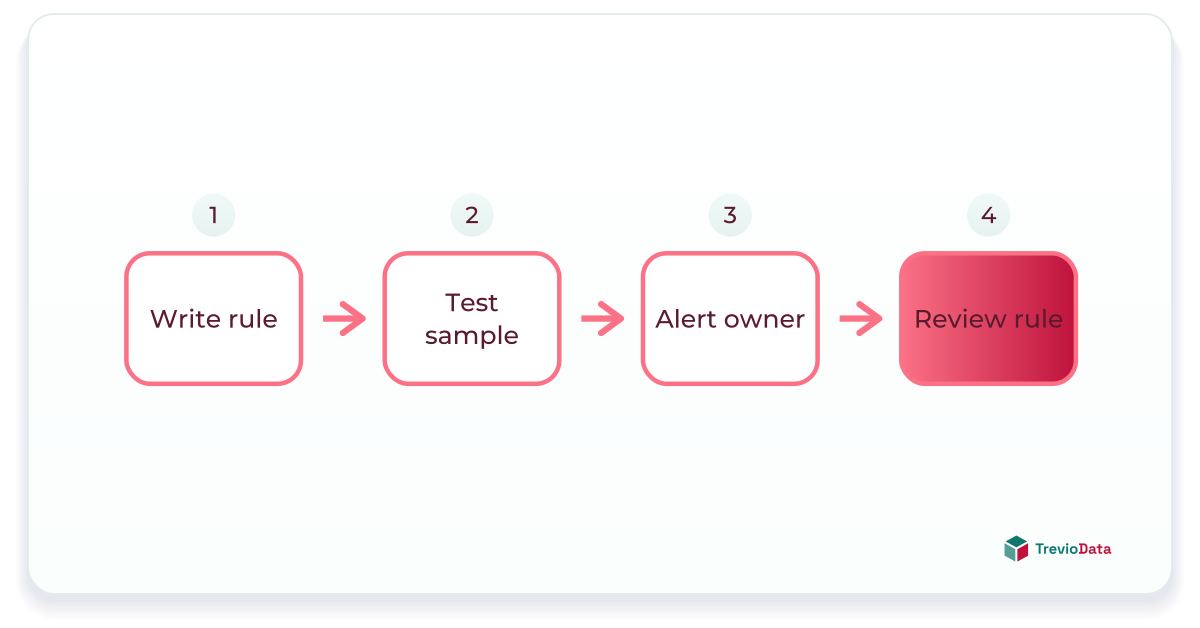
A dimension describes a type of quality, and a rule turns it into a pass or fail test on a field. "Customer email is valid" is a dimension statement. "Email matches the standard pattern and is not on the blocked list" is a rule. Write each rule with an owner, a threshold and an action. My guide to data quality metrics shows ten measures you can attach to those rules.
How the Main Models Compare
You do not have to invent a framework from nothing. Three references come up most often, and each answers a different need.
| Model | What it gives you | Best use |
|---|---|---|
| DAMA-DMBOK | A broad data management body of knowledge with common quality dimensions and role definitions | Shared vocabulary and a checklist of topics |
| ISO 8000 | An international family of standards on data quality and data exchange | Contracts and exchange of master data where a standard is required |
| ISO/IEC 25012 | A data quality model with defined characteristics such as accuracy, completeness and currentness | Precise definitions for software and system requirements |
| Your own lean framework | Six parts, written in plain language | Day-to-day operation in a mid-size company |
In practice I borrow the dimensions from DAMA, check definitions against ISO when a client needs formal wording and keep the working framework to a few pages. Standards change, so confirm the current versions with the publisher if a contract or audit refers to them.
Building Your Framework in Four Weeks
A first version does not need a steering committee. This is the sequence I follow with a mid-size team, and it assumes you can reach the data owners within the first week.
Week 1: Profile and Pick
Profile the candidate datasets to see null rates, duplicates and out-of-range values, then pick two or three with the highest cost of error. Share the profiling output with the owners. Real numbers on their own data start the conversation faster than any slide about best practice.
Week 2: Write the Rules Register
Write 15 to 30 rules in a shared register. For each rule, record the dataset, field, dimension, test, threshold, owner and what happens on failure. Keep language plain, and have an owner approve each rule. A rule that nobody approved will be ignored the first time it fails.
Week 3: Automate the Checks
Turn the rules into scheduled checks. SQL jobs, dbt tests or a tool such as Soda can all do it, and my ranking of data quality tools helps you choose. Route each alert to the owner, not to a shared inbox. Test every alert once on purpose to confirm it arrives.
Week 4: Set the Review and the Fix Routine
Schedule a 45-minute monthly review, create the issue queue and agree on a response time. Your first review will show baseline scores, and those become the numbers you improve. Set the date for the next review before the first one ends.
A Checklist to Test Your Framework
Run this check against your current setup. Each unchecked item is a likely source of next quarter's problem.
- Every critical dataset has a named business owner.
- Every rule has a threshold and an owner who approved it.
- Checks run automatically and alerts reach a named person.
- An issue queue exists with a target response time.
- A monthly review happens, and decisions are written down.
- Scores are visible to business teams, not only to engineers.
If you can tick four or fewer, start with roles and the rules register. If you tick all six, the gap is usually coverage, so extend the framework to your next dataset. An early data quality assessment is a good way to find which datasets deserve to come next.
Why Frameworks Fail to Scale, and What Fixes It
A framework that works for three datasets can break at thirty. The usual cause is that every new dataset gets hand-written rules and hand-assigned owners. The fix is a template: a standard set of checks for each type of table, such as freshness, volume, key uniqueness and null checks on required fields, applied by default and adjusted by exception.
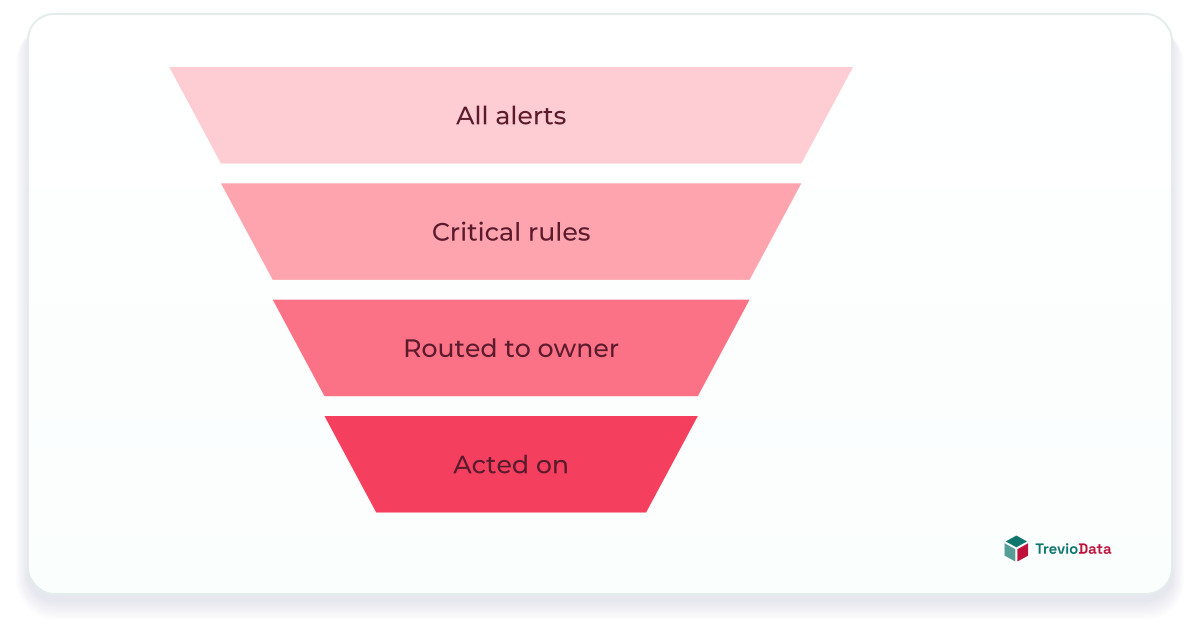
The second cause is overload. Owners who receive dozens of alerts a day stop reading them. Grade your rules by impact, send only the high-impact ones as alerts and put the rest into the monthly report. The third is drift: definitions change and nobody updates the register. Assign the quality lead to review the register each quarter and retire rules that no longer match how the business works.
Plan where the framework fits in your larger program. My data quality strategy article explains how to set priorities and sequence the work, so the framework grows with a purpose.
What the Roles Do in a Normal Month
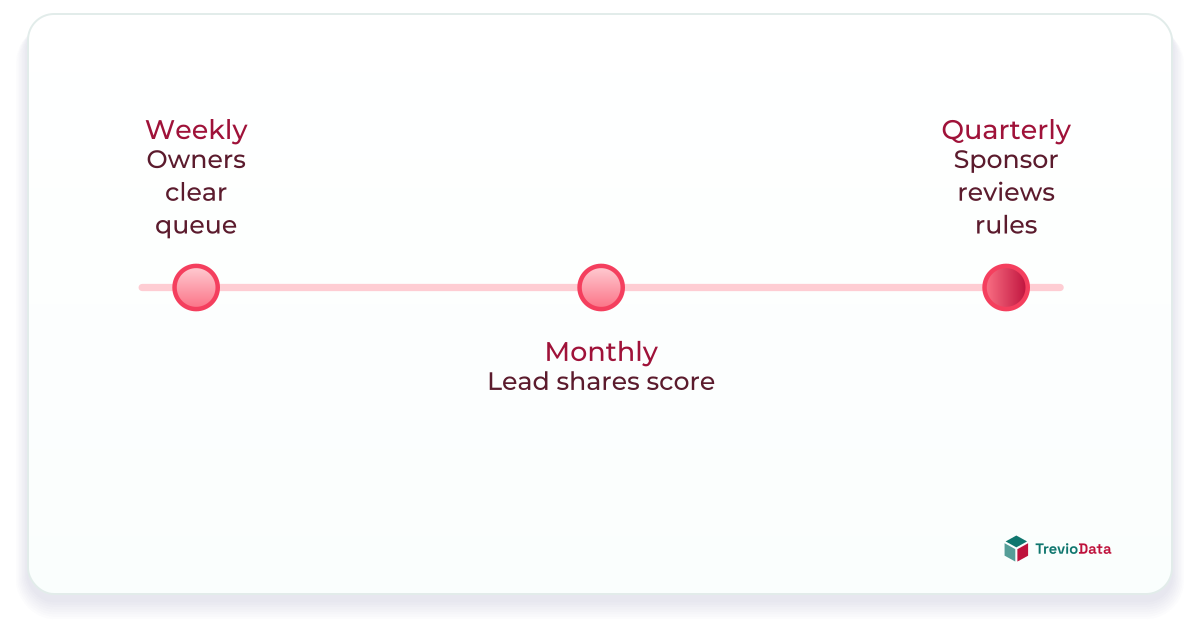
Roles stay abstract until you see them in a calendar. In a normal month, the data owner reviews the score for the dataset and approves any change to a rule. The steward works through the issue queue, confirms causes with the source team and closes fixed items. The quality lead prepares the one-page score report, runs the review meeting and escalates anything that has been open too long. Engineers fix pipelines and add checks when the owner approves a new rule.
Write this down in one paragraph per role, with the time it should take. If the owner role needs more than two hours a month, the framework is asking too much, and you should cut rules or alerts until it fits.
How to Choose Between a Lean Framework and a Formal Standard
I ask three questions before I recommend anything formal:
- Does a contract, customer or regulator require a named standard?
- Do you exchange master data with partners who expect a common format?
- Do you have a team who can maintain formal documentation?
If the answers are no, write a lean framework and keep it to a few pages. If one answer is yes, map your lean framework to the standard afterward, so the formal wording sits on top of working practice. Check the current requirements with your legal advisor before you rely on a standard for compliance.
Questions About Data Quality Frameworks
What Is a Data Quality Framework?
A data quality framework is the set of roles, standards, rules, checks and routines that keep data fit for use. It answers who owns each dataset, what good looks like, how you measure it and what happens when a check fails. A framework is a working structure for your team, and the documents that describe it are only one part.
How Many Dimensions Should My Framework Include?
Start with five or six: completeness, validity, uniqueness, timeliness, accuracy and consistency. These match the dimensions in common practice guides such as DAMA. More dimensions add reporting work without finding new problems on most tables, so add one only when a real issue needs it.
Which Standard Should I Follow, DAMA or ISO?
Use them as references, not as rulebooks. DAMA-DMBOK gives a practical vocabulary for dimensions and roles. ISO standards such as ISO 8000 and ISO/IEC 25012 define terms and characteristics that matter when contracts or audits require them. Most teams borrow the parts that fit and write their own short framework.
How Long Does It Take to Build a Framework?
A first version for two or three critical datasets takes four to eight weeks in my client work, including profiling, rules and the first monitoring. The framework grows as you add datasets. Waiting for a complete version before you start checking data is the most common reason these projects stall.
Who Should Own the Framework?
A data quality lead owns the framework itself, and business data owners own the quality of their datasets. The lead sets standards, runs the review meeting and reports results. If IT owns everything, business teams treat quality as someone else's job, so put the decision rights with the people who use the data.
Do I Need a Data Quality Tool for a Framework?
Not at the start. Profiling queries, a rules register and a monthly review work in spreadsheets and SQL. Tools become useful once you run many checks daily and need alerts and history. Decide on tooling after the rules exist, so the tool enforces something real.
How Is a Data Quality Framework Different from Data Governance?
Governance sets decision rights and policy for all data, including access, privacy and definitions. A quality framework focuses on whether data meets the standards, and on how you test, report and fix it. The two overlap on ownership and rules, and a quality framework usually sits inside a governance program.
Sources
Note: This article is general information, not legal, financial or tax advice. Figures and examples are estimates based on typical projects, so check current details with your providers and advisers before you decide.
Was this article helpful?
Thank you for letting us know.
Camille leads the Trevio editorial team and works with our consultants to turn real client projects into practical guides on data strategy, engineering and governance. Before joining Trevio, she spent 11 years in data engineering and analytics roles. She has since edited more than 300 articles on data management and reviewed pipelines and platforms from over 100 client projects. She is based in Denver, Colorado.