Key Takeaways
- State privacy laws keep spreading, so a single national baseline works better than one program per state.
- Opt-out signals such as Global Privacy Control are moving from nice-to-have to something regulators expect you to honor.
- Shadow AI is now a measurable breach cost, which makes AI tool rules a privacy task.
- Buyers ask for evidence earlier in the sales cycle, so records and request logs pay back in revenue.
I track privacy changes for client work, and most years the news looks like noise until you sort it by which routine it touches. This year, seven shifts matter. Each one lands on the same few jobs: your data inventory, your consent setup, your request workflow and your vendor list. If you are building those with data privacy consulting support or on your own, this is the list I would plan around.
Laws are in motion in several places, so I describe what has been decided, what is proposed and where you should check the current status with your counsel.
1. State Privacy Laws Keep Multiplying
The US still has no single federal privacy law for consumers, so states keep writing their own. Trackers count about 20 states with comprehensive consumer privacy laws in effect, and a few more enacted with later effective dates, depending on how a tracker counts them (PrivacyTerms tracker; the IAPP tracker is the one professionals follow).
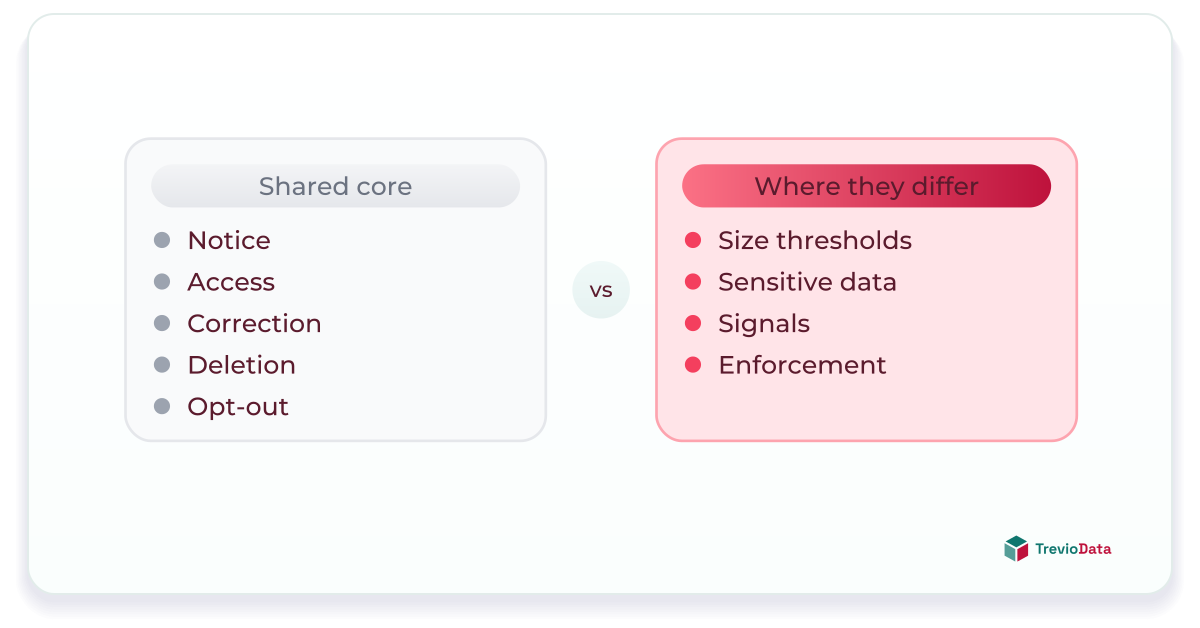
The laws share a core: notice, access, correction, deletion and opt-outs for certain uses. They differ in thresholds, definitions of sensitive data and how they treat children and profiling. My advice to clients is to build one baseline that meets the strictest common rules, then add small state-specific switches. Running a separate program per state is a maintenance trap.
2. Opt-Out Signals Become Something You Must Honor
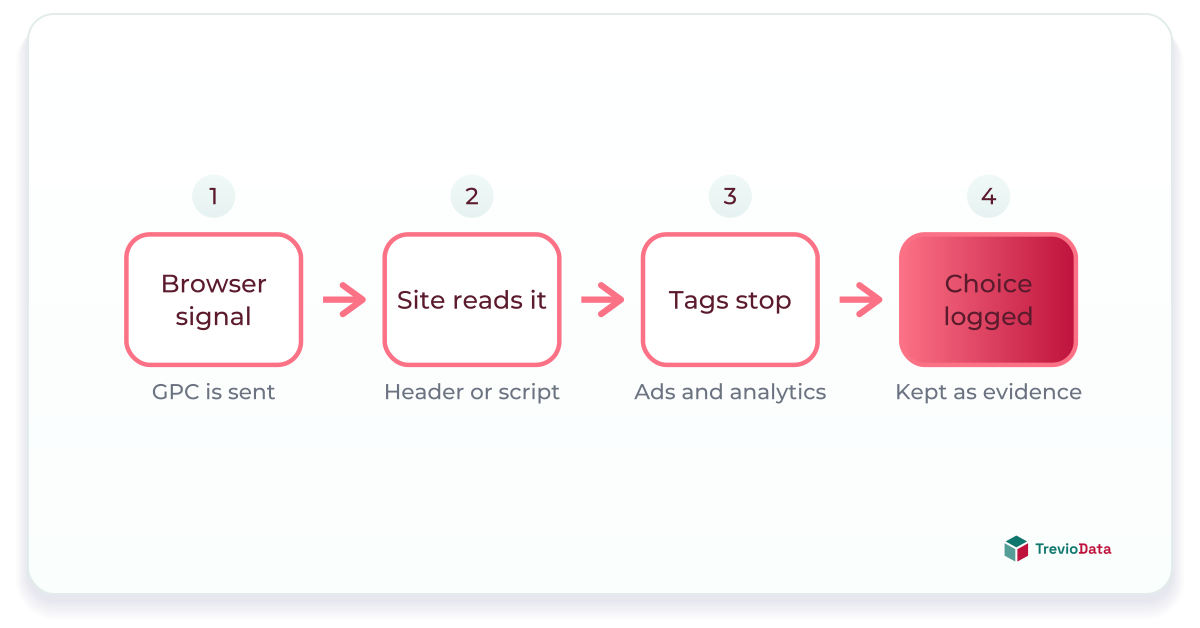
Global Privacy Control is a browser signal that tells a site the visitor opts out of sale or sharing of personal data. California's privacy agency voted in August 2026 to open formal rulemaking on opt-out preference signals. Staff expect the proposed rules to treat GPC as a valid opt-out and require signals to be processed before data is sold, shared or disclosed. No final text had been published at the time of that report (Alston & Bird summary).
You can act before the rules settle. Turn on GPC in a test browser, visit your site and check whether your analytics and advertising tags stop firing. In several audits I have seen banners that record the signal but leave tags running, which defeats the purpose. A tag test takes ten minutes and tells you more than a vendor's compliance claim does.
3. Data Broker Deletion Goes Industrial
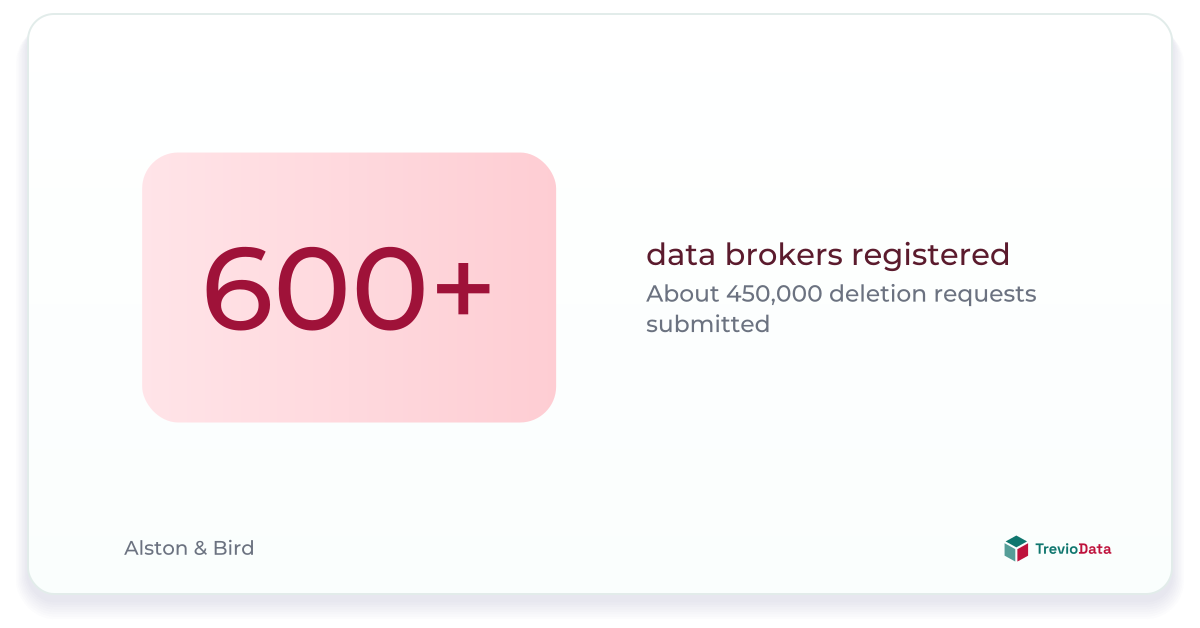
California's Delete Request and Opt-Out Platform, known as DROP, launched on January 1, 2026. Registered data brokers had to start processing deletion requests from it on August 1, 2026, on a 45-day cycle. About 450,000 Californians had submitted requests, and more than 600 brokers had registered, according to the same Alston & Bird summary.
If you are not a data broker, why care? Because it shows where regulators are heading: one request, many deletions, handled by software and checked by audit. Expect more of your own customers to arrive through tools that file requests on their behalf. A request workflow that depends on email threads will struggle with that volume. It also raises the value of knowing exactly where each person's data lives, which is the job of the inventory in my guide to data privacy management.
4. EU GDPR Reform Is on the Table
The European Commission proposed changes to the GDPR as part of its Digital Omnibus package, and the proposals have been debated by member states and the Parliament. Reports have described disagreement over how to change the definition of personal data, and compromise drafts have moved in different directions (IAPP news). I will not state dates or final content here, since the proposal is not settled. Check the current status with counsel before you change anything.
What you can do now is the work that holds under any outcome. Know where personal data lives, keep records of why you process it and keep the evidence tidy. Teams with a current inventory will adapt to whatever passes in days. Teams without one will start from zero.
5. Shadow AI Becomes a Privacy Cost
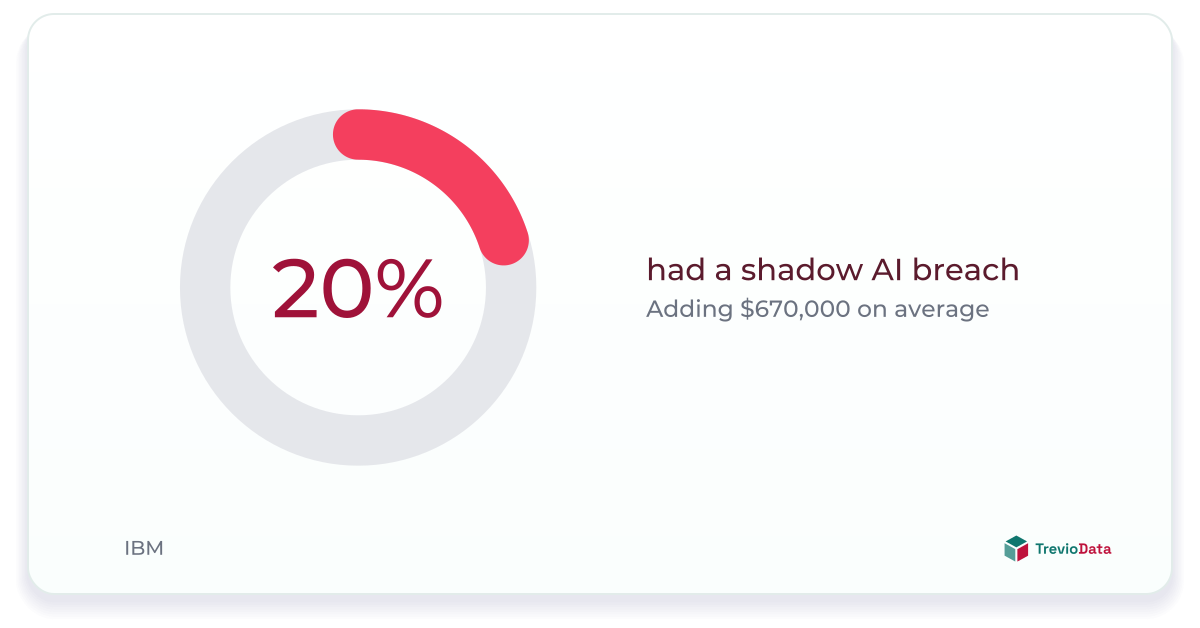
IBM's 2025 Cost of a Data Breach research reported a global average breach cost of $4.44 million. It also found that 20 percent of organizations studied had a breach linked to shadow AI, meaning AI tools used without approval, adding an average of $670,000 to the cost. Of organizations that had AI-related breaches, 97 percent lacked proper AI access controls (IBM Cost of a Data Breach report).
The privacy angle is plain. Staff paste customer records into public chat tools, connect AI notetakers to meetings with personal details and switch on vendor AI features that send data to third parties. The fix is boring and works: publish a short list of approved tools, say which data classes may go into them, and use access controls for anything connected to company systems. Add AI tools to your vendor review and to the inventory.
6. Request Handling Moves From Email to Workflows
As individuals and automated services send more requests, manual handling breaks down. A request touches a dozen systems, needs identity checks and has a deadline that depends on the rules that apply. Companies respond in two ways: tighter inventories that shorten the search, and tools that scan systems and route tasks automatically.
My view is that tools help only after the workflow is written down. I have seen a team buy a request platform and then discover that nobody had decided who approves a deletion that conflicts with a retention duty. Decide the workflow first, then pick software. My ranked data privacy tools list shows which ones suit consent, request handling or discovery, and which fit small teams.
7. Buyers Ask for Evidence Earlier
Enterprise and public-sector buyers now send privacy and security questionnaires before the first pilot. They ask for data maps, retention rules, vendor lists and request logs. A company without them waits weeks to answer, and the deal waits too. This trend is less visible than a new law, yet it moves revenue directly.
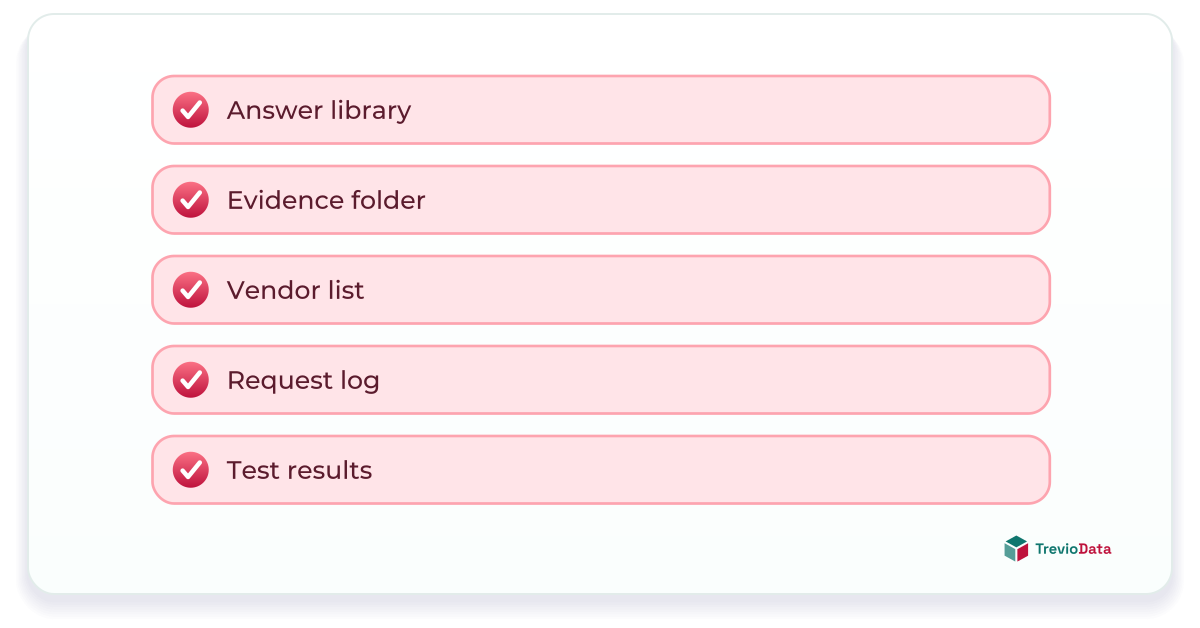
The remedy is a library of ready answers and a folder of dated evidence, both of which fall out of a regular data privacy audit. It also rewards honesty. Buyers read vague answers as a sign of missing controls, and specific answers with dates as a sign of a program that runs.
What Is Not Changing
Amid the news, a few things stay put, and they are worth remembering when a headline makes you want to rebuild your program. Regulators and buyers still ask the same basic questions: what data do you hold, why, where, who can reach it, how long do you keep it and how do you answer a person who asks about theirs. Companies that can answer those in plain language and with dated evidence handle each new rule as a small update.
Breaches also keep following a familiar pattern. Stolen credentials, forgotten access and data kept long after it was needed show up again and again in incident reports. Deleting what you no longer need and removing access that nobody uses reduces your exposure under any law, in any state or country. I call this the cheapest privacy program there is, and clients are often surprised how much of it they can finish in a quarter.
The last constant is people. Training that uses your own examples, such as a real export left in a shared drive, changes behavior more than a generic course. Keep it short, repeat it each year and run it whenever a new tool arrives.
What to Do About All Seven
The seven trends point at the same short to-do list. Keep the inventory current. Build one baseline for consent and opt-outs, and test it in a browser. Write the request workflow. Review vendors, including AI vendors. Keep evidence dated and in one place.
| Trend | Routine it touches | First action |
|---|---|---|
| State laws | Rules, notices | Check applicability thresholds with counsel, then adopt one baseline |
| Opt-out signals | Consent setup | Test GPC in a browser and fix tags that keep firing |
| Broker deletion | Request workflow | Write the deletion path and map where data lives |
| GDPR reform | Inventory, records | Keep records of processing and purposes current |
| Shadow AI | Vendors, access | Publish approved AI tools and data rules |
| Request automation | Workflow, tools | Decide the workflow before buying software |
| Buyer scrutiny | Evidence | Build an answer library and an evidence folder |
To turn the list into a sequence with owners and dates, use the five phases in my data privacy strategy framework. To find out how ready you are today, a data privacy assessment scores the same routines.
How to Choose Which Trend to Tackle First
Pick the one with the nearest consequence for your business. If you sell into California and run ad tags, test opt-out signals this month. If your teams use AI tools freely, write the approved tool list. If enterprise deals stall, build the answer library. You do not need to address all seven in a quarter, and trying to do so usually means none gets finished.
If you want a view on which one applies to you, a free call can cover it in a few minutes.
Questions About Data Privacy Trends
What Is the Biggest Data Privacy Trend Right Now?
For most US companies it is the spread of state privacy laws, because each new law adds slightly different definitions, rights and thresholds. For companies with AI tools in daily use, uncontrolled AI use with customer data is a close second. Which matters more depends on where your customers live and how your teams use AI.
Do I Need to Follow the EU GDPR If I Am in the US?
It can apply when you offer goods or services to people in the EU or monitor their behavior, wherever you are based. Whether it applies to you is a legal question, so ask your counsel. If you sell to EU customers, build your data map with that in mind from the start.
What Is Global Privacy Control?
Global Privacy Control, or GPC, is a browser setting that tells websites a visitor opts out of the sale or sharing of their data. Some US state rules treat it as a valid opt-out request. Test whether your consent tools honor it, because a banner that ignores the signal can create a problem you did not know you had.
How Does AI Change My Privacy Risk?
It adds new places where personal data can leak: prompts pasted into public tools, training data, vendor features switched on by default and shared transcripts. The fix starts with an approved list of tools, rules about what data may go into them and access controls on anything connected to company data.
Will Privacy Laws Keep Changing?
Yes. New state laws, regulator rules and court decisions arrive every year, and the EU is debating changes to the GDPR. A program built on a good data inventory and clear owners absorbs these changes as updates, so it does not need a rebuild each time.
What Should a Small Business Do First?
List where you keep customer data, delete what you no longer need, make sure your opt-out and request paths work, and write down who handles requests. Those four steps cover most of the practical risk. Then ask your counsel which rules apply to your sales regions.
Where Can I Follow Privacy Changes Reliably?
Use primary sources: the text of laws, regulator announcements and trackers run by professional bodies such as the IAPP. Vendor blogs are useful for practical detail but often sell a product alongside the news, so confirm anything important against the original source or with counsel.
Sources
- PrivacyTerms: US state privacy laws in 2026
- IAPP: US state privacy legislation tracker
- Alston & Bird: California opt-out signals and data brokers
- IAPP: Digital Omnibus compromise proposal
- IBM: Cost of a Data Breach report
Disclaimer: This article is general information, not legal advice. Privacy laws and proposals change quickly, so confirm the current status of any rule with your own counsel.
Was this article helpful?
Thank you for letting us know.
Camille leads the Trevio editorial team and works with our consultants to turn real client projects into practical guides on data strategy, engineering and governance. Before joining Trevio, she spent 11 years in data engineering and analytics roles. She has since edited more than 300 articles on data management and reviewed pipelines and platforms from over 100 client projects. She is based in Denver, Colorado.