Key Takeaways
- A data platform strategy starts from business decisions, not from a vendor shortlist.
- Six decisions shape almost everything: scope, storage, ingestion, modeling, governance and cost control.
- Build in four phases and show one trusted result before you widen the scope.
- Write the strategy in a few pages, review it every quarter and give it one owner.
Most data platform projects fail on the first page, before anyone touches a tool. The goal is vague, the owner is unclear and the shopping list starts with a vendor. If you want an outside view while you write the plan, data platform consulting usually begins with exactly these questions.
I wrote this playbook from platform projects where the order of work mattered more than the brand on the invoice. It gives you a structure you can copy, with the decisions that deserve a meeting and the ones that do not.
The Strategy at a Glance: Four Phases
The table below is the whole plan on one screen. Each phase ends with a result you can show to someone outside the data team, and you do not start the next phase until the current one has produced it.
| Phase | Typical length | Main work | Result you can show |
|---|---|---|---|
| 1. Frame | 3 to 6 weeks | Interviews, decision list, source inventory, baseline cost and effort | A three-page strategy with an owner and a ranked list of use cases |
| 2. Choose | 4 to 8 weeks | Requirements, shortlist, proof of concept on your own data, cost model | A platform decision with a written comparison |
| 3. Build the first slice | 6 to 12 weeks | Two or three sources, raw and modeled layers, tests, access rules | One trusted report that replaces a manual one |
| 4. Widen and operate | Ongoing | More sources and teams, catalog, cost reviews, training | A quarterly scorecard with usage, freshness and cost |
These lengths come from my own projects, and your timing depends on how fast you get access to source systems. That single item causes more delay than any technical choice.
Start With Decisions, Not Technology
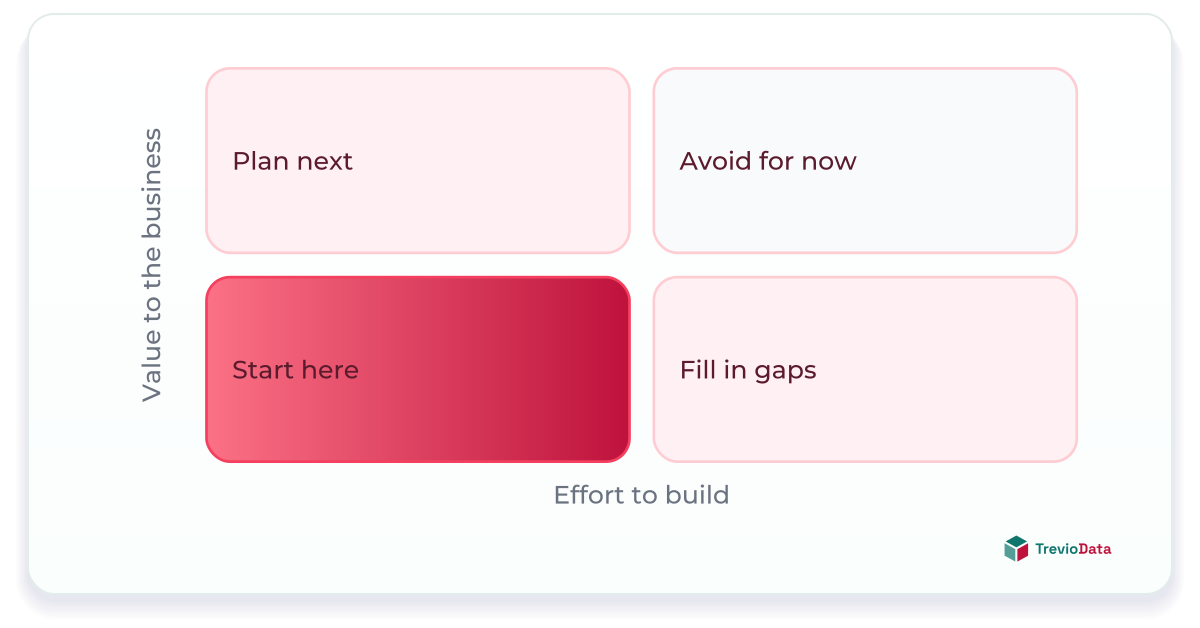
Ask the leaders you work with which decisions they make every week with bad or late data. Write down ten of them, then rank them by money at stake and by how often they come up. Pricing, stock levels, churn follow-up and cash forecasts show up on almost every list.
This list is the spine of the strategy. Every platform feature you later propose has to point at one of those decisions, and anything that cannot is a candidate for the “later” column. It also gives you language that executives understand when budget talks start.
Next, count what you already have. List every source system, who owns it, how the data leaves it and where people copy it by hand. A shared sheet is enough, and the exercise usually reveals three or four exports that nobody remembered. Record the monthly cost of the tools involved too, because you will need that baseline to prove savings later.
Six Decisions Every Strategy Has to Make
You do not need fifty design choices. Six of them shape the rest, and each one can be written down in a paragraph.
Scope: What the Platform Is and Is Not For
Decide whether the platform serves reporting only, or also machine learning, customer-facing data products and data sharing with partners. Each addition raises the skill level and the bill. For most teams, reporting plus a clean path to machine learning later is enough.
Storage: Warehouse, Lake or Lakehouse
A warehouse stores structured, modeled tables and gives analysts fast SQL. A lake stores raw files cheaply. A lakehouse adds table features to lake files so one copy can serve both BI and machine learning. My default is a warehouse unless you store large volumes of raw files or train models on them.
| Option | Best when | Main trade-off |
|---|---|---|
| Cloud warehouse | Most of your data is structured and your users write SQL | Compute costs rise with heavy or always-on workloads |
| Data lake | You keep raw files, logs, images or event streams | Without rules it turns into a swamp nobody can search |
| Lakehouse | BI and machine learning should share one copy of the data | Needs more engineering skill to run well |
Ingestion: Batch, Streaming or Both
Batch loads on a schedule are cheaper and simpler. Streaming earns its cost when someone can name a decision that needs data within seconds, such as fraud checks or live stock. Start with batch and move one use case to streaming when it is justified.
Modeling: Where Business Logic Lives
Pick one place where revenue, active customer and margin get defined, and keep it in version-controlled code with tests. If the definition lives in six dashboards, you will have six answers. This choice matters more to trust than any storage decision.
Governance: Who Can See and Change What
Set role-based access, name data owners and decide how you label sensitive columns before the first sensitive table lands. Retrofitting access rules costs far more. If you handle health or financial data, involve your security team in the first week and keep a record of who approved what. The wider approach is covered by data governance consulting.
Cost Control: Who Watches the Bill
Give one person the cost dashboard, set budgets and alerts, and review spend by team monthly. Most surprise invoices come from a handful of heavy queries or clusters left running overnight.
Phase One: Frame the Work
Interview six to ten people across finance, sales, operations and IT, and ask each one three questions: what decision is slow, which number do you not trust and what do you do by hand every month. Record answers in plain language and quote them in the strategy.
Then write the strategy itself: a goal in one sentence, the ranked use cases, the six decisions above with your current leaning, the owner and a first budget. Three pages is a good length. If the document grows past ten, you are probably writing a specification.
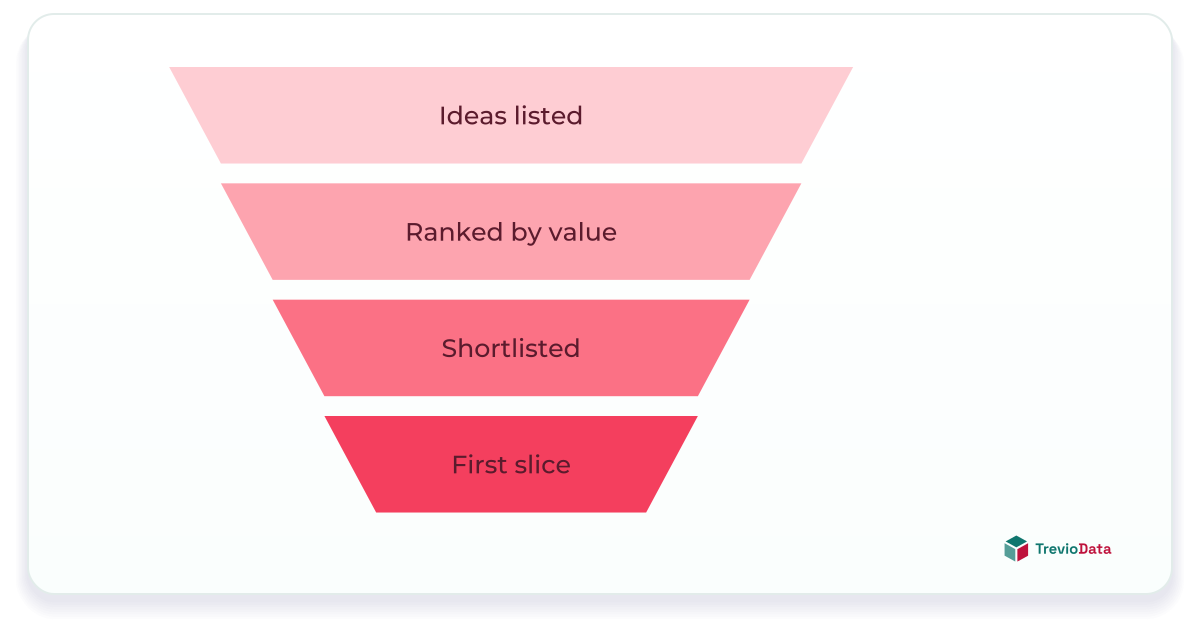
One caution from experience: the first draft will be too ambitious. In one project, the first list held fourteen use cases, and after a prioritization meeting only three survived. Those three delivered more than the full list would have, because the team had room to finish them.
Phase Two: Choose the Platform With Evidence
Turn the strategy into a requirements sheet: data volume today and in two years, number of users, languages and tools your team already knows, security needs, your cloud provider and the budget range. Score two or three platforms against it. Prices and ratings for the main options are in my ranking of data platform tools.
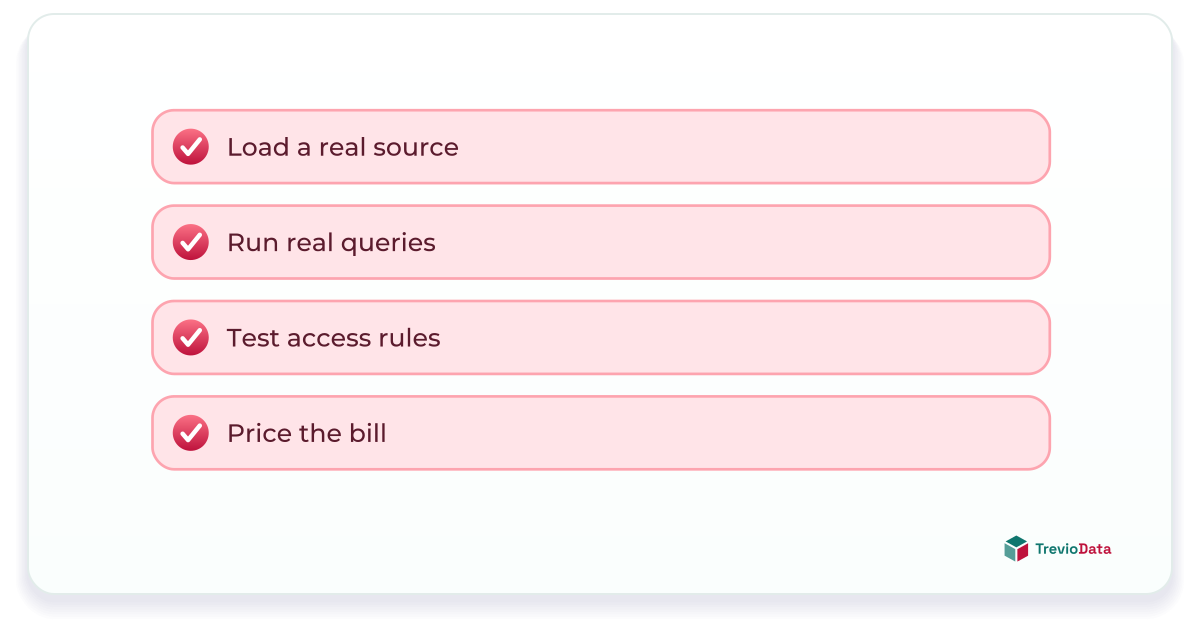
Run a proof of concept on your own data for two weeks. Load one real source, build one real model and run the queries your analysts actually write. Measure query time, cost and how long it took your own people to get started. Vendor demos use friendly data, and your data will be messier.
Before you sign anything, estimate the cost for year one and year three. A platform that looks cheap at today’s volume can behave very differently at ten times the data, and my guide to data platform cost shows which line items grow fastest.
Phase Three: Build One Thin Slice
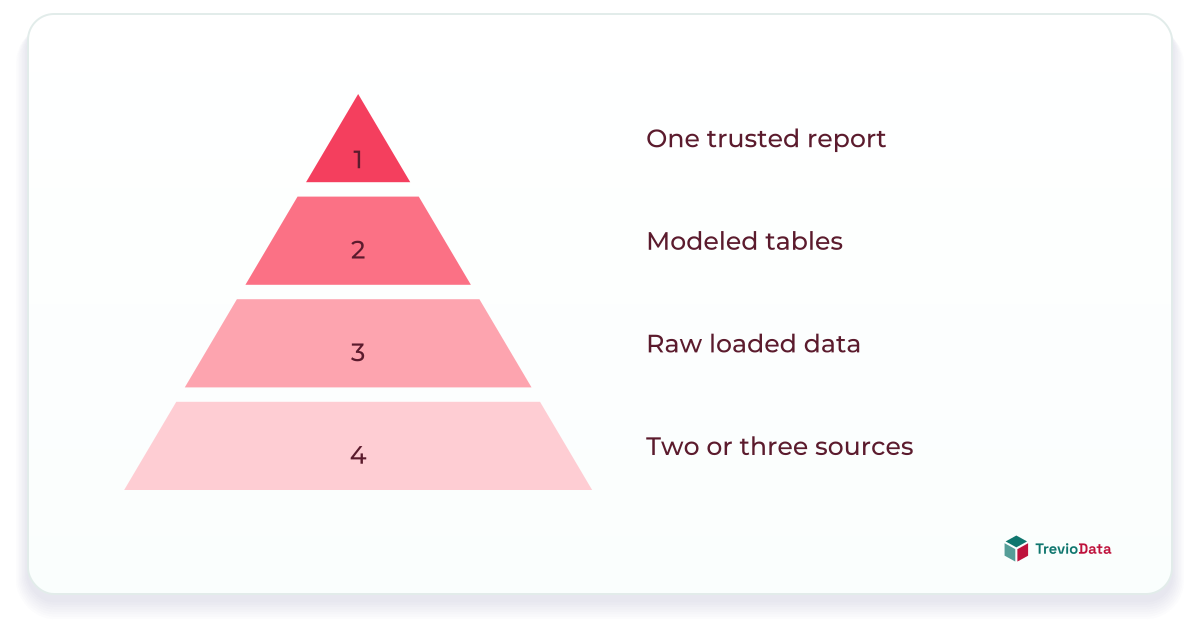
A thin slice runs through every layer with a small amount of data: two or three sources, a raw zone, modeled tables, tests, access rules and one report. It proves the architecture and gives the business something to use within weeks.
Pick the slice from your ranked list. Choose a report that people already request and that someone currently builds by hand, so you can show the hours saved. Run the old and new numbers side by side and explain every difference. When finance says the new figure is right, you have your first real win.
Write down the rollout steps as you go. The practical sequence of environments, migrations and cutovers is covered in my article on data platform implementation, and it turns this phase into a checklist.
Phase Four: Widen and Operate
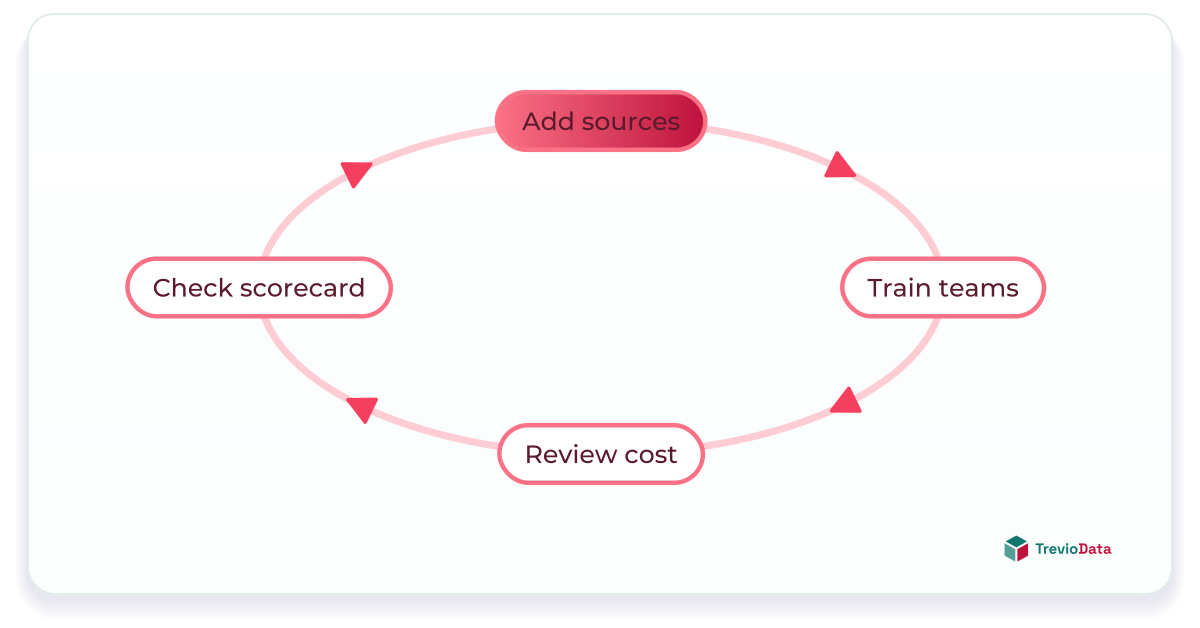
After the first slice works, add sources and teams in order of business value. Every addition follows the same pattern: owner named, source loaded, model written, tests in place, access reviewed, report switched over. Repeat it until it is routine.
Add a catalog when people start asking where data comes from, and add self-service when your models are stable enough to trust. Too early, both become clutter. Hold a monthly cost review and a quarterly scorecard with four numbers: active users, data freshness, failed loads and cost per team.
Look at how other organizations did it before you decide how far to go. My collection of data platform examples shows what a few well-known teams chose and what they said they would change.
Where Strategies Go Wrong
- The plan starts with a vendor, so every requirement bends toward that product.
- Nobody owns the budget, and the cloud bill arrives in a different department.
- Governance is postponed until after the first sensitive table is loaded.
- The team builds for a company ten times larger, then cannot staff what it built.
- Results are reported in technical terms, so executives cannot see the value.
The fix for the last point is simple: report in the numbers your leaders already track, such as hours saved, days to close the books or time to answer a request. Use a table like the one below in your quarterly update.
| Measure | Baseline | After first slice | Why it matters |
|---|---|---|---|
| Hours spent on manual report prep | Measured in phase one | Measured again after cutover | Shows the labor saved |
| Days to answer a new data request | Measured in phase one | Measured again each quarter | Shows speed to decision |
| Failed loads per month | Count from existing jobs | Count from new pipelines | Shows reliability |
| Cloud cost per active user | Estimate from the cost model | Actual from the bill | Shows whether the platform scales sensibly |
How to Choose Your First Move
If you have a strategy draft and are unsure where to start, check it against four questions:
- Does every item on the first-release list point at a named business decision?
- Is there one person who owns the plan and sees the bill?
- Can you show a trusted result within twelve weeks?
- Do you know what you will leave out for now?
If three of the four are yes, you are ready to choose a platform. If not, spend another week on the framing phase. It is the cheapest week in the project.
Questions About Data Platform Strategy
What Is a Data Platform Strategy?
It is a short written plan that says what your data platform must do for the business, which capabilities it needs, who owns each part and what you will build first. It is not a tool list. A good one fits on a few pages and names the decisions the platform will speed up.
How Long Should a Data Platform Strategy Take to Write?
Three to six weeks for most mid-sized companies. The interviews and the source inventory take the longest, because people need time to answer honestly. If a strategy takes six months, it usually turns into a research project that nobody finishes.
Should the Strategy Name a Vendor?
It should name the requirements first and a shortlist second. Pick the vendor after you have scored two or three options against your own workloads. A strategy that starts with a vendor tends to describe the vendor’s product instead of your business.
Who Is Accountable for the Strategy?
One accountable person, usually the head of data or the CTO, with a business sponsor who can say no to requests. Committees can review the strategy, but they should not write it. Ownership also covers the budget, so the owner needs to see the cloud bill.
How Do I Choose Between a Warehouse, a Lake and a Lakehouse?
Start from your data and your questions. Mostly structured business data points to a warehouse. Large volumes of raw files, logs or media, or heavy machine learning, point to a lake or lakehouse. Many companies run a warehouse first and add lake storage when a real need appears.
How Often Should I Update the Strategy?
Review it every quarter and rewrite priorities once a year. Platform prices, features and your own business change faster than a three-year plan can follow. Short reviews keep the plan honest without turning it into a yearly project.
What Is the Biggest Mistake in a Platform Strategy?
Building for a company you are not yet. I have seen teams buy streaming, a feature store and a full catalog before they had a single trusted revenue table. Start with the smallest platform that answers your top five questions, and grow it when a named need shows up.
Note: This article is general information, not legal, financial or tax advice. Figures and examples are estimates based on typical projects, so check current details with your providers and advisers before you decide.
Was this article helpful?
Thank you for letting us know.
Camille leads the Trevio editorial team and works with our consultants to turn real client projects into practical guides on data strategy, engineering and governance. Before joining Trevio, she spent 11 years in data engineering and analytics roles. She has since edited more than 300 articles on data management and reviewed pipelines and platforms from over 100 client projects. She is based in Denver, Colorado.