Key Takeaways
- An eighteen-month roadmap in five stages takes you from design to a company-wide rollout.
- Prove the design on one pilot domain before you scale it.
- Every stage ends with a gate question, and the next stage starts only on a yes.
- Plan buffers, because source access slows most first stages.
A roadmap turns a design into a calendar. The one below is a template you can copy and adapt. If you want help fitting it to your company, data architecture consulting usually begins by testing stage one against your real constraints, and it works best when it follows a written plan such as the one in my data architecture strategy guide.
I built this sequence from projects where the order mattered more than the tools. It is shaped around a pilot, because that is the stage most companies skip and later regret.
The Eighteen Months at a Glance
| Stage | Months | Main work | Gate question | Owner |
|---|---|---|---|---|
| 1. Assess and design | 1 to 3 | Current-state map, target design, standards, baseline | Does the sponsor approve the target? | Lead architect |
| 2. Pilot one domain | 3 to 6 | Build the layers for one domain, run old and new in parallel | Do the pilot numbers match and does the owner trust them? | Domain owner and engineering lead |
| 3. Harden the platform | 6 to 9 | Monitoring, access, cost controls, runbooks | Can the platform run without the builders? | Platform lead |
| 4. Roll out by domain | 9 to 15 | Move two to four further domains with reusable templates | Is each domain served from the curated layer? | Data lead |
| 5. Retire and sustain | 15 to 18 | Decommission old systems, train teams, set the review cycle | Are old systems off and costs down? | Data lead and sponsor |
Stage One: Assess and Design (Months 1 to 3)
Begin with a map of what you have: systems, data flows, owners and costs. A shared sheet is enough. Then design the target using the layers described in my data architecture framework, and write naming and ownership standards on a few pages.
Record baselines before you change anything: time to add a new source, number of direct system links, report preparation hours and monthly platform cost. You will need these to show progress at every later gate.
Typical delay: access to source systems and diagrams that do not match reality. Ask for access in week one, and plan time to correct the map after talking to the people who run the systems.
Stage Two: Pilot One Domain (Months 3 to 6)
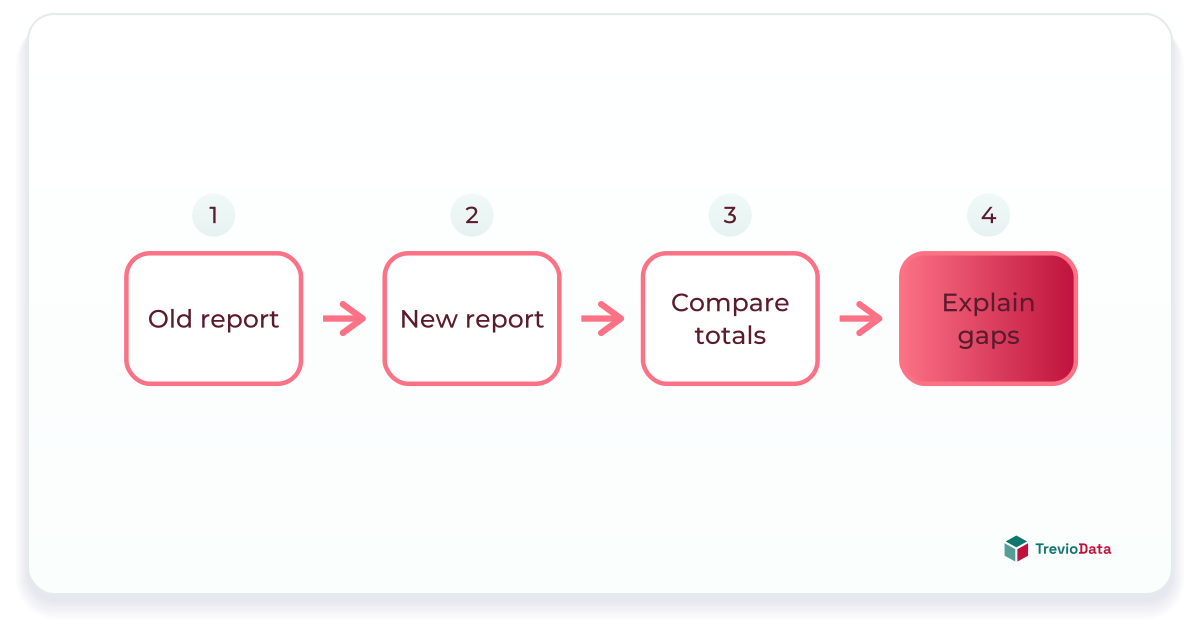
Choose one domain and build the whole chain for it: ingestion, storage, modeling and serving, with owners and quality checks. Run the old and new reports side by side until the numbers agree, and write down every difference with its cause. Those differences often show where the old numbers were wrong, and the domain owner will want to know.
At the end, write one page: baseline, result, lessons and cost. It decides whether the program keeps its momentum, so spend an hour on it. Several habits from my list of data architecture best practices belong in this stage, especially naming rules and raw data retention.
Stage Three: Harden the Platform (Months 6 to 9)
A pilot can run on goodwill, but a platform cannot. In this stage you add monitoring, alerts that reach a named person, access reviews, spending limits and runbooks for the most likely failures. You also pick the tools to keep, replace or buy. Compare options against written criteria, and a ranked list of data architecture tools gives you a shortlist to start from.
The gate for this stage is the question of whether the platform can run without the people who built it. Test it: have someone else handle a simulated failure using only the runbook. If they cannot, fix the runbook before you scale.
Stage Four: Roll Out by Domain (Months 9 to 15)
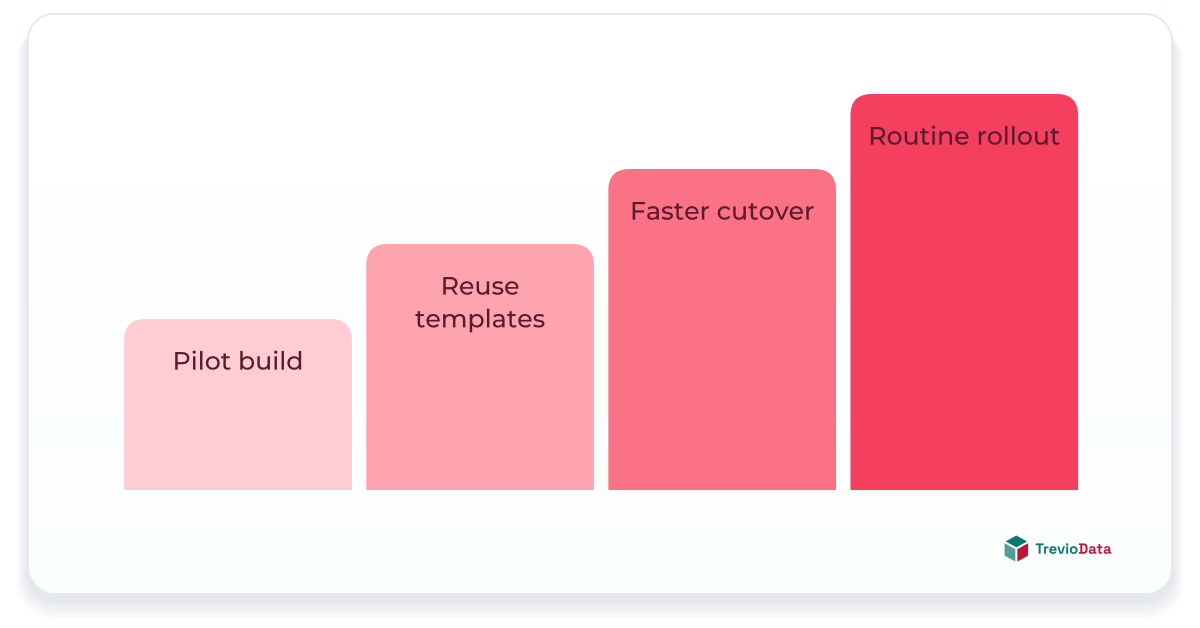
With the pilot proven and the platform stable, extend the same pattern to the next domains. Reuse the templates for owners, definitions, checks and documentation, and the work gets faster each time. In my client work, the second domain usually takes about half as long as the pilot, and the third faster still, as long as the templates are really reused.
Keep each domain's cutover small and reversible. Switch reports in groups, keep the old path available for a short window and set a date after which it is switched off. Without that date the old and new systems run side by side for years.
Stage Five: Retire and Sustain (Months 15 to 18)
The savings come from switching things off. List every old system, report and script that the new design replaced, and decommission them in order of cost. Each retired system should leave a short note in the decision log with the date and the reason.
Then set up the sustaining rhythm: a quarterly review of the scorecard, an annual rewrite of priorities and a short onboarding session for new engineers and analysts. Update the diagrams in the same session as every review.
How Gates Keep the Roadmap Honest
A gate is a question you must answer with evidence before the next stage starts. It is the cheapest control in the whole plan, and it is the part teams most often skip because the calendar feels urgent. Write each gate question when you write the roadmap, not when you arrive at it, because by then everyone wants to say yes.
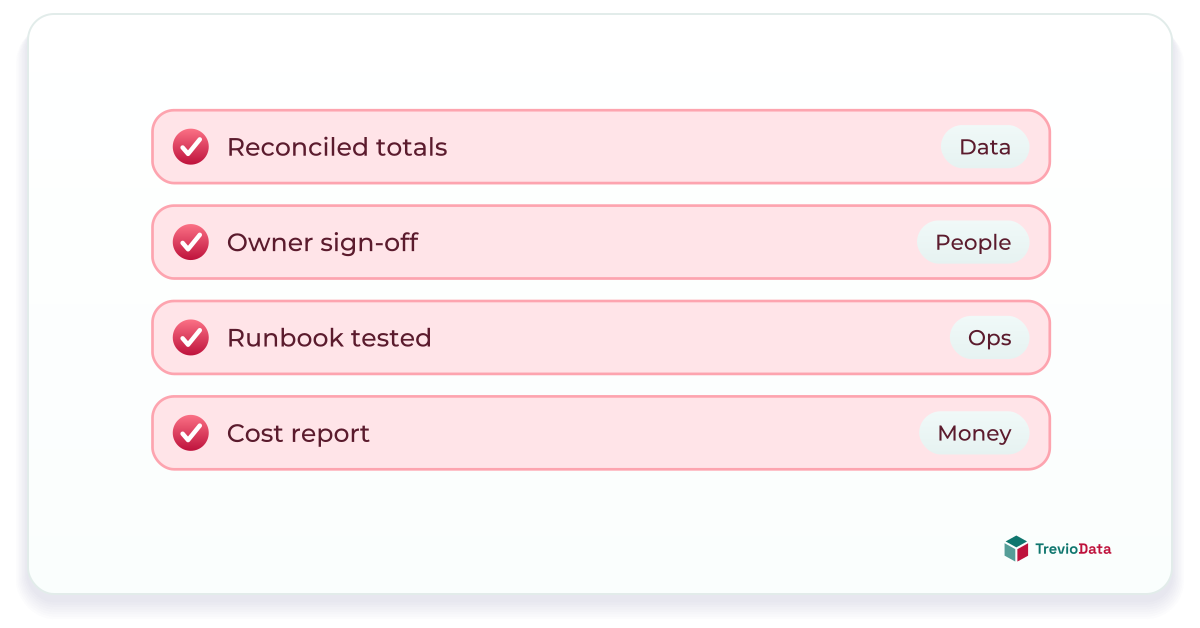
Good gate evidence is concrete. For the pilot gate, bring the reconciliation sheet that shows old and new numbers side by side, the list of differences with causes and a signed note from the domain owner. For the platform gate, bring the result of the simulated failure test, the alert history and the current monthly cost against the baseline. For the rollout gates, bring the share of reports served from the curated layer and the number of old jobs switched off.
If the evidence is weak, you have three choices: repeat the stage with a smaller scope, fix the cause and retest, or accept the risk in writing with a named person responsible. The third choice is legitimate, as long as it is explicit. What fails is the silent pass, where the calendar moves on and the problem travels with it.
Keep gate meetings short. Thirty minutes, the sponsor, the lead architect and the relevant domain owner is enough. Circulate the evidence a day ahead, so the meeting is for decisions and not for reading. Record the outcome in the decision log with the date.
Who Does What Across the Roadmap
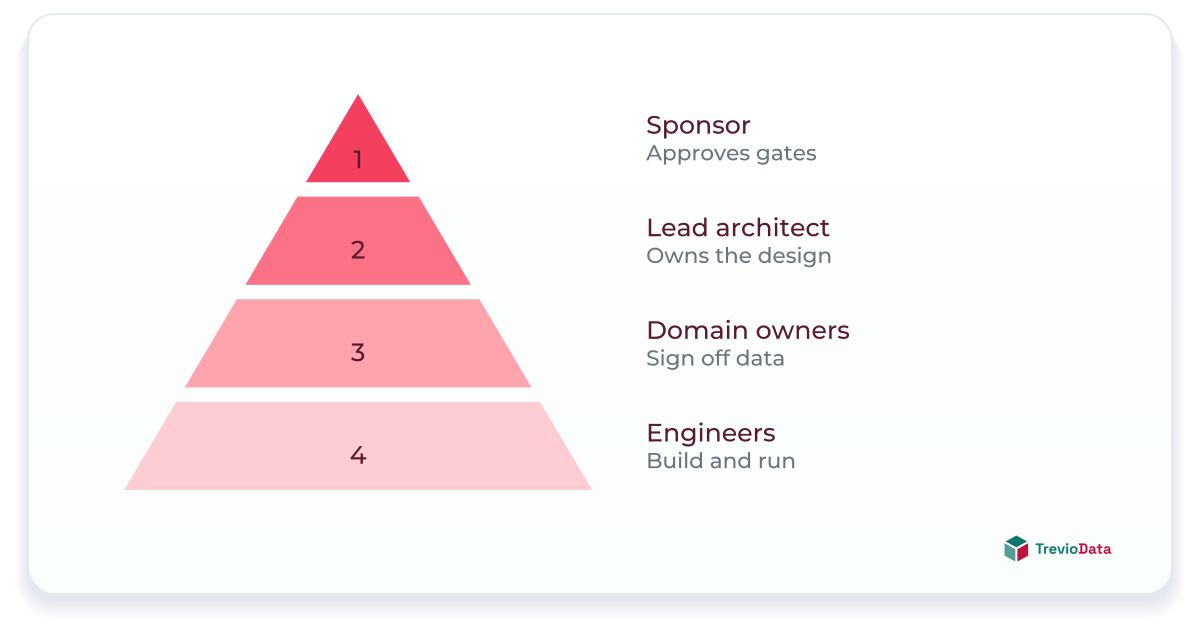
Roadmaps stall when ownership is vague. Four roles cover most mid-sized programs. The sponsor removes blockers and attends gates. The lead architect owns the design and the standards. Domain owners decide what their data means and approve changes. Engineers build and run the platform.
In smaller companies one person holds two roles, and that works. What does not work is an item owned by a team and not by a person. When I review stalled programs, the cause is nearly always a gate that nobody was responsible for passing.
Budget time as carefully as money. Domain owners need a few hours a month in the early stages, and the lead architect needs most of a week. If those hours are not freed up, the dates in the table will slip, whatever the technology.
Where Roadmaps Slip, and How to Plan for It
| Cause | How it shows up | Plan for it by |
|---|---|---|
| Slow system access | Work waits on tickets and approvals | Requesting access in week one |
| Unknown report users | Must-have reports appear late in the pilot | Surveying users before design |
| Unclear ownership | Decisions stall in meetings | Naming one owner per domain first |
| Pilot scope growth | One domain becomes three | Parking extras for stage four |
| Key person leaves | Knowledge disappears with them | Writing runbooks as you build |
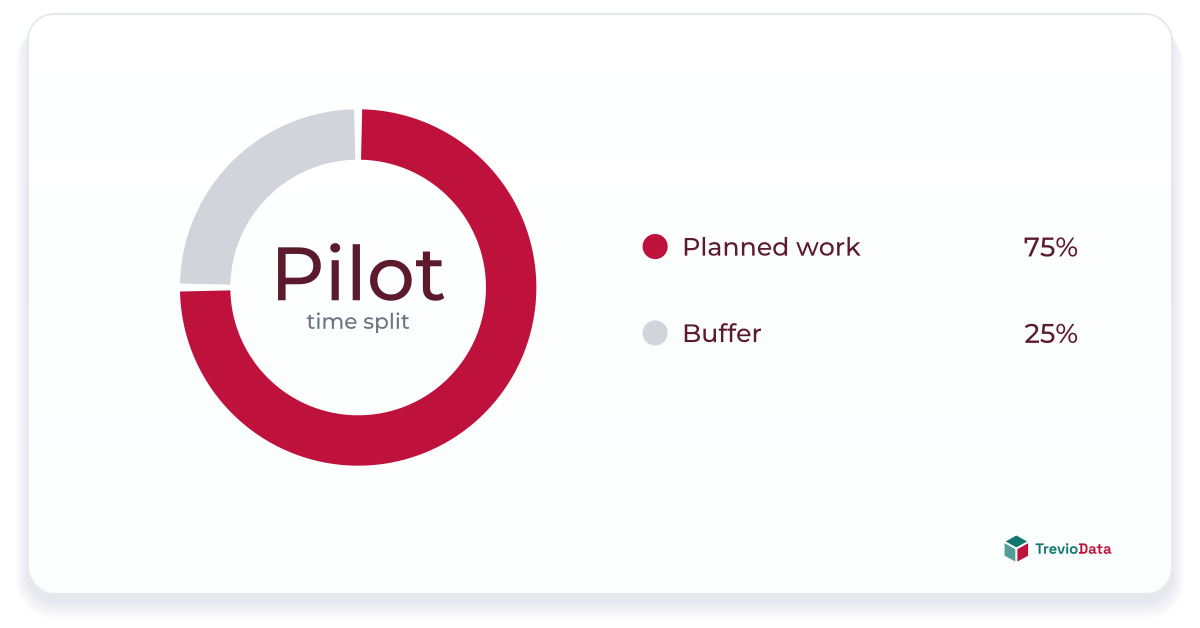
Build a buffer of about a quarter of the time into stage two, and review milestones monthly. If a milestone slips twice, split it into smaller pieces.
Keeping the Business Informed Along the Way
A roadmap that only the data team reads loses support by the second quarter. Send a one-page update after every gate: what finished, what the numbers show, what slipped and what you need from the readers. Keep the tone plain. If the pilot found that an old report was wrong for two years, say so and explain what it means for decisions made on it.
Hold a short demo at the end of the pilot and again after each domain. Ten minutes of the real report, running on the new design, convinces more people than any slide. Invite the people who will be next, so they hear the lessons from their colleagues and not from the project team.
Finally, name what the program will not change. People worry that a new architecture will take away their reports and their tools. When you can say which ones stay, they stop defending them and start helping.
Budget and Effort, Roughly
Budgets depend on company size, so I avoid quoting a single number. What I can describe is where the money goes. Stage one is mostly staff time and workshops. Stages two and three carry platform and engineering cost. Stage four is repeated engineering with falling effort per domain, and stage five brings savings from retired systems. Tie every purchase to a roadmap item and a measure. If you cannot name the item, wait a quarter and ask again.
How to Adapt the Roadmap to Your Company
Adjust the timing and keep the order. A small company can compress stages one and two into four months. A larger one may need a quarter just for the map. Check your version against this list:
- Each stage ends with a gate question someone outside the data team can see answered.
- Every item has one named owner and a date.
- The next two stages are detailed, and the rest is outlined.
- A monthly review is already in the calendar.
If you are unsure about any stage, test it on the pilot domain before you commit the whole organization.
Questions About the Data Architecture Roadmap
What Is a Data Architecture Roadmap?
A data architecture roadmap is a dated sequence of changes that moves your landscape from its current design to the target design. It says what happens in each stage, who owns it and how you will know it worked.
How Long Should the Roadmap Cover?
Eighteen months is a good range for architecture work, with detail for the next two stages and outlines beyond that. Longer plans go stale as the business changes.
Why Start with a Pilot?
A pilot proves the design on one domain before you commit the whole company. It exposes access problems, unclear definitions and surprises in source systems while the cost of fixing them is still small.
How Do I Pick the Pilot Domain?
Choose a domain with visible pain, a willing business owner and moderate complexity. Sales or finance reporting often fits. Avoid the most politically sensitive domain, and avoid the simplest one, which proves too little.
What If the Pilot Fails?
Treat it as information. Find out whether the design, the data or the process failed, fix that and rerun a smaller version. A pilot that fails in week eight is cheaper than a rollout that fails in month twelve.
How Do I Handle Delays?
Plan for them. In my experience, first stages slip by several weeks, usually because of access to source systems. Build a buffer into stage one and keep milestones small enough that a slip is visible.
Who Should Review the Roadmap?
The data lead, the business owners of the main domains and an executive sponsor. Meet monthly for thirty minutes to review progress and rewrite priorities every quarter.
Note: This article is general information, not legal, financial or tax advice. Figures and examples are estimates based on typical projects, so check current details with your providers and advisers before you decide.
Was this article helpful?
Thank you for letting us know.
Camille leads the Trevio editorial team and works with our consultants to turn real client projects into practical guides on data strategy, engineering and governance. Before joining Trevio, she spent 11 years in data engineering and analytics roles. She has since edited more than 300 articles on data management and reviewed pipelines and platforms from over 100 client projects. She is based in Denver, Colorado.