Key Takeaways
- A working framework has eight parts: charter, roles, domains, classification, policies, quality, access and sharing, and monitoring.
- Name owners from the business side and give them authority to settle definitions.
- Classify data by sensitivity first, because it drives access, masking and sharing rules.
- Start with the domains behind your first use cases and expand once the routine holds.
Healthcare data governance has a reputation for producing binders. The version that works is smaller: a handful of roles, a short set of rules and a monthly meeting where decisions get made. Healthcare adds weight because the data is sensitive and because the same measure often means different things to clinicians, finance and quality teams.
The model below has eight steps. It is the one I use when a healthcare data consulting engagement reaches the governance stage, and it works for a single clinic group as well as for a health system. Use the table to see the whole model, then read the steps in order.
| Step | What you decide | First output | Owner |
|---|---|---|---|
| 1. Charter | Why governance exists and what it covers | One-page charter | Executive sponsor |
| 2. Roles | Who decides and who maintains | Council, owners, stewards named | Sponsor and CDO or CIO |
| 3. Domains | Which data areas you govern first | Ranked domain list | Council |
| 4. Classification | How sensitive each dataset is | Four-level scheme applied to key tables | Privacy officer |
| 5. Policies | What is allowed, required or forbidden | Short policies and a glossary | Domain owners |
| 6. Quality | What good data looks like | Checks and thresholds per domain | Stewards |
| 7. Access and sharing | Who sees what, and who receives it | Access model and sharing review path | Privacy officer and owners |
| 8. Monitoring | How you know it works | Monthly scorecard | Council |
Why Healthcare Needs Its Own Framework
Three things set healthcare apart. First, the data is among the most sensitive that any organization holds, and the HIPAA Journal counts more than 1 billion individuals' records exposed in reported large breaches between 2009 and 2025 (HIPAA Journal). The Change Healthcare incident in 2024 alone affected an estimated 192.7 million people. Second, definitions differ between departments, so one number rarely means one thing. Third, data moves between providers, payers, vendors and patients, so your rules have to work across organizational borders.
A framework puts a person and a rule behind each of those problems. It also gives you something to show when a regulator, partner or auditor asks how you handle data. Good governance does not remove all risk, but it makes the answers short.
The Eight Steps of the Framework
Step 1: Write a One-Page Charter
The charter says why governance exists, which data it covers, who sponsors it and what decisions the council can make. Keep it to a page. The strongest charters tie governance to a business problem, such as disputed quality measures or slow audit responses, instead of to compliance in general. A sponsor who can say that sentence out loud is worth more than a long document.
Step 2: Name Roles and Decision Rights
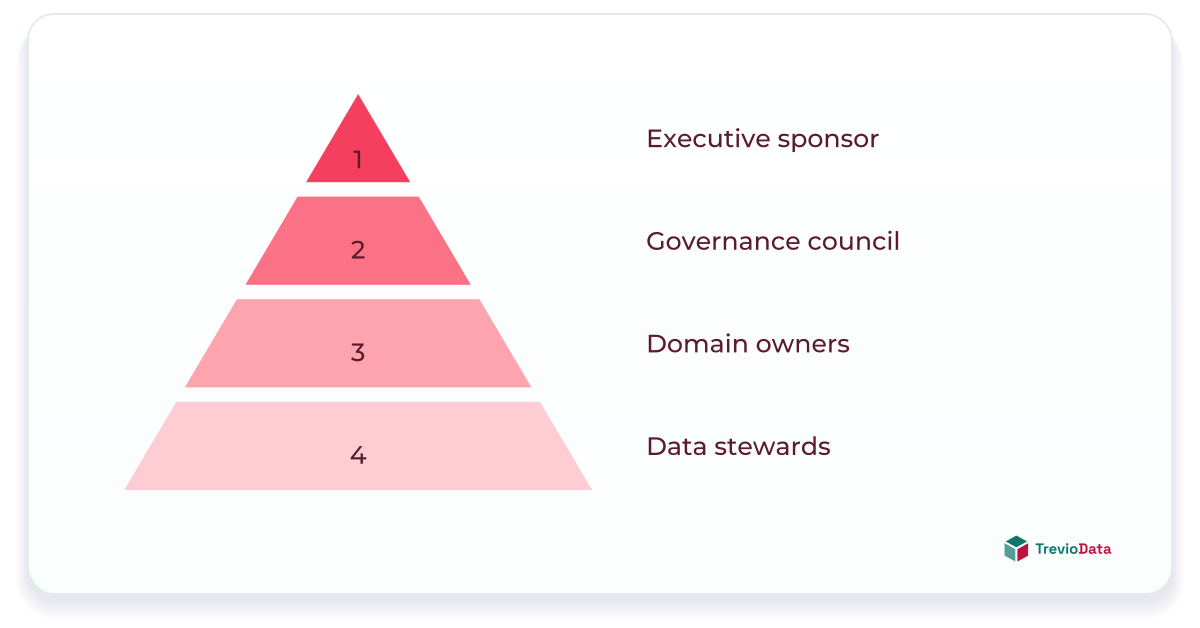
You need four roles. A council sets priorities and resolves disputes. Domain owners, usually senior business leaders, decide what their data means and who may use it. Stewards handle the daily work of definitions, quality issues and access questions. A privacy or compliance officer reviews anything touching identifiable information.
Write down what each role can decide without asking anyone. A steward who must escalate every definition will stop trying. In one hospital client, naming the revenue cycle director as owner of billing data ended a two-year argument about charge definitions in about three weeks.
Step 3: Pick Your First Domains
Do not govern everything at once. Choose the domains behind your first two or three use cases. Common starting points are patients and providers, encounters, claims and revenue, and clinical quality measures. Rank candidates by value, how often people dispute the data and how sensitive it is. The strategy work in my healthcare data strategy playbook shows how to choose those use cases.
Step 4: Classify Data by Sensitivity
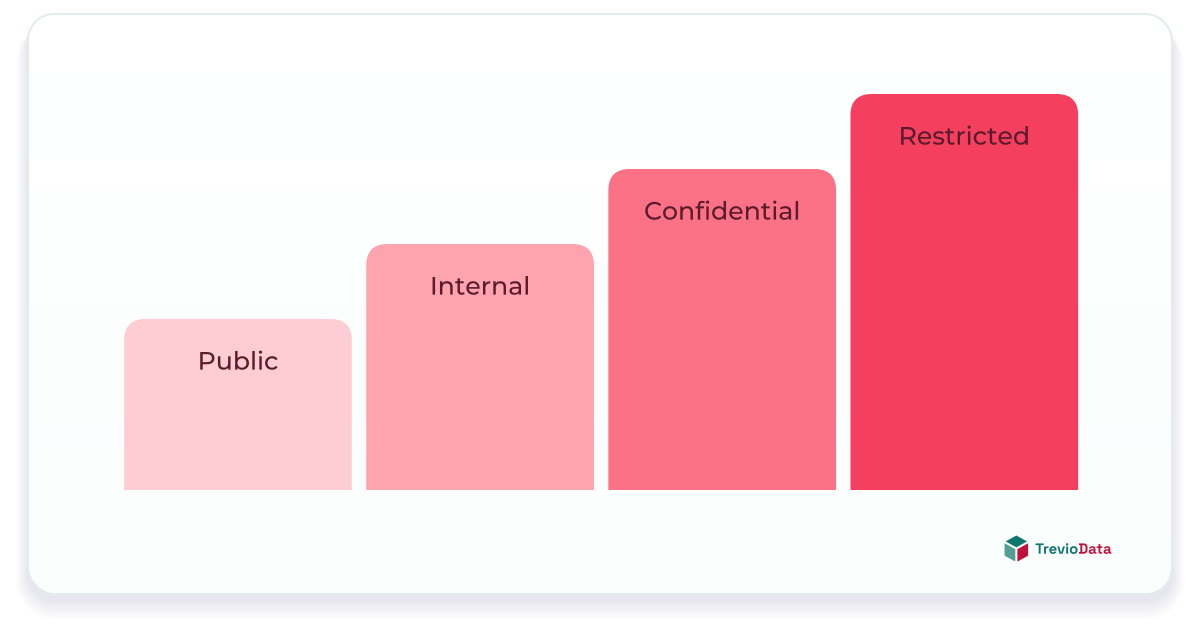
A simple four-level scheme is enough: public, internal, confidential and restricted. Restricted covers identifiable patient information and anything else that could cause harm if exposed. Apply the scheme to the key tables in each domain, not to every column in the first pass. The label drives everything later, including who gets access, what is masked and which environments may hold the data.
HIPAA's Safe Harbor method for de-identification lists 18 types of identifiers that must be removed, from names and dates to device and account numbers. Use it as a reference when you decide which columns to mask in reporting and test environments, and ask your privacy officer whether an expert determination is a better fit for a specific project.
Step 5: Write Short Policies and a Shared Glossary
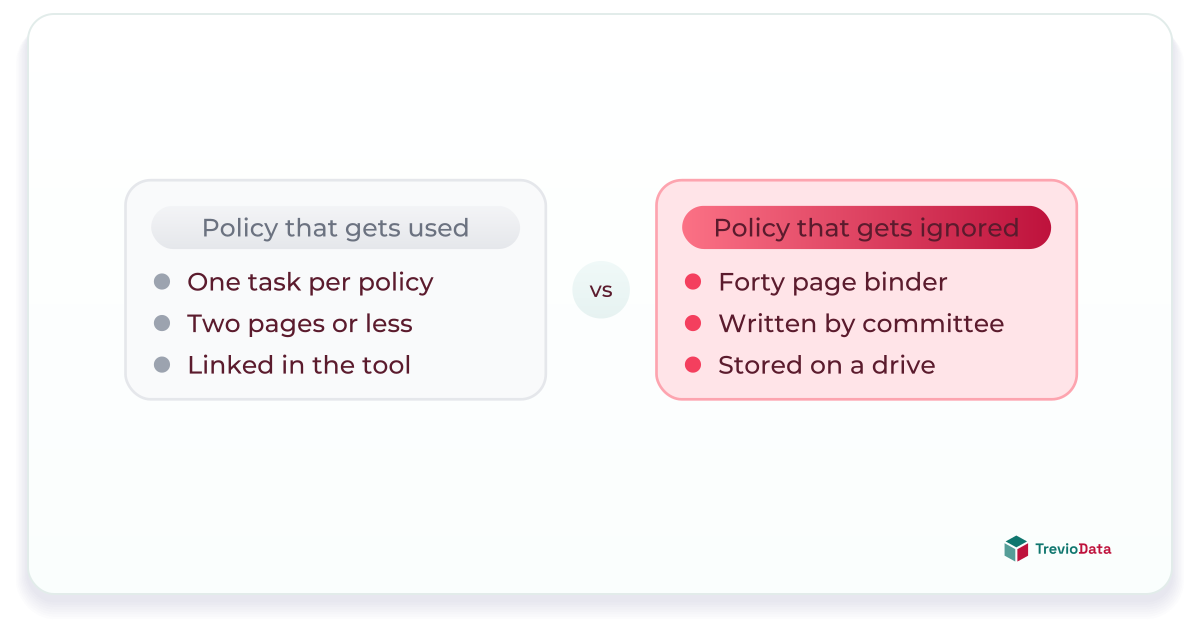
Aim for one page per policy and write in plain language. A usable set covers data ownership, definitions, access and approval, retention and data sharing. Add a glossary with a one or two sentence definition for each key measure, such as readmission, length of stay, active patient and net revenue. Put the glossary where report builders work, not in a folder.
Attach every policy to a real task. "Approving a new report" or "onboarding a new analyst" gives people a moment when the rule applies. Rules with no moment attached are the ones people forget.
Step 6: Set Quality Checks and Thresholds
For each domain, define five to ten checks: completeness of required fields, valid code values, duplicate rates, freshness and reconciliation to a trusted source. Give each check a threshold and a named person who gets the alert. Patient matching deserves its own line, because duplicate patient records cause both clinical risk and billing errors.
Start with the checks tied to your first reports. A check that has no consumer is overhead. If a number is on a board slide, put a check behind it.
Step 7: Control Access and Review Sharing
Base access on role and need. The HIPAA minimum necessary standard asks you to limit the use and disclosure of protected health information to what the purpose requires, and your access model is where that standard becomes real. Mask or remove identifiers in reporting layers, log who queries restricted data and review access every quarter.
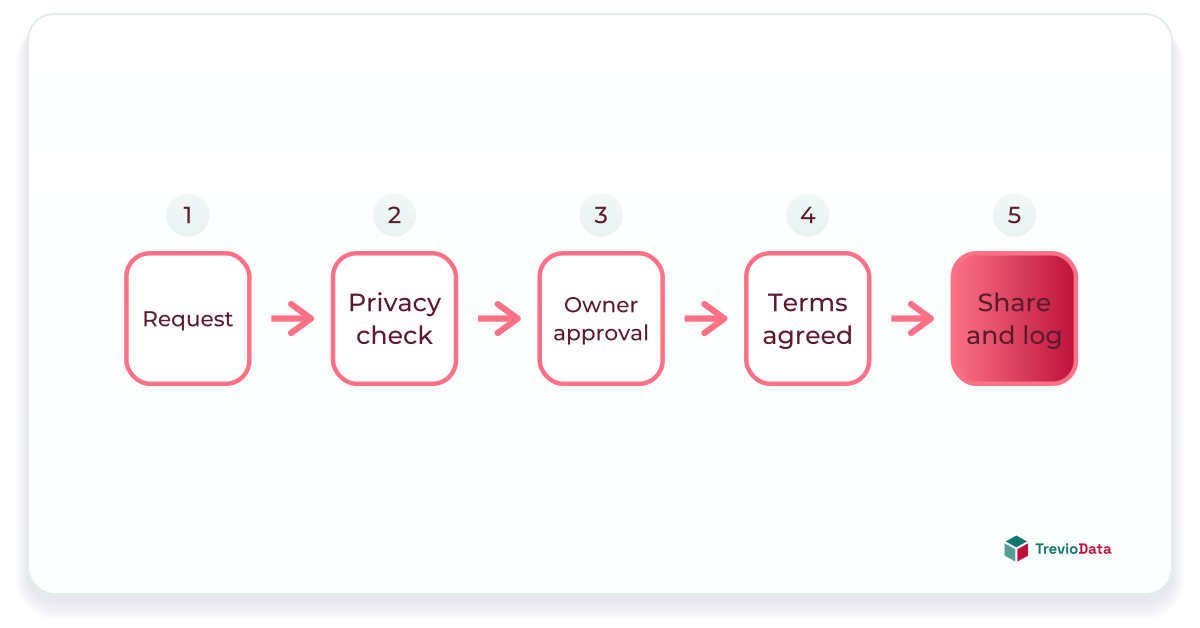
Create a short review path for sharing with outside parties: partners, researchers, vendors and AI tools. Each request records the purpose, the fields, the legal basis and the owner who approved it. Rules on information blocking and patient access also affect what you must share, so involve your compliance team and confirm current requirements with your advisor.
Step 8: Monitor With a Monthly Scorecard
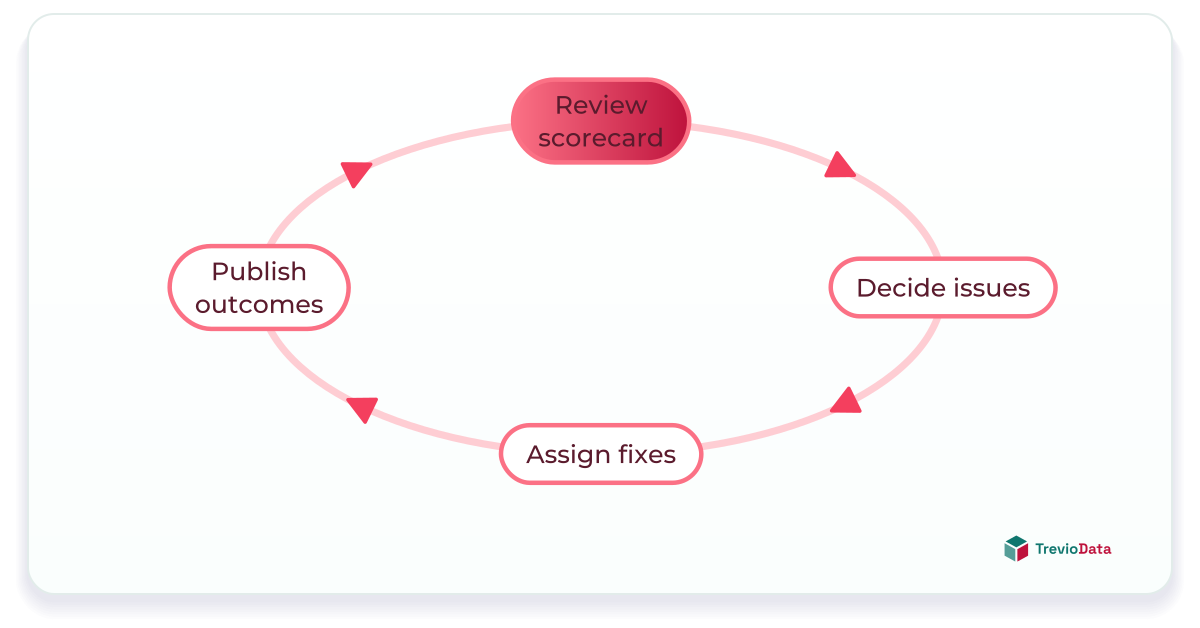
Choose five or six measures and review them monthly. Good ones are the share of critical datasets with a named owner, the share of key measures with an approved definition, time to approve an access request, share of records passing quality checks and the number of open issues older than 30 days. Show the trend, not just the number.
Once a quarter, ask the council two questions: what did governance prevent, and what did it slow down? If the second list is longer than the first, simplify. For habits that support this scorecard day to day, my guide to healthcare data management best practices covers the operating side.
Who Does What: A Quick Reference
Role confusion causes most framework failures, so keep this table close when you set up your council.
| Role | Decides | Does not decide | Time needed |
|---|---|---|---|
| Executive sponsor | Priorities and funding | Definitions of individual measures | 2 hours a month |
| Domain owner | Meaning and use of the domain's data | System design | 2 to 4 hours a month |
| Data steward | Quality fixes and daily questions | Policy changes | 4 to 8 hours a week |
| Privacy officer | Classification and sharing approvals | Business priorities | Varies by load |
| Data engineer or architect | How controls are built | What the rules are | Part of regular work |
The time estimates come from projects I have seen, and they vary a lot with the size of your organization. Stewards carry the heaviest load, so give them time in their job description, not just a title.
Where Tools Fit
Tools follow the framework, not the other way around. A catalog holds your glossary, owners and lineage once you have them. Quality tools run the checks you defined, and BI tools show the scorecard. If you are ready to look at software, my comparison of healthcare data analytics tools shows which platforms suit which teams. Many organizations get through the first six months with documents, a shared drive and scheduled queries.
For context on why these controls are getting more attention, the HIPAA Journal reports that hacking and other IT incidents accounted for more than 80% of large breaches reported in 2025, and 79.7% in 2023. The figures in my healthcare data statistics roundup give more detail on how breaches, costs and adoption are changing.
Mistakes I See in Healthcare Frameworks
The most common is starting with a committee instead of a problem. Thirty people attend, nothing is decided and the effort dies by month four. Start with a council of eight and one problem, such as a disputed measure.
The second is writing policies nobody reads. A 40-page data policy gets signed and ignored, while a one-page rule inside a workflow gets used. The third is leaving clinicians out. A framework built only by IT and compliance misses how data is used at the bedside, and clinicians will bypass it. The fourth is treating privacy as a separate track. Classification, access and sharing are governance, and the privacy officer should sit on the council.
Where You Should Begin
Match the first step to your biggest pain:
- If people argue about numbers, start with roles and the glossary (steps 2 and 5).
- If audits or partner questionnaires worry you, start with classification and access (steps 4 and 7).
- If reports break or arrive late, start with quality checks (step 6).
- If you have no sponsor yet, start with the charter (step 1) and a single problem the sponsor cares about.
Set a date for the first council meeting, bring one decision and write down the outcome. After thirty days, check your scorecard baseline and decide which step to add next. If you want an outside view of your current setup, a short assessment will tell you which of the eight steps are missing.
Questions About Healthcare Data Governance Frameworks
What Is a Healthcare Data Governance Framework?
It is the set of roles, decision rights, policies, standards and controls that decide how patient, clinical, financial and operational data is defined, protected, shared and kept accurate. A good framework answers who owns each kind of data, who can see it, how quality is checked and what happens when something goes wrong.
How Is Healthcare Governance Different from General Data Governance?
The principles are the same, but healthcare adds sensitive patient information, privacy rules, many clinical coding systems and strict rules on sharing. Your framework needs a privacy role, a way to classify identifiable data, consent handling and an approval path for sharing with partners and researchers.
Who Should Sit on the Governance Council?
Keep it small: an executive sponsor, a clinical leader, a finance leader, the privacy or compliance officer, the chief data or information officer and the domain owners as needed. Eight to ten people is plenty. Meet monthly at first, and bring decisions, not status updates.
Do We Need a Governance Tool to Start?
No. Roles, definitions, a classification scheme and a review rhythm can run in documents and spreadsheets. A catalog or governance platform becomes worth buying once you have owners and rules to put into it. My healthcare data analytics tools ranking covers the platforms that sit on top.
How Long Does It Take to Put a Framework in Place?
In my client work, a first working version takes eight to twelve weeks for one or two domains. Full coverage across a health system takes a year or more. Start with the domains behind your first use cases, and extend the framework as you add data.
How Does the Framework Relate to HIPAA?
HIPAA sets privacy and security obligations for covered entities and business associates, and your framework turns those obligations into daily practice: classification, minimum necessary access, audit logs and breach response. The framework does not replace legal review, so confirm current requirements with your compliance or legal team.
How Do We Measure Whether Governance Works?
Track a few numbers monthly: share of critical datasets with a named owner, share of key measures with an approved definition, time to approve an access request, share of records passing quality checks and number of open data issues older than 30 days. Set a baseline before you start.
Sources
- HIPAA Journal: Healthcare Data Breach Statistics
- HHS: Guidance on De-identification of Protected Health Information
- HHS: Minimum Necessary Requirement
Note: This article is general information, not legal, financial or tax advice. Figures and examples are estimates based on typical projects, so check current details with your providers and advisers before you decide.
Was this article helpful?
Thank you for letting us know.
Camille leads the Trevio editorial team and works with our consultants to turn real client projects into practical guides on data strategy, engineering and governance. Before joining Trevio, she spent 11 years in data engineering and analytics roles. She has since edited more than 300 articles on data management and reviewed pipelines and platforms from over 100 client projects. She is based in Denver, Colorado.